
เครื่องทำถาดไข่ขนาดเล็ก 1000-1500 เครื่อง/ชั่วโมง
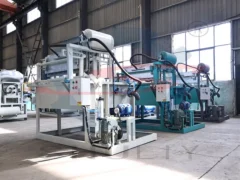
| โมเดล | SL-3*1, SL-4*1 |
| ความจุ | 1000-1500 ชิ้น/ชั่วโมง |
| การใช้น้ำ | 300กก./ชั่วโมง-380กก./ชั่วโมง |
| การใช้กระดาษ | 120-160กก./ชั่วโมง |
| การใช้ไฟฟ้า | 32กิโลวัตต์/ชั่วโมง-45กิโลวัตต์/ชั่วโมง |
| จำนวนคนงาน | 3-4 |
| การรับประกัน | 12 เดือน |
คุณสามารถถามผู้จัดการโครงการของเราเกี่ยวกับรายละเอียดทางเทคนิคได้แล้ว
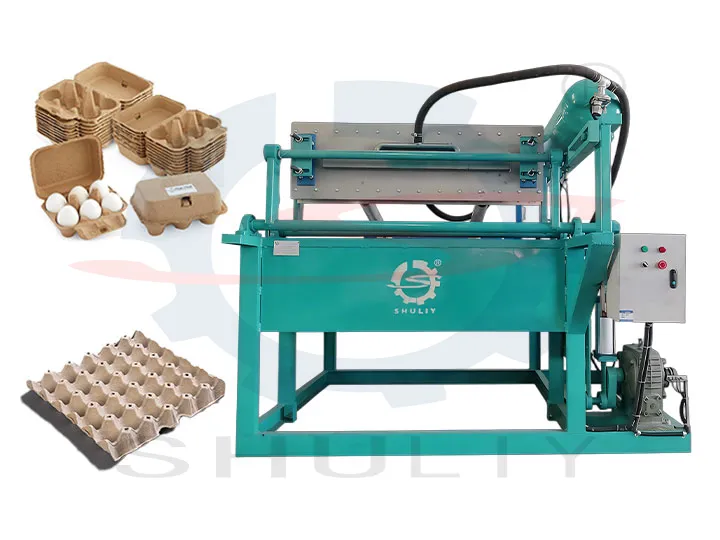
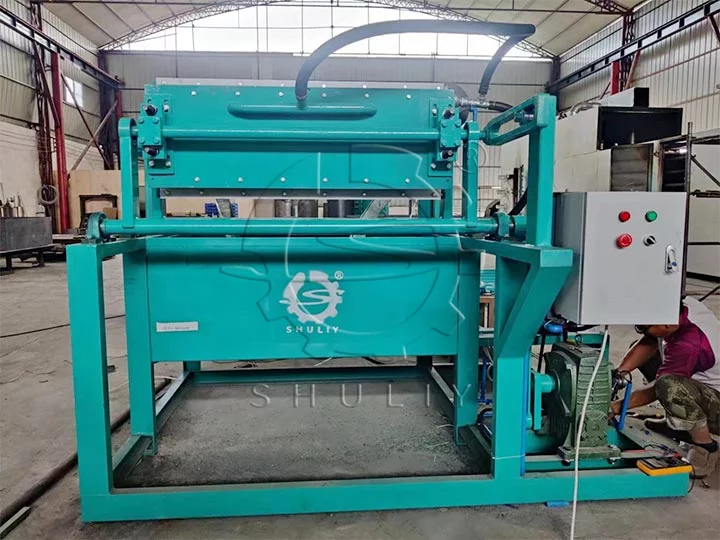
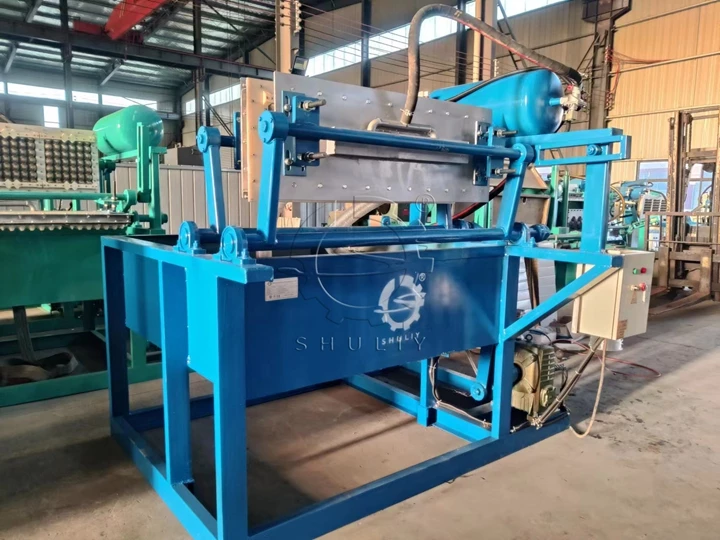
The small egg tray machine, also called a single-sided egg tray machine, mainly uses waste paper, cardboard, old books, and other fiber materials. It produces various egg trays, such as 30-hole and 20-hole trays, with an output of 1,000–1,500 pieces per hour through pulp molding.
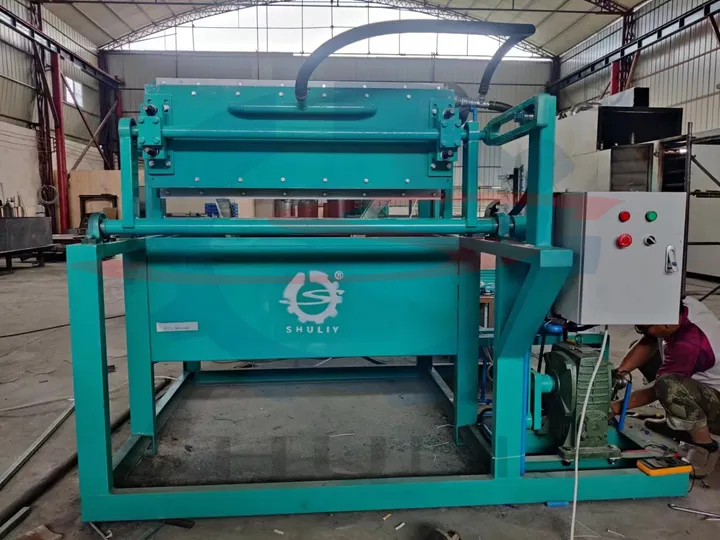
This small egg tray machine is ideal for small poultry farms, large-scale chicken farms, and start-up egg processing businesses. It has low output, low investment, low energy consumption, and is easy to operate. With a fast return on investment, it is the first choice for many users and is popular in over 50 countries, including Nigeria, Brazil, Cuba, Colombia, Russia, Saudi Arabia, Morocco, Ghana, and South Africa.
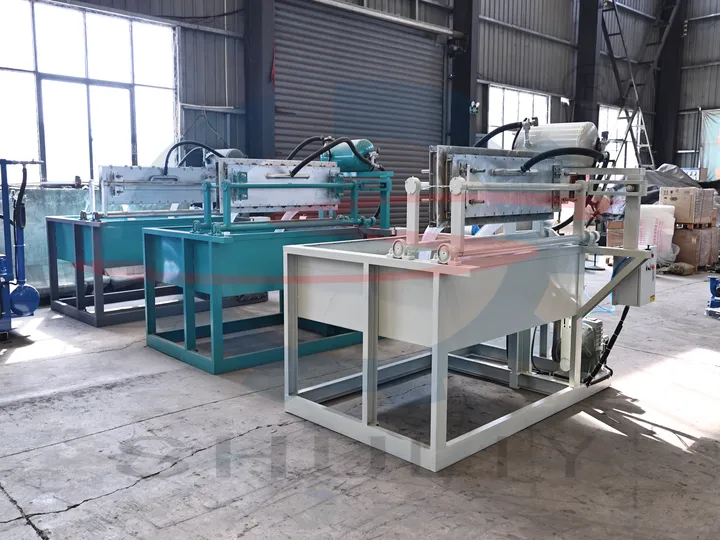
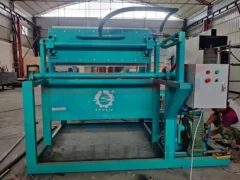
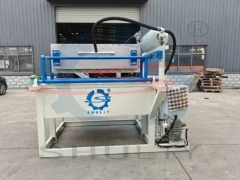
Shuliy’s best-selling small egg tray making machines are the SL-3*1 และ SL-4*1. Below, I will introduce these two models in detail.
Why Is This Small Egg Tray Machine Also Called a Single-Side Egg Tray Making Machine?
This small egg tray machine is also known as a single-side egg tray making machine because it is equipped with only one forming mold and one transfer mold. All wet egg trays complete the pulp suction, molding, and demolding processes on the same side. This compact egg tray machine can close the molds 6–8 times per minute, with an output of 18–32 trays per minute.
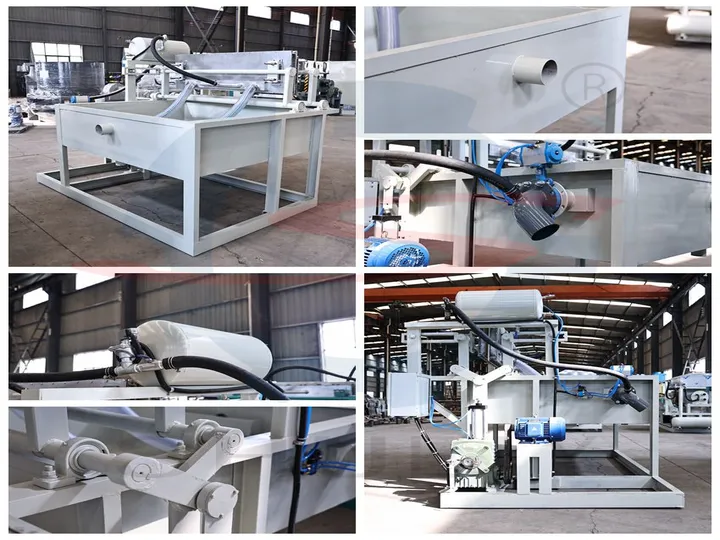
Compared with multi-side machines (such as four-side, eight-side, or twelve-side machines), the single-side egg tray machine features a simpler structure, smaller footprint, and lower energy consumption. Therefore, it is an ideal choice for poultry farms and small businesses looking to upgrade from old egg tray production equipment.
Due to its single-side molding process, the production output per cycle is moderate, reaching approximately 1,000–1,500 pieces per hour. In addition, this machine is easy to operate and requires less maintenance, making it suitable for beginners and small-scale egg tray production projects.
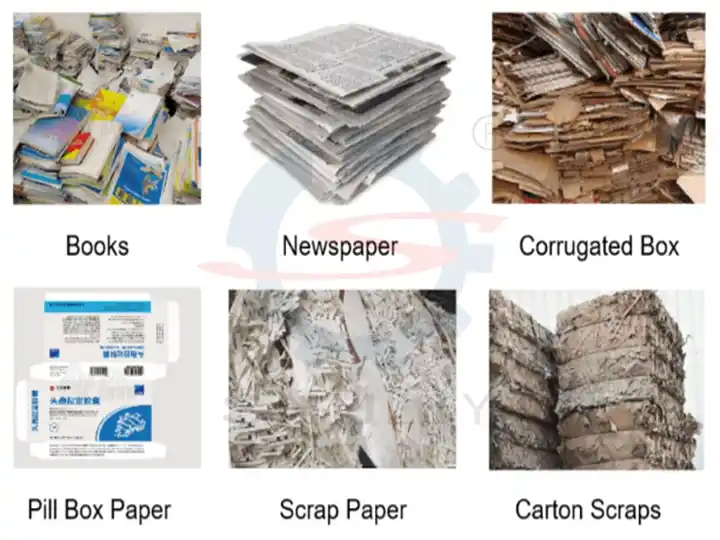
วัตถุดิบสำหรับการผลิตถาดไข่
Small egg tray machines mainly use fiber materials such as waste paper, kraft paper, corrugated paper, and cardboard as raw materials. The production process mainly involves physical processing, including pulping, molding, and drying, to finally produce finished egg trays. Generally, the weight of one egg tray is about 60–80 g. According to calculations from the Shuliy factory, one ton of waste paper can produce approximately 12,000 egg trays, making this solution highly attractive for businesses seeking a fast return on investment. In many cases, the investment can be recovered within about one week.
According to customer requirements, waterproofing agents or strengthening additives can be added to the pulp to improve the moisture resistance and durability of the trays. These additives remain stable in the products after drying and do not cause chemical reactions, discoloration, or unpleasant odors.
Therefore, both the raw materials and the production process are environmentally friendly. Egg trays are fully biodegradable, do not cause secondary pollution, and meet the growing demand for sustainable and eco-friendly packaging solutions.
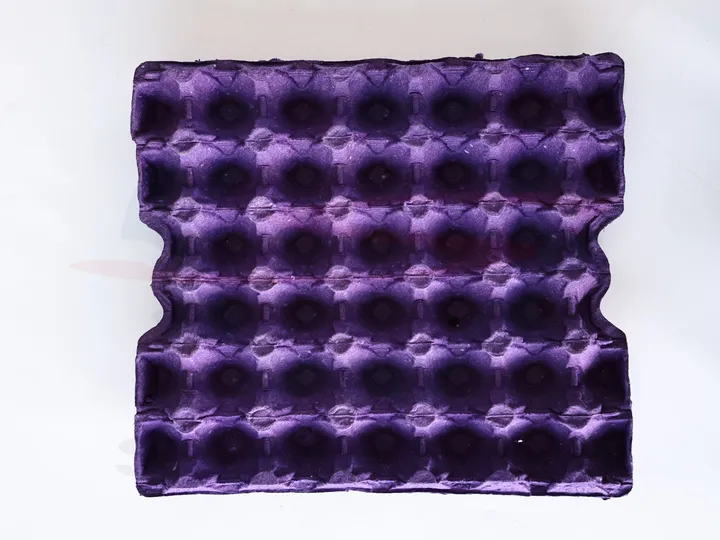
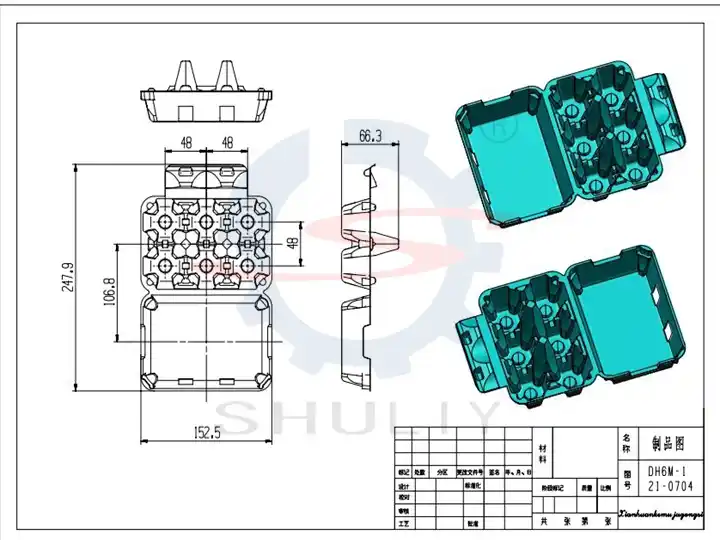
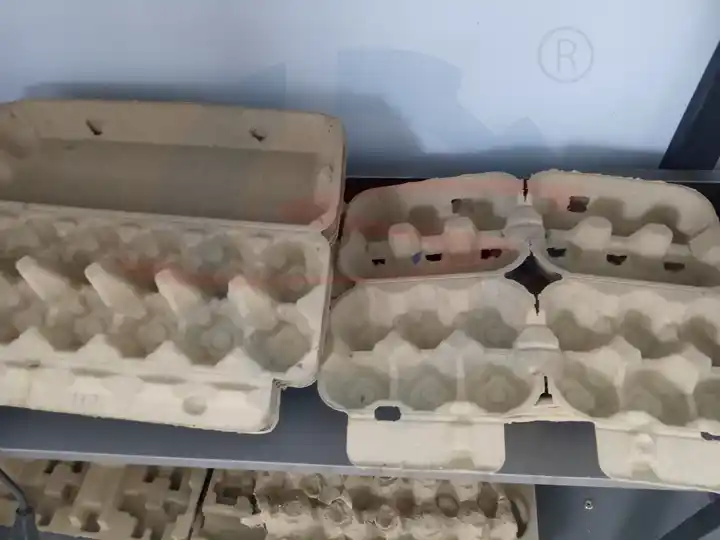
What Finished Products Can Shuliy Small Egg Tray Machines Produce?
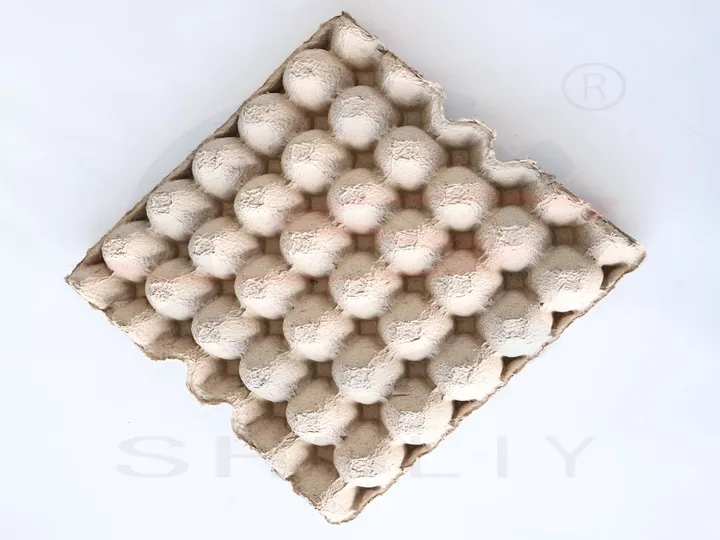
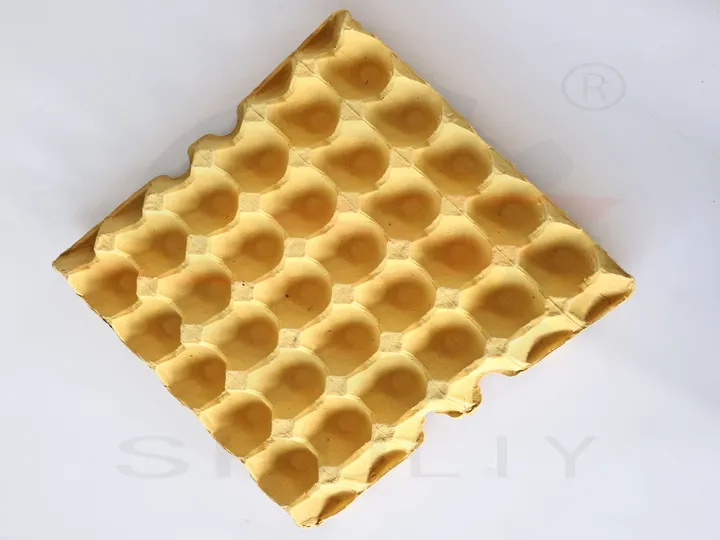
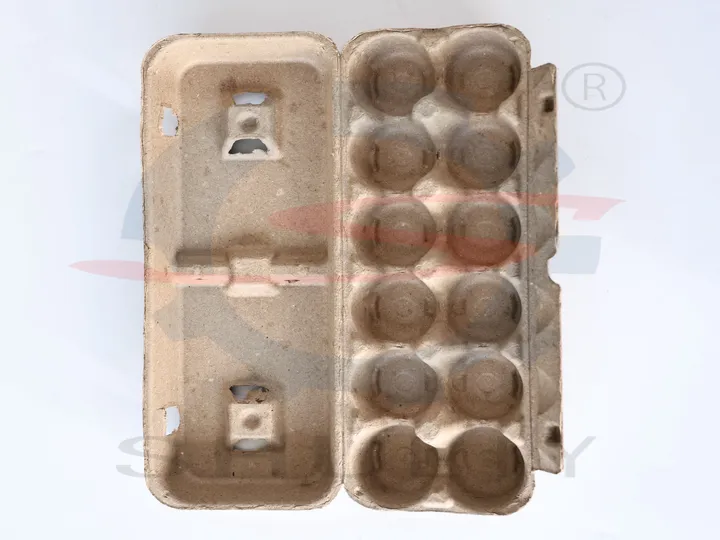
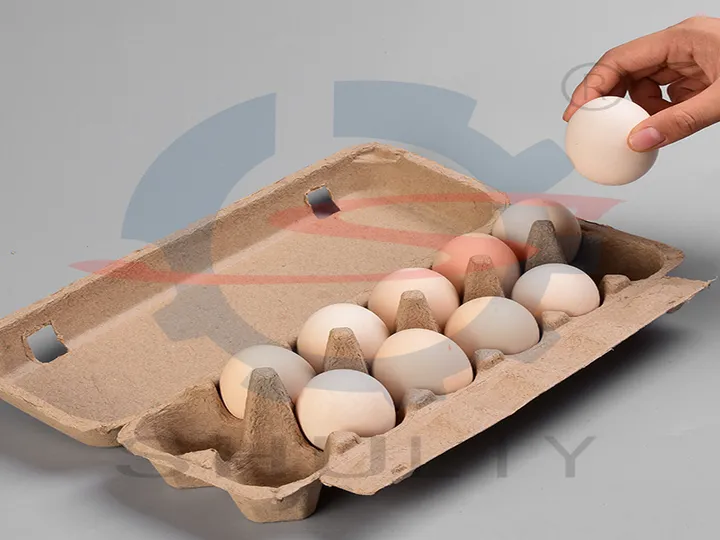
How Does a Small Pulp Molding Egg Tray Machine Make Egg Trays?
The small pulp molding egg tray machine works mainly through four steps: pulping, molding, demolding, and drying. First, waste paper, corrugated paper, and other raw materials are mixed with water in the right ratio to make a uniform pulp. Stirring and beating ensure the fibers are fully dispersed.
จากนั้นเนื้อเยื่อจะถูกส่งไปยังแม่พิมพ์ขึ้นรูปด้านเดียว ภายใต้การดูดด้วยสูญญากาศ เนื้อเยื่อจะติดแนบกับพื้นผิวแม่พิมพ์อย่างสม่ำเสมออย่างรวดเร็ว แล้วขึ้นรูปเป็นถาดไข่เปียก ถาดเปียกจะถูกถอดแม่พิมพ์และส่งไปยังระบบอบแห้ง (อบแห้งด้วยลม หรือห้องอบแห้ง) เพื่อเอาความชื้น ผลลัพธ์คือถาดไข่ที่แข็งแรง เรียบ และสม่ำเสมอ
กระบวนการทั้งหมดเป็นทางกายภาพ โดยไม่มีสารเคมีอันตราย ทำให้เป็นมิตรกับสิ่งแวดล้อมและมีประสิทธิภาพ แต่ละรอบสามารถผลิตถาดหลายชิ้นพร้อมกัน ใช้ปริมาณน้ำและกระดาษต่ำ เหมาะสำหรับการผลิตขนาดเล็กที่มีประสิทธิภาพสูง
ประเภทของเครื่องทำถาดไข่ขนาดเล็ก
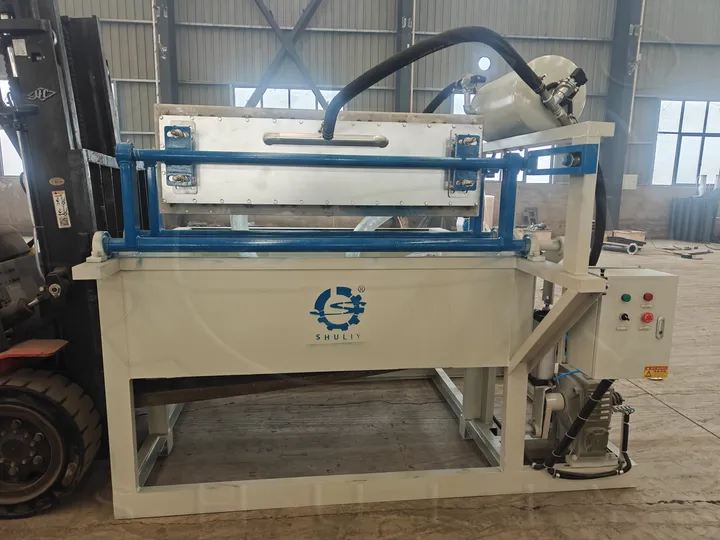
Type 1: SL-3*1 Small Egg Tray Machine
The SL-3×1 small egg tray forming machine consists of one transfer side and three forming sides. The transfer side is responsible for conveying wet pulp, while the three forming sides mold wet paper trays simultaneously. Each production cycle can produce 3 egg trays, with an output capacity of up to 1,000 pieces per hour.
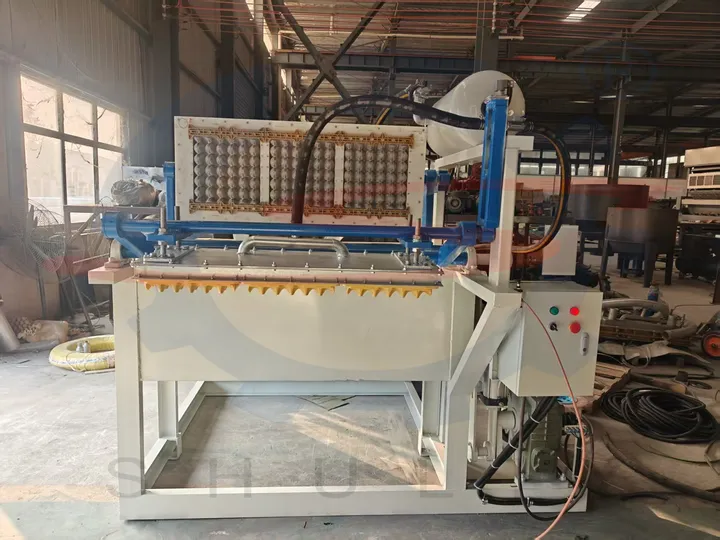
Technical Parameters of SL-3*1 Small Egg Tray Making Machine
| รายการ | Parameter |
|---|---|
| โมเดล | SL-3*1 |
| ผลผลิต | 1,000 ถาด/ชั่วโมง |
| พลังงาน | 38 กิโลวัตต์ |
| แรงดันไฟฟ้า | 380V / 50Hz |
| น้ำหนัก | 2,500 กิโลกรัม |
| ขนาดเครื่องหลัก | 2,600 × 2,200 × 1,900 มม. |
| การบริโภคกระดาษ | 80 kg/h |
| การใช้น้ำ | 160 kg/h |
| วิธีการอบแห้ง | กล่องอบแห้ง / การอบแห้งด้วยลม |
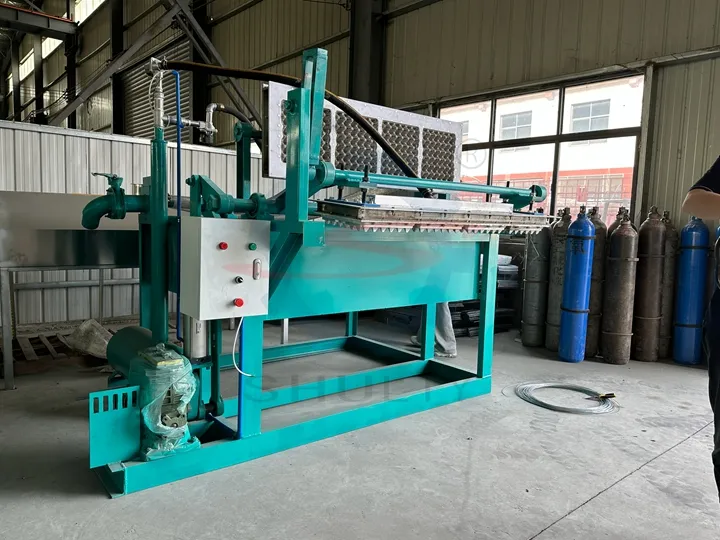
Type 2: SL-4*1 Small Egg Tray Machine
The SL-4×1 small egg tray making machine consists of one transfer side and four forming sides. The transfer side conveys wet pulp, while the four forming sides simultaneously mold the pulp into egg trays. Each production cycle can produce 4 egg trays.
Compared with the SL-3×1 model, this machine provides higher production capacity while maintaining a simple structure and easy operation. It is suitable for small and medium-scale egg tray production lines. The output capacity can reach 1,500 pieces per hour.
Technical Parameters of SL-4*1 Small Egg Tray Machines
| รายการ | Parameter |
|---|---|
| โมเดล | SL-4*1 |
| ผลผลิต | ถาด 1,500 ถาด/ชั่วโมง |
| พลังงาน | 38 กิโลวัตต์ |
| แรงดันไฟฟ้า | 380V / 50Hz |
| น้ำหนัก | 3,000 กิโลกรัม |
| ขนาดเครื่องหลัก | 2,800 × 2,200 × 1,900 มม. |
| การบริโภคกระดาษ | 120 kg/h |
| การใช้น้ำ | 240 kg/h |
| วิธีการอบแห้ง | การอบแห้งด้วยลม / ห้องอบแห้ง |
ความแตกต่างหลักระหว่างสองเครื่อง
| รายการเปรียบเทียบ | SL-3*1 | SL-4*1 |
|---|---|---|
| ตำแหน่งแม่พิมพ์ | 3 | 4 |
| ผลผลิต | 1,000 ถาด/ชั่วโมง | ถาด 1,500 ถาด/ชั่วโมง |
| กำลังไฟทั้งหมด | 38 กิโลวัตต์ | 38 กิโลวัตต์ |
| น้ำหนักเครื่องหลัก | 2,500 กิโลกรัม | 3,000 กิโลกรัม (เสถียรกว่า) |
| การบริโภคกระดาษ | 80 กิโลกรัม/ชั่วโมง | 120 กิโลกรัม/ชั่วโมง |
| การใช้น้ำ | 160 กิโลกรัม/ชั่วโมง | 240 กิโลกรัม/ชั่วโมง |
| การกำหนดค่าการอบแห้ง | กล่องอบแห้ง / การอบแห้งด้วยลม | การอบแห้งด้วยลม / ห้องอบแห้ง (สำหรับผลผลิตที่สูงขึ้น) |
| เหมาะสำหรับ | ฟาร์มขนาดเล็ก / สตาร์ทอัป | โรงงานถาดไข่ขนาดเล็กถึงขนาดกลาง / การขยายกำลังการผลิต |
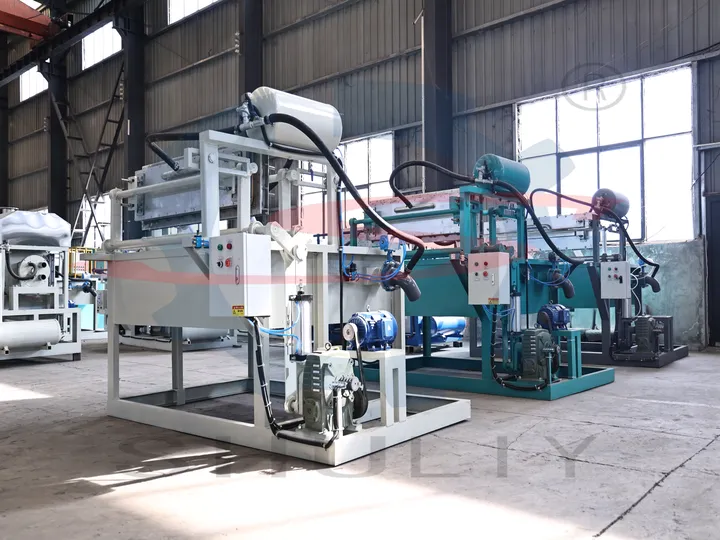
ข้อดีของเครื่องทำถาดไข่ขนาดเล็ก
Simple and Stable Structure
เครื่องใช้ระบบขึ้นรูปด้านเดียว 3×1 หรือ 4×1 ซึ่งมีขนาดกะทัดรัดและมีอัตราความล้มเหลวต่ำ
- SL-3*1: 3 ตำแหน่งแม่พิมพ์
- SL-4*1: 4 ตำแหน่งแม่พิมพ์
ระบบด้านเดียวลดชิ้นส่วนหมุนและส่งกำลัง เพื่อให้การทำงานเสถียรและบำรุงรักษาง่าย
High Efficiency and Low Energy Consumption
ทั้งสองรุ่นมีกำลังไฟ 38 กิโลวัตต์ ผลิตถาดได้ 1,000–1,500 ถาดต่อชั่วโมง อัตราสำหรับพลังงานต่อผลผลิตเป็นเหตุผล ทำให้คุ้มค่ากับต้นทุนในเครื่องจักรที่คล้ายกัน
High Pulp Utilization
การขึ้นรูปด้วยสูญญากาศช่วยให้เนื้อเยื่อกระจายตัวอย่างสม่ำเสมอและมีประสิทธิภาพในการดูดซึมสูง
- การใช้กระดาษ: 80–120 กิโลกรัม/ชั่วโมง
- การใช้น้ำ: 160–240 กิโลกรัม/ชั่วโมง (สามารถนำกลับมาใช้ใหม่ได้มากที่สุด)
Durable Materials
โครงสร้างทำจากเหล็กกล้าคาร์บอน Q235 หนา หนัก 2,500–3,000 กิโลกรัม รับประกันความเสถียรและการขึ้นรูปที่แม่นยำ
แม่พิมพ์ทำจากอลูมิเนียมหรือทองแดง ทนต่อการกัดกร่อน ทนความร้อน ทนทาน และขึ้นรูปถาดได้เรียบร้อย
Flexible Drying Options
การอบแห้งสามารถปรับให้เหมาะสมกับการผลิตและสภาพอากาศ:
- การอบแห้งด้วยลม (ต้นทุนต่ำ เหมาะสำหรับพื้นที่มีแดด)
- กล่องอบแห้ง (สำหรับ SL-3*1)
- ห้องอบแห้ง (แนะนำสำหรับ SL-4*1)
การกำหนดค่าที่ยืดหยุ่นตอบสนองความต้องการการผลิตขนาดเล็กต่าง ๆ
Stable and Reliable Output
การขึ้นรูปด้วยสูญญากาศที่แม่นยำช่วยให้ได้จำนวนและคุณภาพถาดที่สม่ำเสมอต่อรอบ
- SL-3*1: 1,000 ถาด/ชั่วโมง
- SL-4*1: 1,500 ถาด/ชั่วโมง
ถาดเปียกมีความสม่ำเสมอและคงที่; ถาดแห้งเรียบ แข็งแรง และลดการทำซ้ำ เพิ่มประสิทธิภาพการผลิตโดยรวม
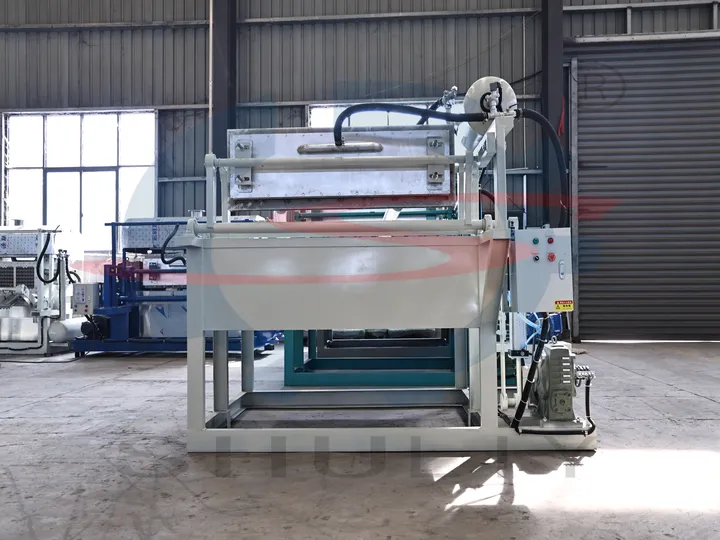
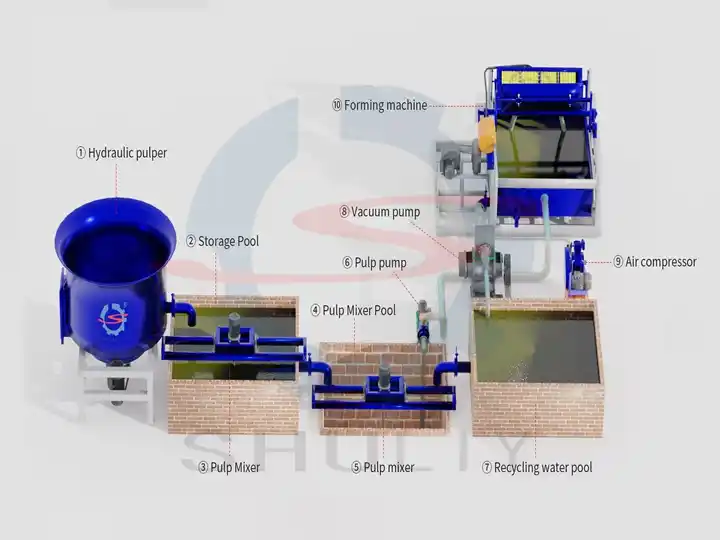
สายการผลิตถาดไข่ขนาดเล็ก
The small สายการผลิตถาดไข่ mainly consists of the following parts:
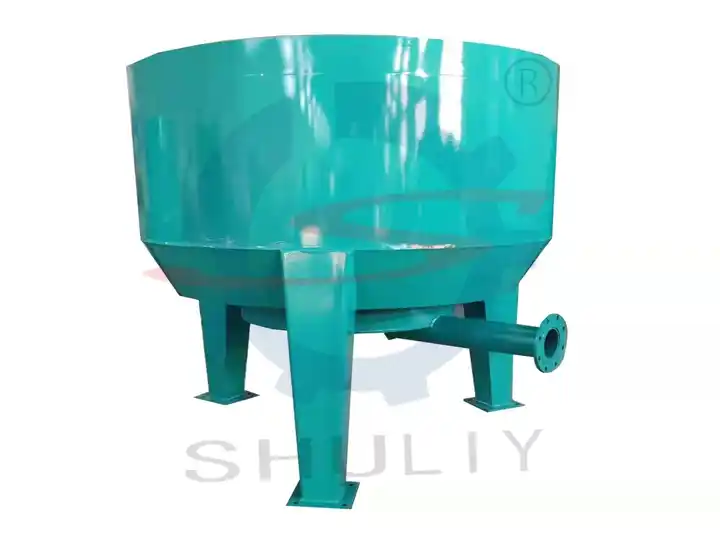
ระบบการทำเยื่อ
Waste paper such as newspapers, corrugated paper, and kraft paper is mixed with water, then stirred and crushed to form a uniform pulp mixture.
The pulp concentration can be adjusted according to production requirements, and a small amount of waterproofing agent can be added to improve moisture resistance. The maximum recommended water-to-paper ratio is 5:1, while the optimal ratio is generally around 10:1. A higher pulp concentration means more waste paper can be processed with less water; however, if the concentration is too high or too low, the final egg trays may not form properly.
During egg tray production, not only the pulp concentration needs to be properly controlled, but the pulp must also be thoroughly mixed and refined. In general, the pulping process takes approximately 20–40 minutes to achieve a uniform pulp consistency suitable for molding.
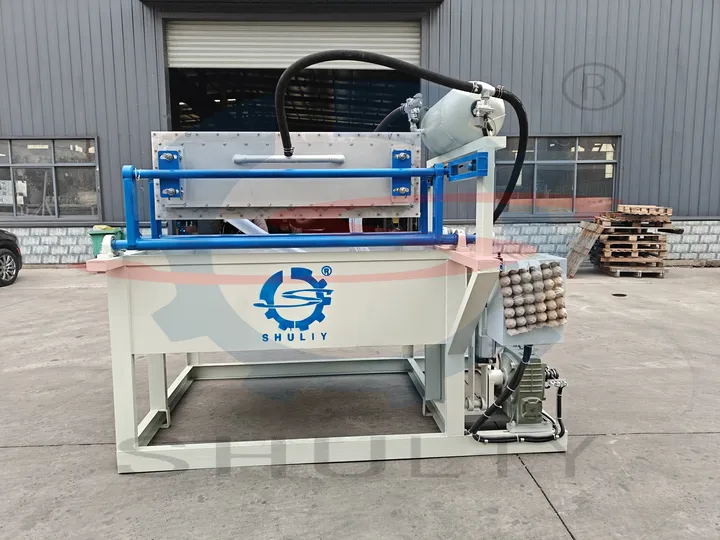
ระบบการขึ้นรูป
แม่พิมพ์ด้านเดียว (3*1 หรือ 4*1) พร้อมการดูดด้วยสูญญากาศ ใช้ในการขึ้นรูปถาดเปียกอย่างสม่ำเสมอ
แต่ละรอบสามารถขึ้นรูปถาดหลายชิ้นพร้อมกัน เพิ่มประสิทธิภาพการผลิต
ระบบการอบแห้ง
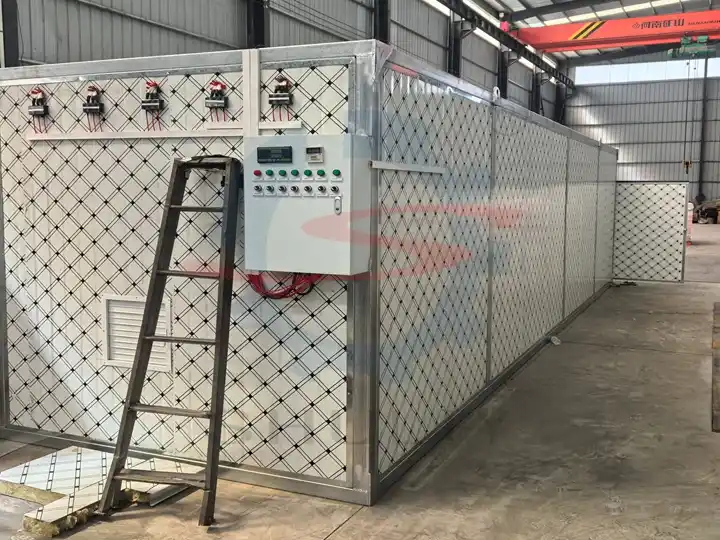
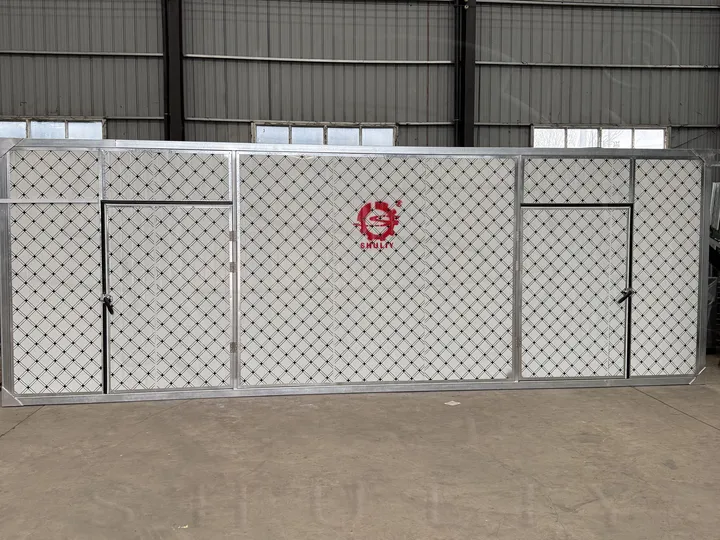
This egg tray drying room can dry approximately 1,000 egg trays per batch at 180–200°C, with a drying time of 30–40 นาที.
After molding, the wet egg trays are placed on galvanized trays, loaded onto drying racks, and pushed into the drying room for hot-air drying. The room can hold 10–12 carts, with each cart carrying about 90–100 egg trays. An additional 10 carts can be equipped for continuous production.
Compared with natural sun drying, this method allows continuous production regardless of weather conditions, saves space, and improves drying stability. However, it requires more manual labor for tray loading, cart movement, and unloading.
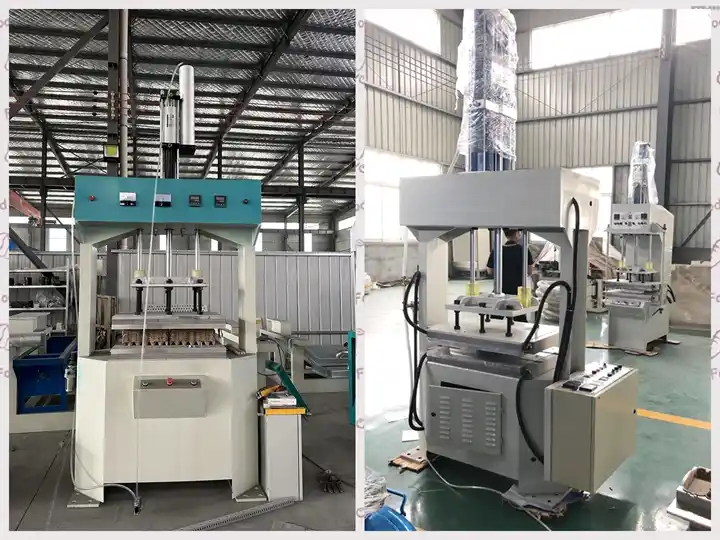
การกดร้อน (ตัวเลือก)
To achieve a smoother and more attractive surface, a small egg tray hot pressing machine can be used for further processing. This egg tray hot press molding machine uses electric heating to heat the pressing mold up to 200°C. Then, with a downward pressure of 20 tons from the hydraulic cylinder, it compresses the egg trays, making both sides of the trays smooth and evenly finished.
Packaging and Stacking
The egg tray packing machine provided by Shuliy uses a pneumatic cylinder to compress 70–120 egg trays into a compact stack. This process ensures that the stacked egg trays have a uniform length, making them easier to package, load, and transport.
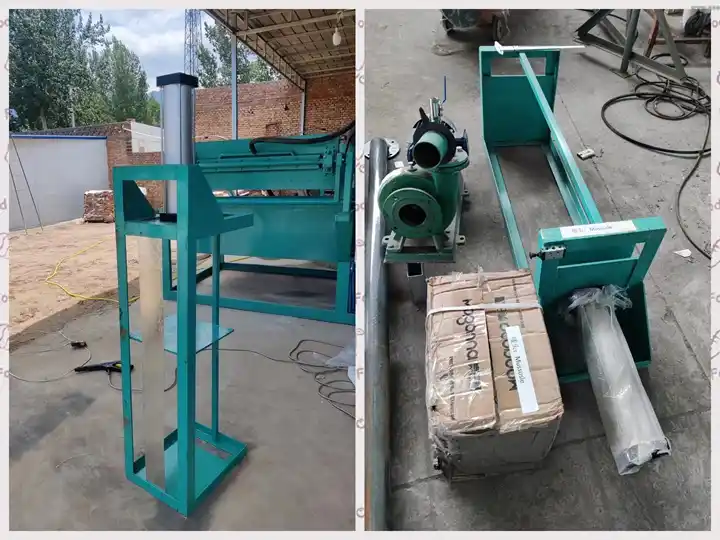
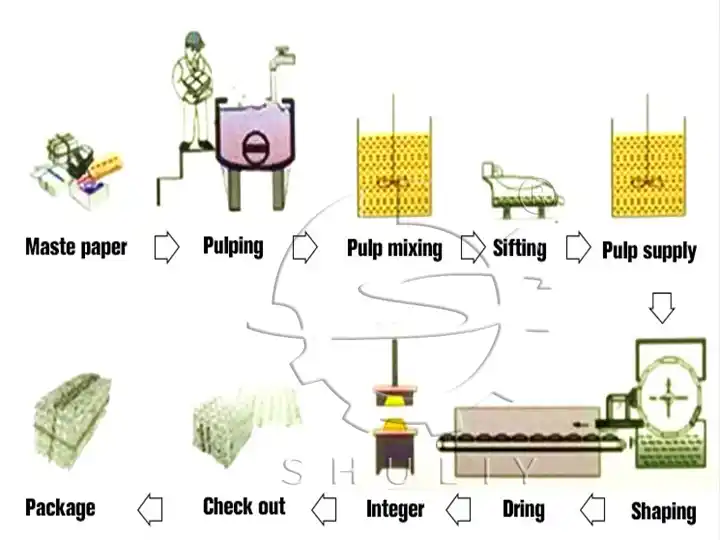
แสดงกระบวนการผลิตทั้งหมดในแผนภาพ
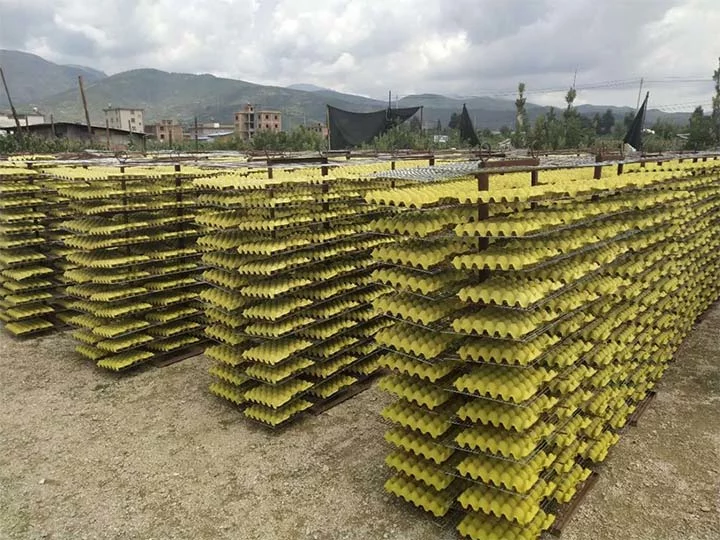
Drying Methods Compatible with Small Egg Tray Making Machines
Small egg tray making machines usually use two main drying methods: natural sun drying and drying room drying. The suitable method depends on production capacity, local climate conditions, and investment budget.
การตากแดดธรรมชาติ
Natural drying is suitable for small-scale production of 1,000–2,000 egg trays per day, especially in areas with warm and dry climates. The drying time mainly depends on the weather conditions: at 30–35°C, egg trays usually need about 2 hours to dry; at around 25°C, drying may take about 5 hours; while in cold weather of 5–10°C, it may take up to 48 hours.
After molding, wet egg trays are placed on bamboo or galvanized trays, then loaded onto drying racks and moved to an open area. The trays are dried naturally through sunlight and airflow. Generally, 100–200 drying racks are required. Each rack can hold 24–30 mesh trays, and each mesh tray can hold 3–4 egg trays.
The main advantage of natural drying is that it requires no additional energy consumption, helping reduce production costs. However, it requires more labor, larger drying space, and depends heavily on weather conditions.
Drying Room / Cart Drying
For businesses requiring more stable production, a drying room or cart drying system is a better choice. This method can dry approximately 1,000 egg trays per batch at 180–200°C, with a drying time of about 30–40 นาที.
After molding, the wet egg trays are placed on galvanized trays, loaded onto drying racks, and pushed into the drying room for hot-air drying. The drying room can accommodate 10–12 carts, with each cart holding approximately 90–100 egg trays. An additional 10 carts can be prepared for continuous circulation.
Compared with natural drying, this method allows stable production regardless of wind or rain, requires less space, and improves drying efficiency. However, it requires more labor for tray handling, cart movement, and loading/unloading operations.
บริการที่ Shuliy ให้
Shuliy ให้บริการแบบครบวงจรเพื่อให้แน่ใจว่าการทำงานของอุปกรณ์มีประสิทธิภาพและปลอดภัย:
- การออกแบบโซลูชัน: ปรับแผนสายการผลิตตามผลผลิตและพื้นที่เพื่อการทำงานที่เสถียรและมีประสิทธิภาพ
- การติดตั้งและการทดสอบระบบ: ให้คำแนะนำทั้งในสถานที่และทางไกลเพื่อเร่งการใช้งานอุปกรณ์
- การฝึกอบรมการดำเนินงาน: ฝึกอบรมผู้ปฏิบัติงานในกระบวนการทำเนื้อเยื่อ การขึ้นรูป การอบแห้ง และการบำรุงรักษา
- การสนับสนุนด้านเทคนิคและอะไหล่: จัดหาอะไหล่ระยะยาวและให้คำปรึกษาทางเทคนิคทางโทรศัพท์หรือระยะไกล
- การบำรุงรักษาหลังการขาย: ให้คำแนะนำการตรวจสอบและบำรุงรักษาเป็นประจำเพื่อยืดอายุการใช้งานของอุปกรณ์
- การปรับแต่งและอัปเกรด: ให้บริการปรับแต่งแม่พิมพ์ อัปเกรดอุปกรณ์ และขยายสายการผลิต

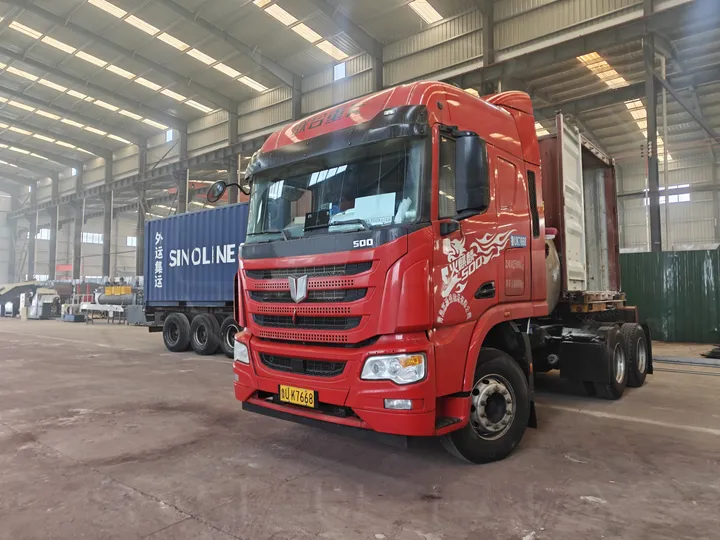
เครื่องทำถาดไข่ 1500 ชิ้น/ชั่วโมง ส่งไปยังบราซิล
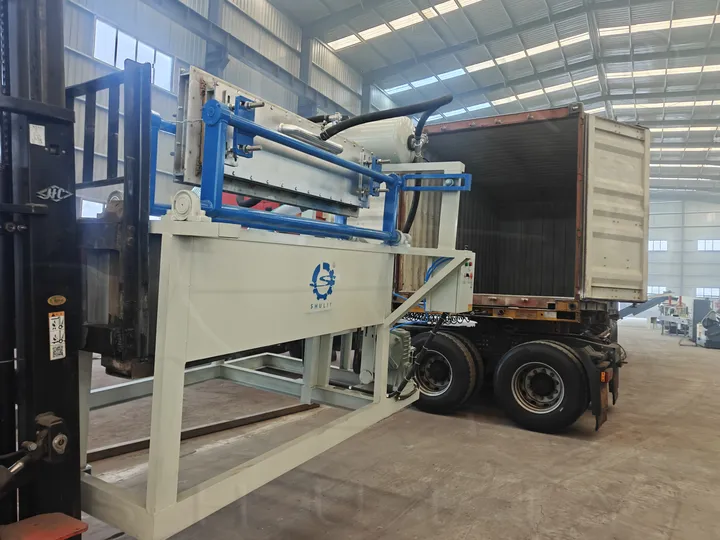
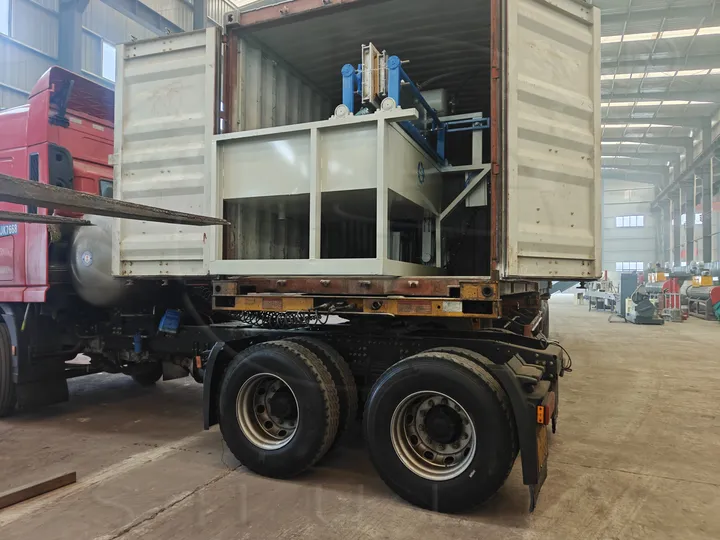
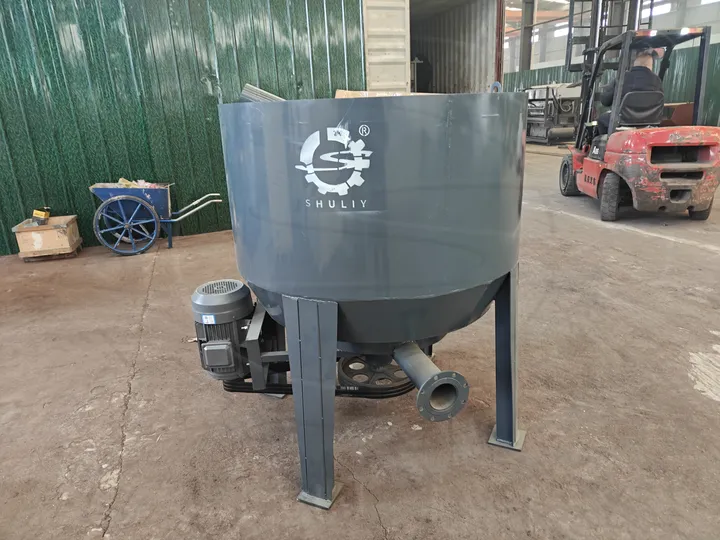
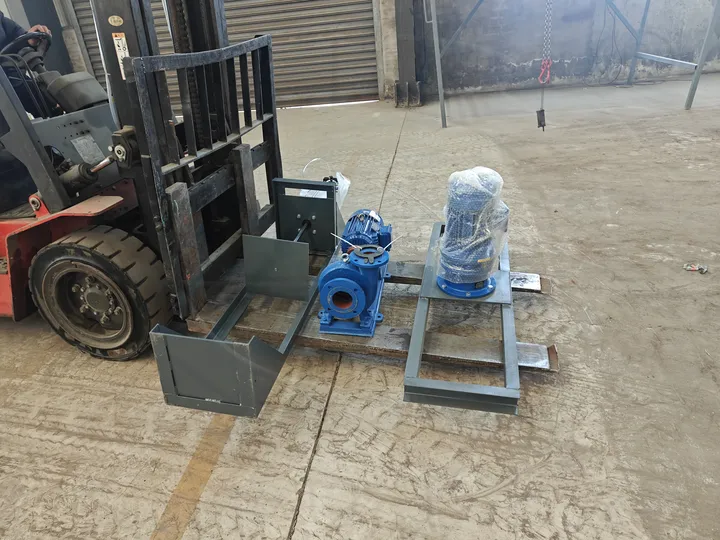
In 2026, a poultry farm in Paraná, Brazil, purchased Shuliy’s SL-1×4 egg tray making machine to produce eco-friendly paper egg trays in-house. Facing rising plastic packaging costs and increasing demand for sustainable solutions, the customer chose this 1500 pcs/h egg tray machine to improve packaging efficiency and reduce operating costs. The complete solution included the egg tray molding machine, pulping equipment, accessories, installation guidance, and technical support. After installation, the customer successfully upgraded from manual packaging to semi-automatic production, achieving higher productivity while reducing packaging expenses with recyclable pulp-based trays.
FAQ About Shuliy Small Egg Tray Machine
What is the standard size and egg diameter of the egg trays produced by this machine?
The standard 30-cell egg tray produced by this machine is approximately 29.5 × 29.5 cm, with a tray depth of about 46 มม.. It is suitable for common egg sizes with diameters ranging from 44 mm to 50 mm. For larger eggs (up to around 52 mm), customized tray molds can be provided.
How much weight can one molded egg tray hold?
Although a standard egg tray usually weighs about 65–75 g, its molded pulp structure provides excellent strength. Under normal conditions, a finished egg tray can withstand the weight of an adult person without breaking when pressure is evenly distributed.
How much moisture does a finished wet egg tray contain after molding?
After the molding process, the moisture content of a wet egg tray is usually around 60–70%. For example, an 80 g egg tray contains approximately 160 g of water, making the total wet weight about 240 g before drying.
What is the production cost of one recycled paper egg tray?
The production cost depends on local waste paper prices, electricity costs, labor, and drying methods. Taking waste paper as an example, if 1 ton of waste paper costs $200 and produces around 12,500 pieces of 80 g egg trays, the raw material cost is approximately $0.016 per tray. Other costs should be calculated according to local conditions.
Can this small egg tray machine produce trays in different colors?
Yes. Different colors can be achieved by adding suitable pigments into the pulp mixing tank before molding. Common colors include blue, green, yellow, and red, which are often used for customized packaging or brand identification.
How can I make the egg trays stronger and harder?
To increase the strength and hardness of molded pulp egg trays, additives such as lime powder or agricultural fibers like bagasse (sugarcane residue) can be added to the pulp. Adjusting pulp concentration and drying conditions can also improve tray strength.
How long is the service life of the egg tray machine mold?
Under normal operating conditions, the molding mold can usually be used for about 2 years or longer. The actual lifespan depends on production frequency, maintenance, and whether abrasive materials enter the pulp system.
Which parts of the egg tray machine are made of stainless steel?
The parts include the mold chamber, pulp tank, machine cover, and mold wire mesh.
Can the egg tray machine be used for products other than egg trays?
Yes. By changing molds, the same pulp molding technology can produce other packaging products, such as fruit trays, bottle trays, coffee cup holders, and industrial protective packaging.
Does the egg tray production process require special environmental conditions?
The machine can operate in normal factory environments. However, a well-ventilated workshop with enough drying space is recommended because molded pulp products contain high moisture after forming and require effective drying before packaging.