How to Start an Egg Tray Making Machine Business in Central Africa?
Investing in an egg tray making machine in Central Africa solves a specific problem. Poultry farms lose money because eggs break during transport. Imported packaging costs too much. Local waste paper sits unused. An egg tray making machine turns this waste into protective trays at less than half the import cost.
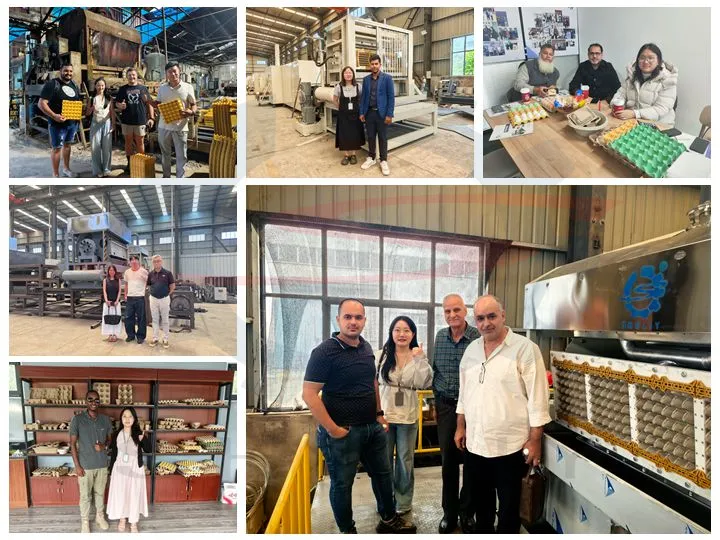
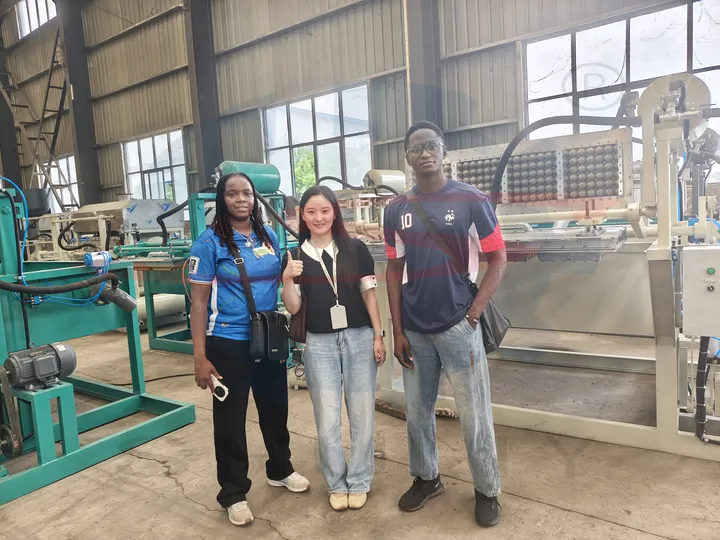
Shuliy works directly with Central African buyers. A poultry cooperative from Cameroon visited our factory last quarter. They inspected the SL-3×4 and SL-5×8 models, compared brick dryer and metal dryer options, and discussed power adaptation for their site near Douala. After the visit, they ordered a complete egg tray production line with coal-fired brick drying. Their equipment is now shipping through the Port of Kribi.
This guide explains how Central African buyers can select the right equipment. It covers machine models, drying choices, power requirements, and logistics. Use it to plan your project before contacting suppliers.
What Should You Know Before Starting an Egg Tray Making Machine Business in Central Africa?
Central Africa presents specific challenges that affect machine selection. Understanding these conditions helps avoid expensive mistakes.
- Rainfall disrupts production. The region has two rainy seasons. Sun drying fails for weeks at a time. Buyers who plan only for dry season face production stops. A mechanical dryer is essential for year-round operation.
- Fuel access varies. Natural gas pipelines exist only in major cities. Wood and charcoal are widely available but face environmental restrictions in some areas. Diesel is reliable but expensive. Coal is available near mining regions. The dryer must match local fuel supply.
- Power is unreliable. Grid electricity in Bangui, N’Djamena, and rural areas fluctuates. Factories need machines that tolerate voltage variation or run on generators. High startup current can trip breakers.
- Transport adds cost. Landlocked countries like Chad and the Central African Republic pay extra for road transport from coastal ports. Container size affects total project cost. Compact machines reduce logistics expense.
- Labor skill varies. Urban areas have technical workers. Rural sites may need simpler controls. Shuliy adjusts the control system to match operator experience.
Egg Tray Making Machine Models for Central Africa
Shuliy offers four categories of equipment. Each serves a different business scale.
Category 1: Small Single-Side Machines for Chicken Farm Self-Use
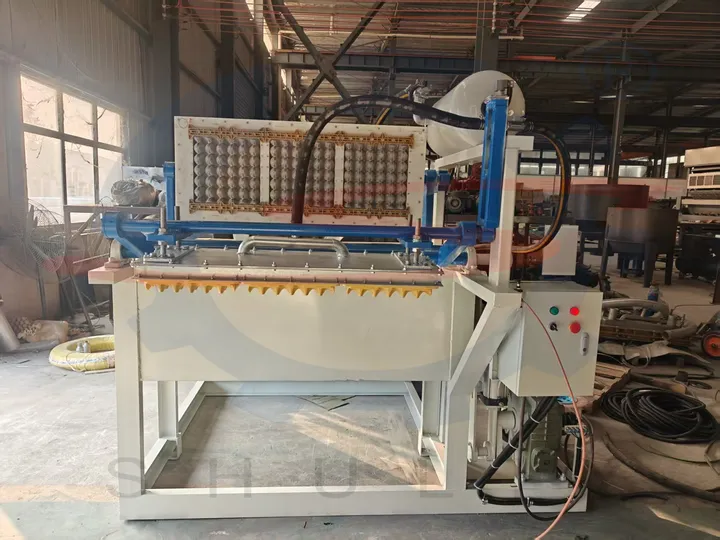
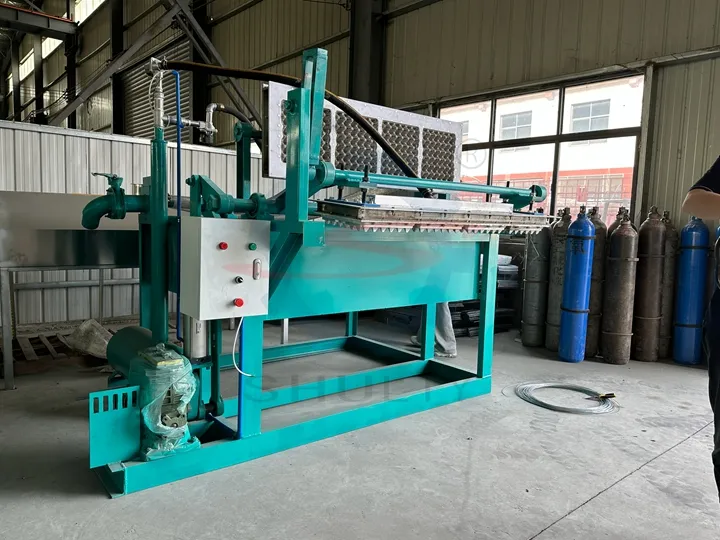
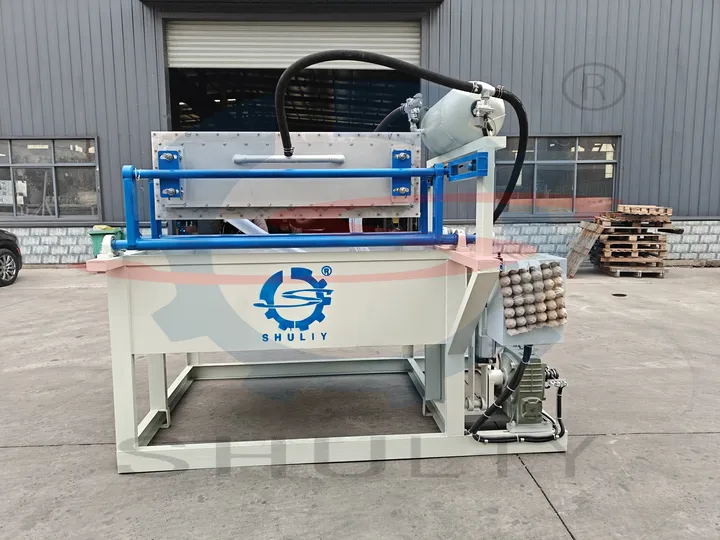
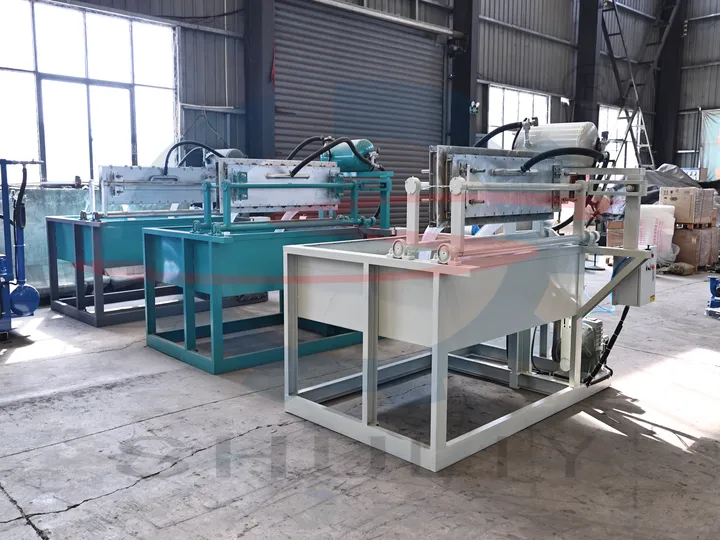
These machines produce 1,000 to 1,500 trays per hour. They suit poultry farms making trays for their own eggs. Output is modest but sufficient for farm-scale operations.
| Modell | Hourly Output | Installed Power | Machine Weight | Torkningsmetod |
|---|---|---|---|---|
| SL-1000-3×1 | 1,000 pcs | 38 kW | 2,500 kg | Sun or drying room |
| SL-1500-4×1 | 1,500 pcs | 38 kW | 3,000 kg | Sun or drying room |
These machines need 3-4 workers. Facility requirement is 50-100 square meters. They are the lowest-cost entry point. Many Central African farmers start here to test the market before expanding.
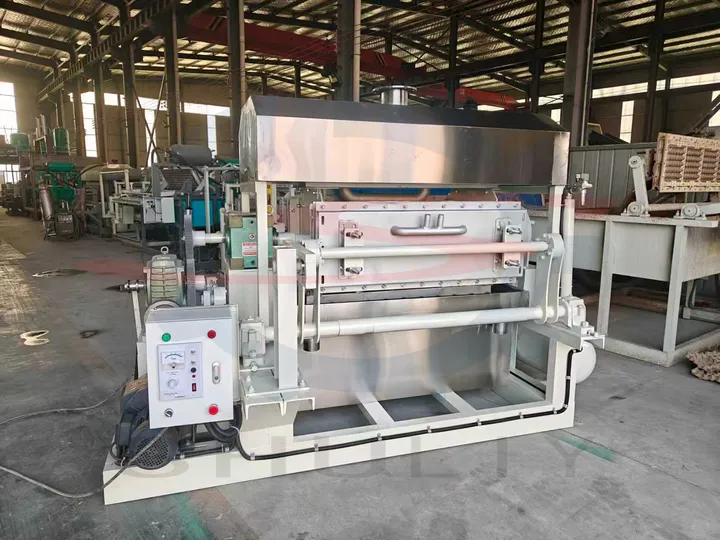
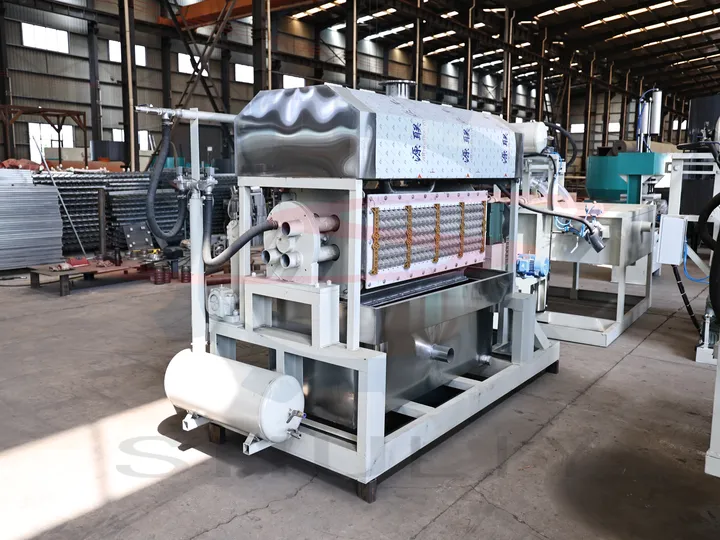
Category 2: Four-Side Rotary Machines for Commercial Supply
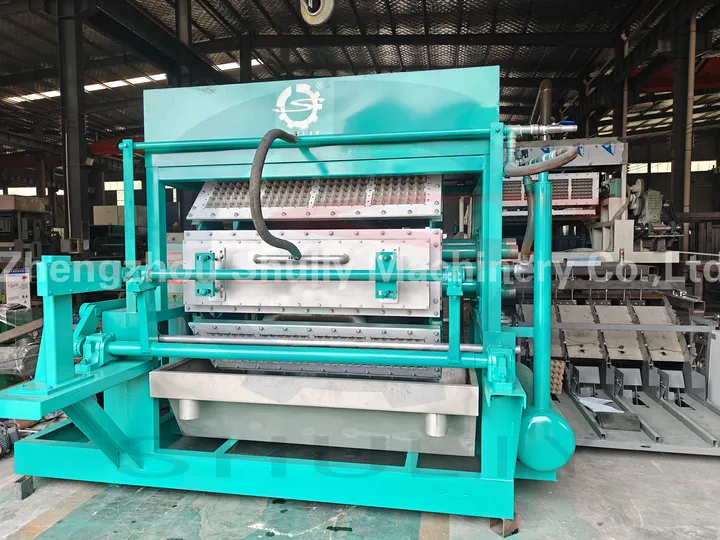
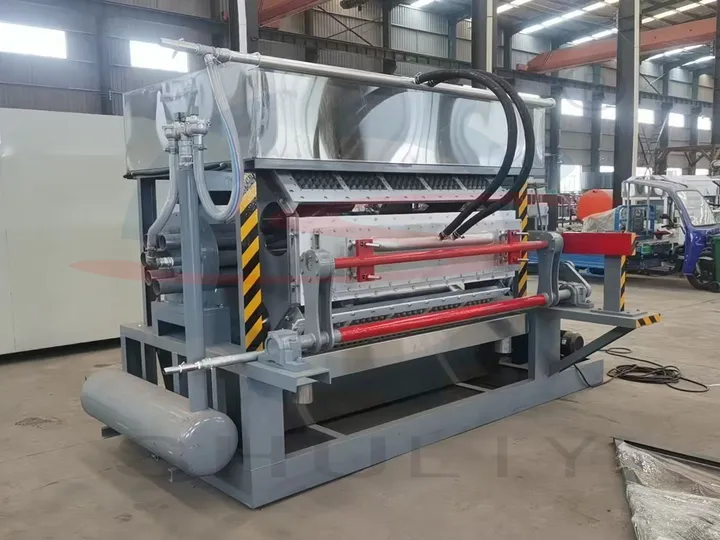
The four-side rotary design produces 2,500 to 3,000 trays per hour. The drum rotates continuously. Four mold faces form trays in sequence. This design doubles output compared with single-side machines.
| Modell | Hourly Output | Installed Power | Moldi za Uundaji | Best Application |
|---|---|---|---|---|
| SL-2500-3×4 | 2,500 pcs | 55 kW | 12 pcs | Supplying 5-10 farms |
| SL-3000-4×4 | 3,000 pcs | 60 kW | 16 st | Regional distribution |
Category 3: Integrated Production Lines for Industrial Scale
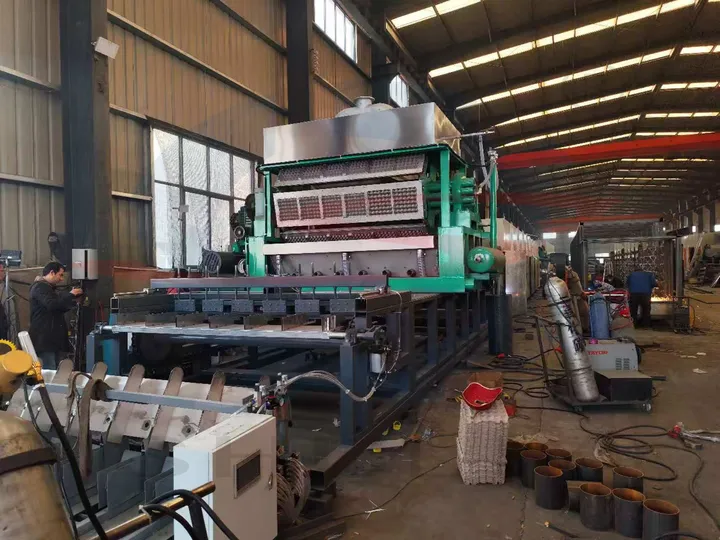
Shuliy’s egg tray production lines combine pulping, forming, drying, and baling in one workflow. Output ranges from 1,000 to 7,000 trays per hour. The system is pre-engineered to match components.
| Modell | Hourly Output | Nguvu Jumla | Line Length | Daily Output |
|---|---|---|---|---|
| SL1-4 | 1,000-1,500 pcs | 74 kW | 40 m | 20,000-30,000 pcs |
| SL3-4 | 2,000-2,500 pcs | 86 kW | 50 m | 40,000-50,000 pcs |
| SL4-8 | 4,500-5,000 pcs | 122 kW | 55 m | 90,000-100,000 pcs |
| SL5-8 | 5,000-6,000 pcs | 149 kW | 65 m | 100,000-120,000 pcs |
| SL6-8 | 6,000-7,000 pcs | 186 kW | 75 m | 120,000-140,000 pcs |
These lines suit factories serving multiple regions or exporting to neighboring countries. The brick dryer is standard. It operates at 180-200°C and handles wood, coal, or diesel.
How Do You Choose an Egg Tray Drying System for Central African Conditions?
The dryer is the most important auxiliary equipment. It affects output, quality, and operating cost. Three options work in Central Africa.
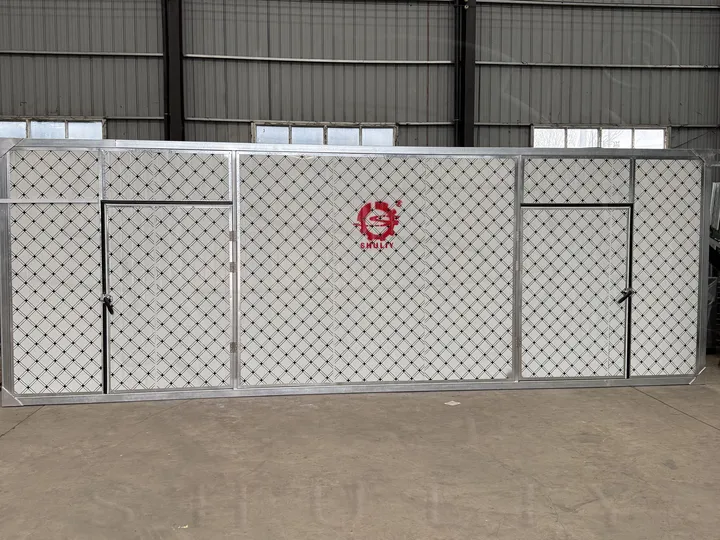
Multi-Layer Drying Room
The drying room is a batch system. Wet trays are loaded onto carts. The carts enter a heated chamber. Hot air circulates until trays dry.
| Kipengele | Specifikation |
|---|---|
| Capacity match | 1,000-3,000 pcs/h forming output |
| Temperature range | 60-120°C |
| Drying cycle | 45-90 minutes |
| Värmekälla | Electricity, diesel, or wood |
| Labor need | 1-2 workers for loading and unloading |
This system works for small and medium machines. It costs less than a tunnel dryer. It protects trays from rain and dust. The downside is batch operation. Loading and unloading take time.
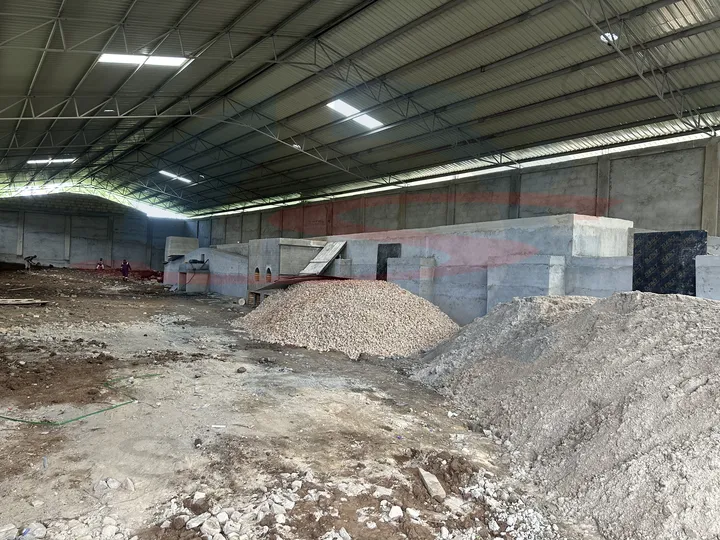
Brick Tunnel Dryer
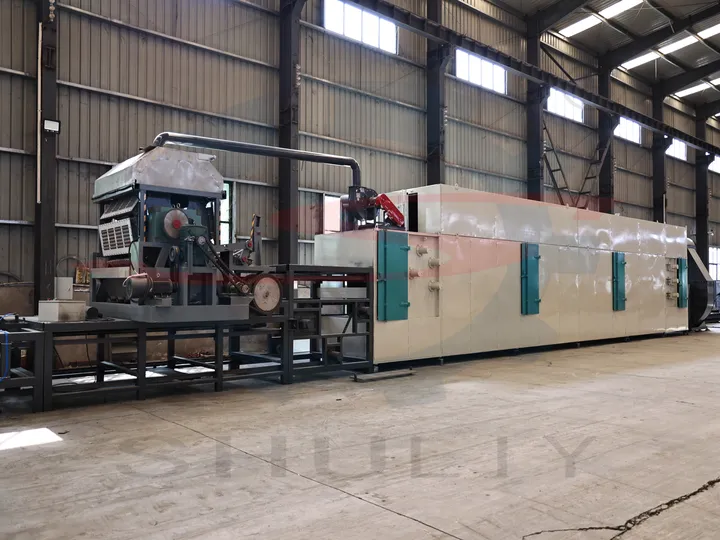
The brick dryer is a continuous system. Trays move on a mesh belt through a heated tunnel. Drying takes 15-30 minutes.
| Kipengele | Specifikation |
|---|---|
| Capacity match | 2,000-7,000 pcs/h forming output |
| Temperature range | 180-200°C |
| Belt speed | Adjustable |
| Värmekälla | Wood, coal, diesel, or natural gas |
| Labor need | Minimal |
The brick dryer is the standard choice for commercial egg tray manufacturing lines in Central Africa. It operates continuously. Output is stable regardless of weather. Fuel flexibility is a major advantage. When diesel prices rise, operators switch to wood or coal.
Kinu cha Mesh ya Chuma
The metal dryer is similar to the brick dryer but uses a metal housing. It heats faster and occupies less space.
| Kipengele | Specifikation |
|---|---|
| Capacity match | 1,500-7,000 pcs/h |
| Temperature range | 180-220°C |
| Drying time | 15-25 minutes |
| Värmekälla | Diesel, natural gas, or LPG |
| Labor need | Minimal |
This dryer suits factories with limited space. It costs more than a brick dryer. It is common in urban areas where land is expensive.
Selection Recommendation for Central Africa
| Your Situation | Recommended Dryer |
|---|---|
| Small farm, budget limited, dry climate | Sun drying plus drying room backup |
| Medium factory, humid area, wood available | Brick tunnel dryer |
| Urban factory, limited space, stable gas supply | Kikaushio cha waya wa metali |
| Large factory, coal or wood available, low fuel cost priority | Brick tunnel dryer with cast iron grates |
What Power and Electrical Requirements Should You Consider for an Egg Tray Making Machine in Central Africa?
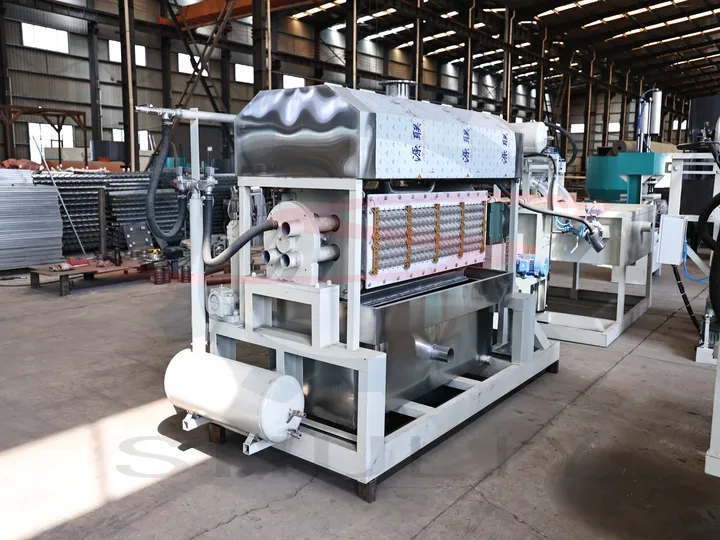
Central African countries use 220V/50Hz for household power and 380V/50Hz three-phase for industrial sites. Shuliy machines are built for 380V three-phase. For sites without three-phase power, two solutions exist.
Option 1: Install a three-phase connection. Contact the local utility. This is the best long-term solution for factories.
Option 2: Use a diesel generator. Many Central African factories rely on generators. Shuliy machines draw about 70% of installed power during normal operation. A generator with 30% spare capacity is recommended.
| Modell | Installed Power | Recommended Generator Size |
|---|---|---|
| SL-1500-4×1 | 38 kW | 50 kW |
| SL-3000-4×4 | 60 kW | 80 kW |
| SL3-4 line | 86 kW | 110 kW |
| SL5-8 line | 149 kW | 200 kW |
| SL6-8 line | 186 kW | 250 kW |
Voltage fluctuation is common. Shuliy installs voltage protection devices on all machines. These prevent motor damage during power surges.
Shipping and Site Preparation
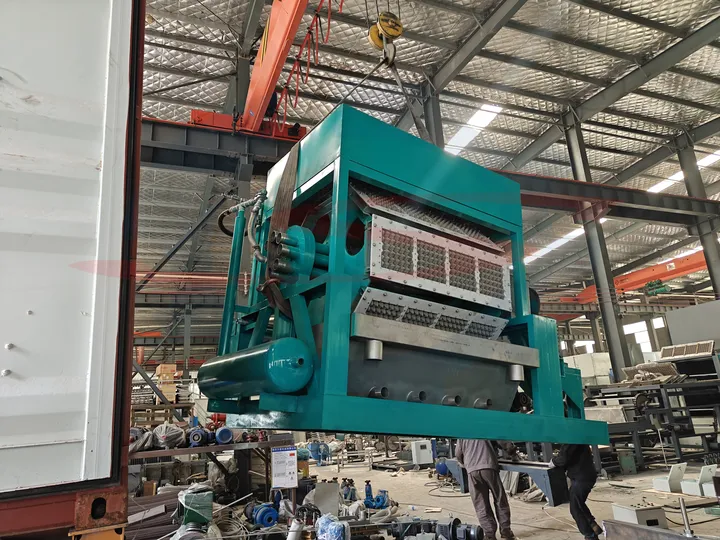
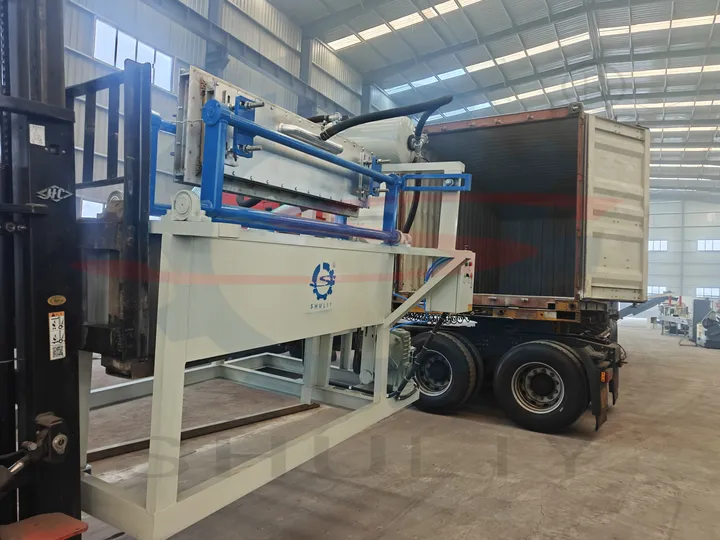
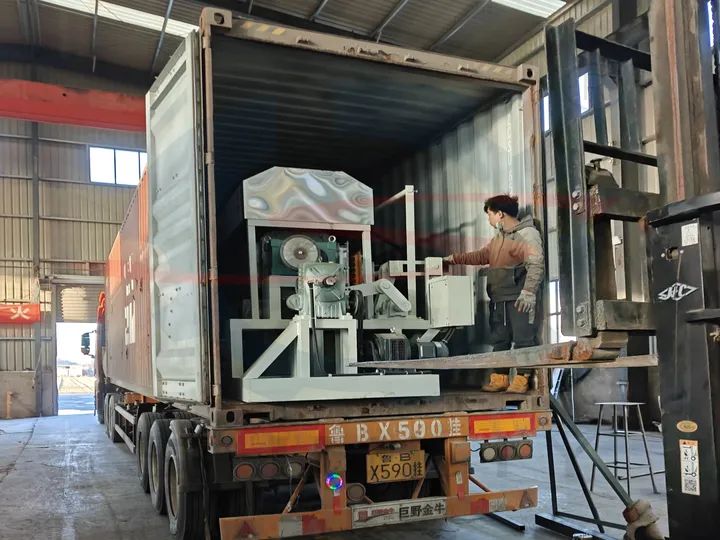
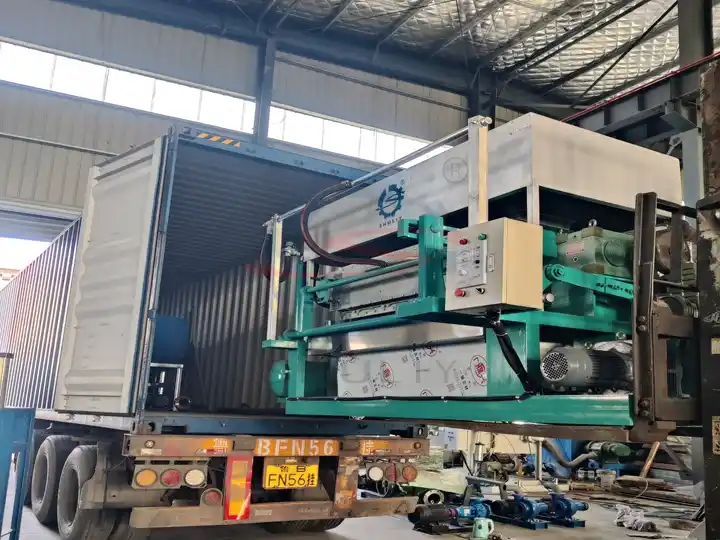
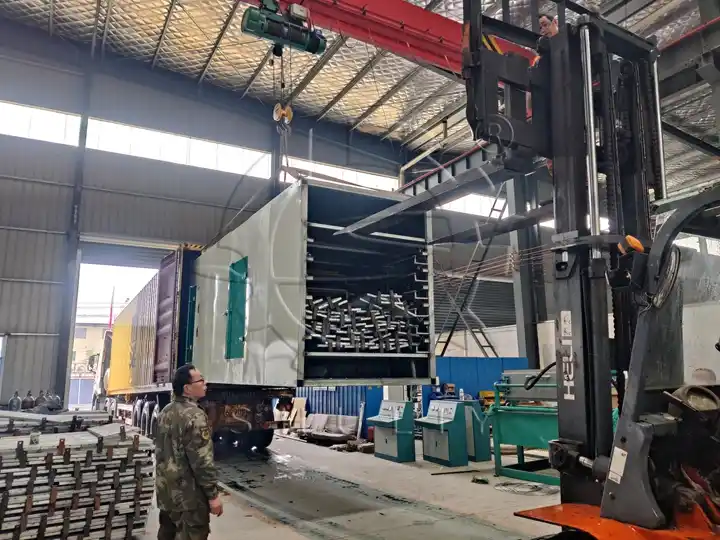
Shuliy ships machines from China to Central African ports. Coastal countries like Cameroon receive cargo at Douala or Kribi. Landlocked countries like Chad receive cargo at Douala, followed by road transport.
Container Sizes
| Aina ya Mashine | Container Requirement |
|---|---|
| SL-1000/1500 | One 40-foot container |
| SL-2500/3000 | One 40-foot container |
| SL1-4 to SL5-8 | One 40-foot container |
| SL6-8 | One 40-foot plus one 20-foot container |
Buyer Preparation Before Arrival
Prepare these items before the container arrives:
- Concrete foundation for the forming machine and dryer
- Three-phase power connection or generator installation
- Fuel storage for the dryer burner
- Raw material storage area for waste paper
- Finished product storage area
- Water supply for the pulping system
- Basic tools and lifting equipment for unloading
Shuliy provides installation drawings. These show foundation dimensions, machine positions, and utility connections. Follow the drawings to avoid rework.
Investment Logic: How to Choose Without Overspending?
Many buyers make two mistakes. They buy too small and outgrow the machine quickly. Or they buy too large and waste capital. The correct approach is to match current demand plus 30% growth.
| Current Daily Need | Rekommenderad Modell | Reasoning |
|---|---|---|
| 10,000-15,000 trays | SL-1500-4×1 | Low investment, farm self-use |
| 20,000-40,000 trays | SL-2500-3×4 or SL3-4 line | Commercial supply, room to grow |
| 50,000-80,000 trays | SL4-8 line | Industrial scale, export potential |
| 100,000+ trays | SL5-8 or SL6-8 line | Large factory, regional distribution |
Consider these factors before deciding:
- Confirmed sales volume. Do not buy a 5,000 pcs/h machine if you only sell 20,000 trays per day. Idle capacity wastes money.
- Raw material supply. Ensure you can source 200-400 kg of waste paper per hour for medium machines. One ton of dry paper produces about 12,000 trays.
- Fuel cost stability. If diesel is expensive and wood is cheap, choose a brick dryer with wood firing capability.
- Operator skill. Simple machines suit rural sites. PLC-controlled lines need trained technicians.
Why Central African Buyers Choose Shuliy?
- Direct factory engagement. Shuliy welcomes buyers to visit the factory. See machines running. Inspect build quality. Discuss customization with engineers.
- Regional experience. Shuliy has supplied egg tray machines to Nigeria, Cameroon, Gabon, Chad, and other African markets. We understand local logistics and customs procedures.
- Configuration flexibility. Every machine is built to order. Voltage, mold size, dryer length, and burner type are adjusted to your site.
- Installation support. Shuliy engineers can travel to Central Africa for commissioning. Remote video guidance is available for buyers with local technical staff.
- After-sales commitment. 12-month warranty. Spare parts supply. Lifetime technical support.
Next Step: Get Your Egg Tray Making Machine Project Assessment
Shuliy provides a free project evaluation. Send us:
- Your target daily output
- Available facility dimensions
- Local fuel type and cost
- Power supply situation
- Raw material source description
Our engineers will recommend the most suitable egg tray making machine or egg tray production line configuration. You will receive a detailed proposal including equipment list, layout drawing, and shipping plan.
Contact Shuliy today and start your Central Africa egg tray manufacturing project.