How Much Do Egg Tray Molds Cost?
The egg tray molds cost is not fixed. It changes based on material, cavity count, size, customization level, and order quantity. A standard plastic mold for a small egg tray machine costs less than an aluminum alloy mold for a high-speed rotary production line. Custom molds for egg cartons, fruit trays, or industrial packaging also carry different price tags because each requires unique design work and machining time.
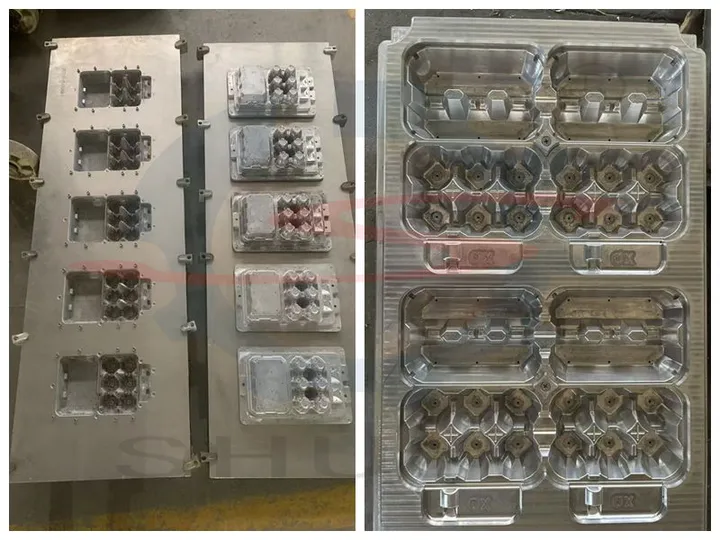
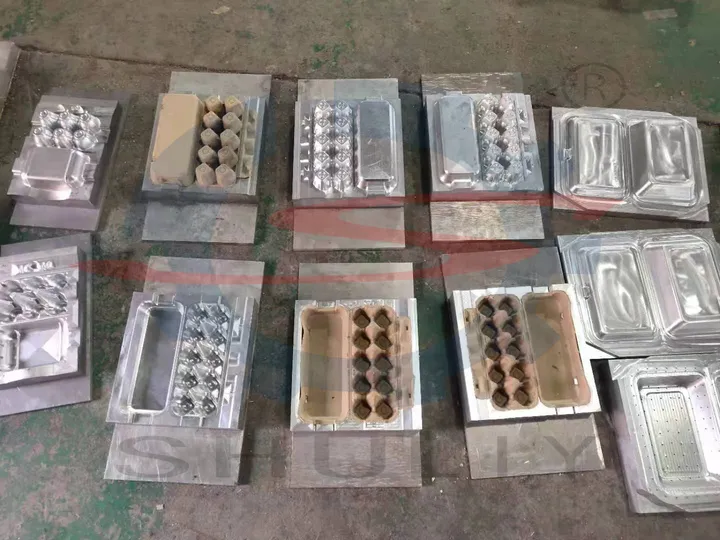
Shuliy manufactures and sells egg tray molds separately from machines. This matters for buyers who already own a pulp molding machine and only need replacement molds. It also helps producers who want to expand their product range without buying another production line. Whether you need 6-cell, 12-cell, 20-cell, or 30-cell molds, Shuliy can customize the material, dimensions, and design to match your forming machine.
Note before reading: If you are interested in the machine featured in this article, please click the three contact options on the right-hand pop-up window to get in touch with us. We will provide you with a quotation within 24 hours.
5 Factors That Affect Egg Tray Mold Cost
1. Mold Material
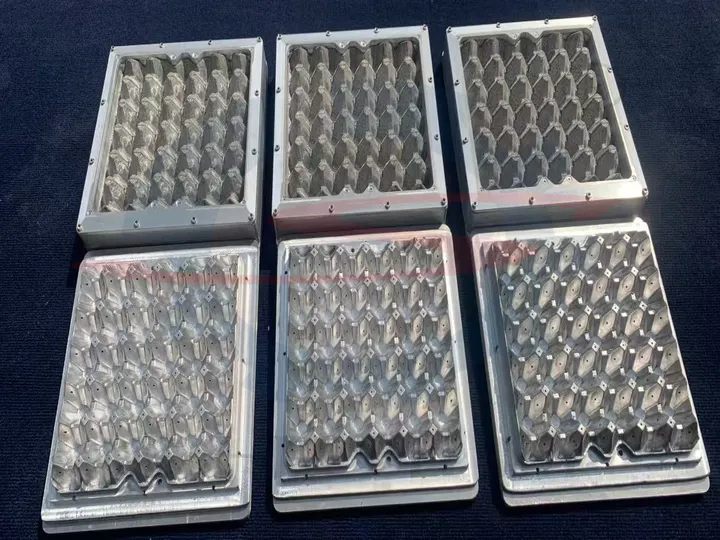
Shuliy offers three common materials for egg tray molds. Each has a different price point, lifespan, and production performance.
| Material | Lifespan | Vikt | Uhamaji wa Joto | Bora Kwa |
|---|---|---|---|---|
| Fomu ya Plastiki | 6-12 months | Nzito sana | Dålig | Uzalishaji wa majaribio, small batches, low investment |
| Half-plastic half- aluminum mold | Relatively long | Medium | Nzuri | Medium-scale production, balanced cost |
| Aluminum alloy mold | Mrefu | Mwanga | Nzuri | High-speed lines, large output, sharp tray edges |
Plastic molds cost the least upfront. They work for startups testing the market. Aluminum alloy molds cost more but last longer and produce better tray definition. For a commercial line running 10-20 hours per day, aluminum alloy usually delivers the lowest cost per tray over time.
2. Number of Cavities
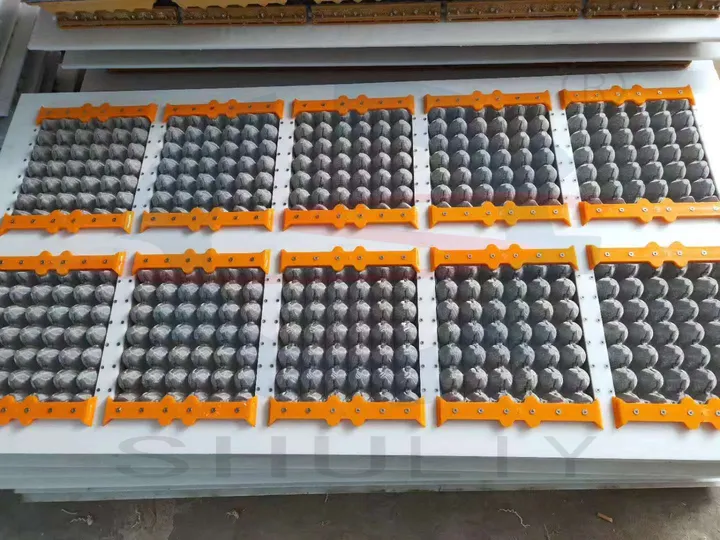
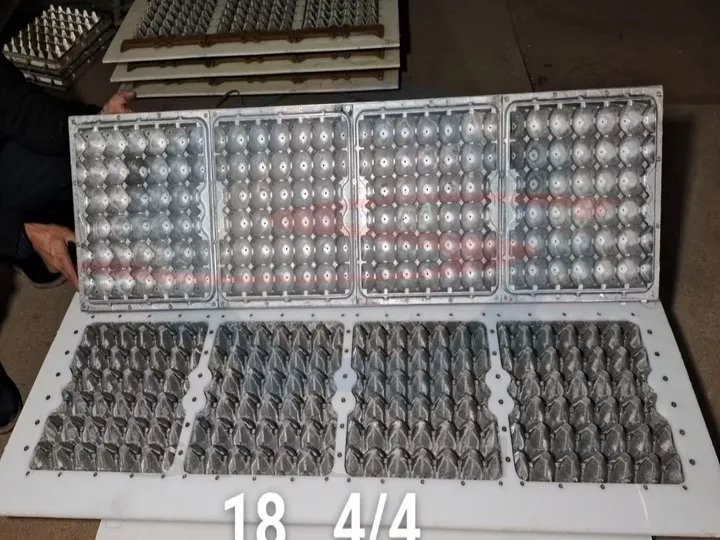
The cavity count directly affects the amount of material and machining time. Common configurations include 6, 12, 20, and 30 cavities per tray.
A 30-cell mold requires more cutting, drilling, and surface finishing than a 6-cell mold. Larger molds also need more drainage holes and stronger structural support. More cavities mean a higher price, but they also mean more trays per cycle and faster production.
3. Tray Size and Complexity
Standard egg tray molds follow common dimensions. Custom sizes add engineering cost. For example, a mold designed for extra-large eggs needs deeper cavities and thicker walls. A flip-top egg carton mold needs a lid mechanism and hinge detail. These features increase design and machining time.
Industrial molds for wine bottles, electronics, or shoes are even more complex. They often require deeper draws, reinforced edges, and special surface textures. Complex molds cost more than simple flat trays.

4. Mold Quantity
Buying one mold set costs more per unit than ordering several sets. Many customers order a full set of forming molds plus transfer molds for one production line. Others keep spare molds to reduce downtime during mold changeovers. Larger orders spread design and setup costs across more pieces, lowering the unit price.
5. Customization Requirements
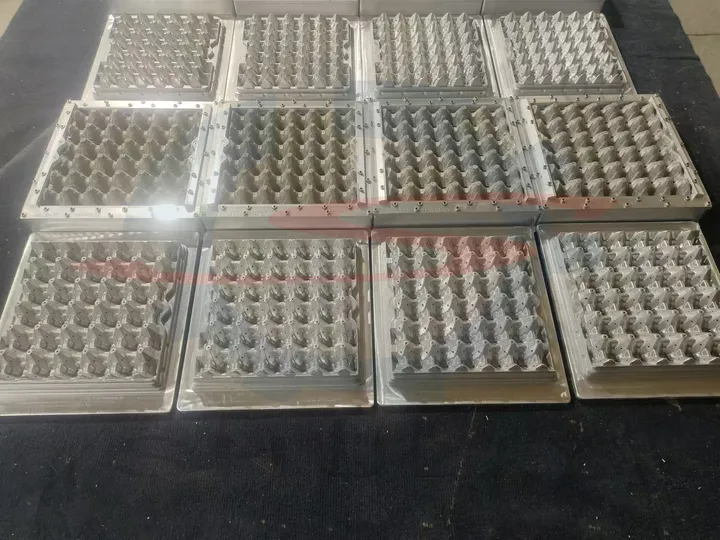
Standard molds require no extra design work. Custom molds may need:
- CAD drawing preparation
- 3D modeling and rendering
- Sample testing and adjustment
- Logo embossing or special patterns
- Reinforced frame design
Each customization step adds labor and machine time. Shuliy provides design confirmation before manufacturing so the customer knows exactly what will be produced.
Standard Mold vs Custom Mold: What Costs More?
| Factor | Standard Mold | Custom Mold |
|---|---|---|
| Design time | Minimal | 3-7 days depending on complexity |
| Sample approval | Usually not needed | Often requires sample testing |
| Lead time | Faster | Longer |
| Bei | Lower base cost | Higher due to engineering |
| Best for | Common egg tray sizes | Special products, branding, unique dimensions |
Standard molds are ready-made for 6-cell, 12-cell, 20-cell, and 30-cell egg trays. Custom molds are necessary when your eggs do not match standard sizes, when you want branded trays, or when you produce non-egg products like fruit trays or cup carriers.
Why the Cheapest Mold Is Not Always the Best Choice?
A low-cost mold may save money today but create problems later. Look at these common risks:
- Thin plastic molds wear out quickly on high-speed machines. They deform under vacuum pressure. Trays lose shape. Replacement frequency rises.
- Poor hole layout slows dewatering. Wet trays take longer to form. Output drops. Energy cost per tray increases.
- Inaccurate dimensions cause stacking problems. Trays do not nest properly. Transport damage increases.
- Weak frame design cracks after repeated use. Mold fragments damage the forming machine.
A well-made pulp molding mold pays back through longer life, faster cycle times, and fewer defective trays. For commercial production, mold quality is not a place to cut costs.
How Shuliy Customizes Egg Tray Molds?
Shuliy provides a complete mold customization service. The process follows five steps:
Step 1: Define Specifications
The customer provides cavity count, tray dimensions, egg size, and forming machine model.
Step 2: Choose Material
Shuliy recommends plastic, half-plastic half-aluminum, or aluminum alloy based on production volume and budget.
Step 3: Confirm Design
Engineers create a CAD drawing or 3D rendering. The customer reviews and approves before manufacturing begins.
Step 4: Precision Machining
Shuliy uses CNC machining and wire cutting to produce the mold. Drainage holes, cavity edges, and frame details are finished to tolerance.
Step 5: Sample Testing and Delivery
Sample trays are produced and inspected. Adjustments are made if needed. Approved molds are packed and shipped.
Mold Materials and Production Volume Matching
Choosing the right material is one of the most important cost decisions. Here is a simple guide:
| Daily Production Volume | Recommended Material | Reason |
|---|---|---|
| Below 5,000 trays/day | Plastic or half-plastic half-aluminum | Low investment, acceptable lifespan |
| 5,000-20,000 trays/day | Half-plastic half-aluminum | Balance of cost and durability |
| Above 20,000 trays/day | Aluminum alloy | Long lifespan, high forming accuracy |
A Nigerian buyer running an SL-3×4 machine for 16 hours per day would typically choose half-plastic half-aluminum or aluminum alloy molds. A university research lab testing pulp formulations might prefer plastic molds for flexibility.
Get a Custom Äggtraysform Quotation from Shuliy
The cost of an egg tray mold depends on what you need. Material, cavity count, size, and customization all play a role. Shuliy does not use fixed price lists because every project is different.
If you need replacement molds, want to expand your product range, or are planning a new egg tray production line, send us your specifications. Shuliy will recommend the right material, confirm the design, and provide a detailed quotation.
Contact Shuliy today and receive your customized egg tray mold proposal within 24 hours.