Egg Tray Machine in Guinea
Guinea’s poultry sector is expanding fast around Conakry, Kindia, and Kankan, and egg production now grows every year as the government pushes for food self-sufficiency. Every egg produced needs a tray, and most trays in the local market are still imported or made of plastic. For Guinean investors, an egg tray machine in Guinea converts local waste paper into a product with guaranteed daily demand.
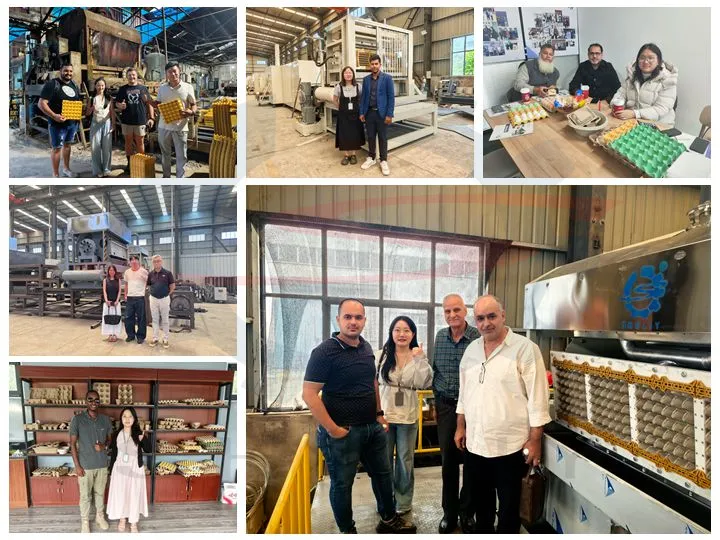
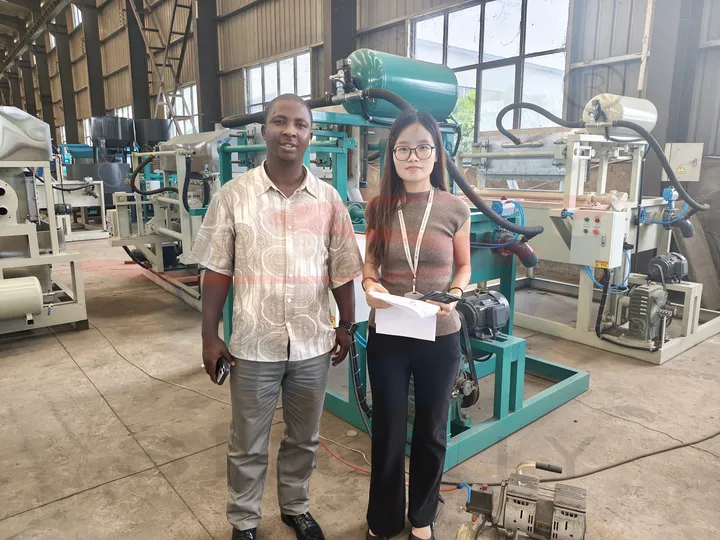
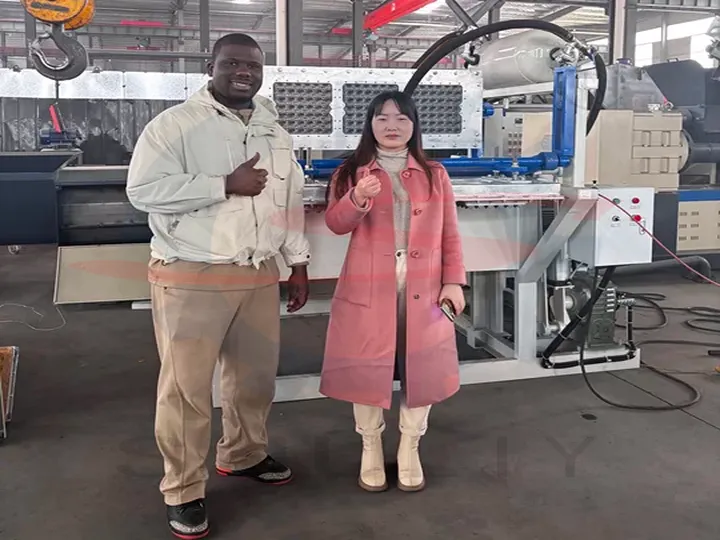
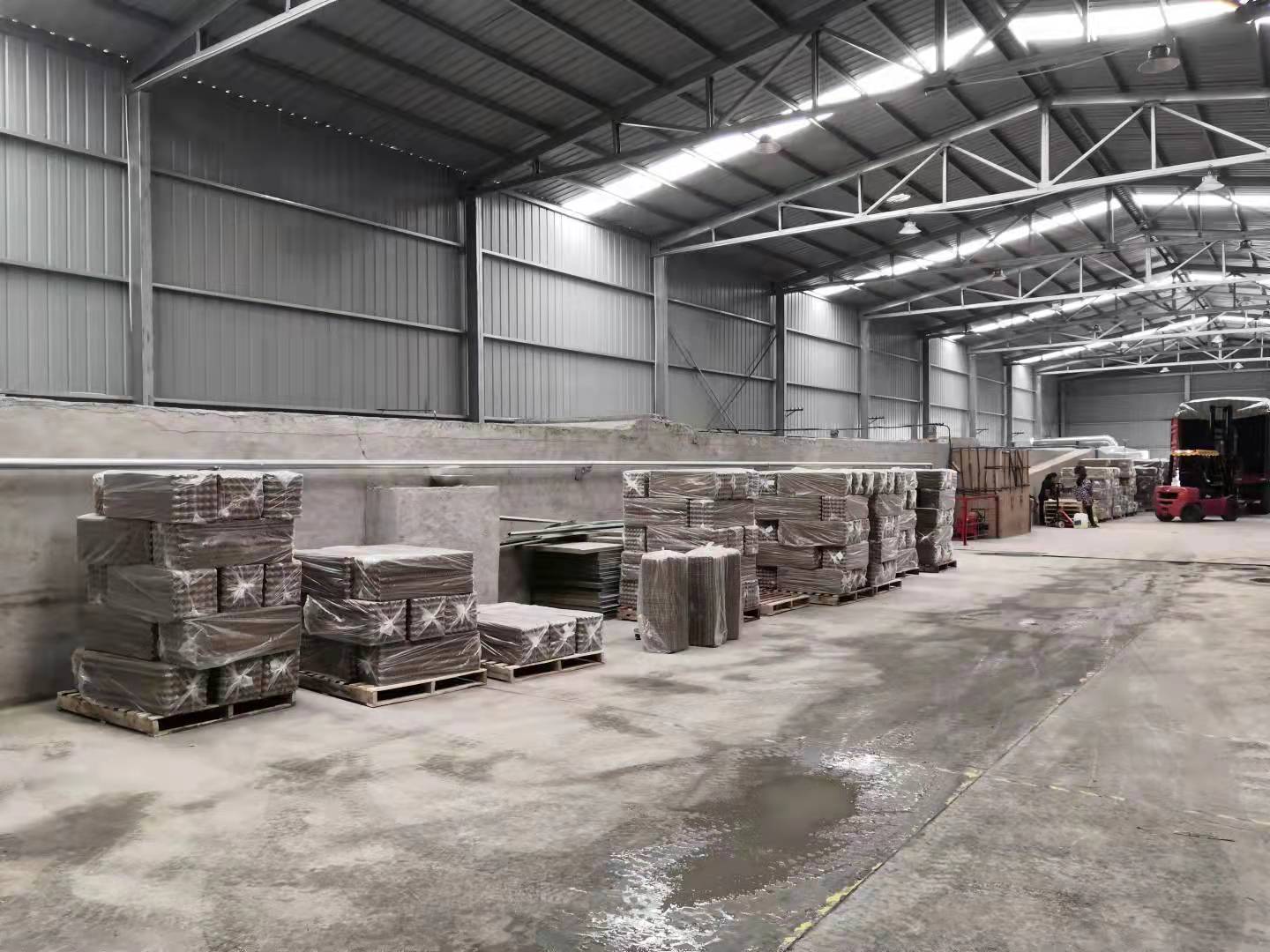
Earlier this year, a delegation of Guinean customers visited the Shuliy factory to inspect our egg tray making machine in operation. They watched the complete production process from waste paper pulping to tray molding and drying, tested finished tray strength themselves, and confirmed the 220V/380V, 50Hz power configuration for Guinea. After the visit, they selected a brick kiln drying line matched to their capacity target and fuel access. We welcome more Guinean buyers to visit our factory and see the machines running before making any decision.
The investment is accessible. A Shuliy egg tray machine costs between $8,000 and $80,000 depending on capacity and configuration, equal to approximately 69 million to 690 million Guinean Francs (GNF). This range covers small farm machines up to fully automatic commercial production lines.
This guide explains Guinea’s environmental policies, the growth of the pulp egg tray market, and how to choose the right egg tray production line for local conditions.
Why Guinea’s Environmental Policies Favor the Egg Tray Machine Business?
Guinea has taken firm steps against plastic pollution. The government banned the production, import, and sale of single-use plastic bags, and environmental authorities continue to tighten controls on non-biodegradable packaging. Municipal waste management in Conakry faces growing pressure as urban consumption rises.
Molded pulp egg trays fit directly into this policy direction. They are made from waste paper and cardboard, fully biodegradable, and recyclable after use. Unlike plastic packaging, pulp trays create no regulatory risk for farms, distributors, or retailers.
For investors, the signal is clear. An egg tray machine in Guinea is not just production equipment. It is a business aligned with national environmental policy, which protects your market position for the long term.

How Fast Is the Pulp Egg Tray Market Growing in Guinea?
Guinea’s egg market grows on three foundations: urban population growth, rising protein consumption, and government support for domestic poultry farming. Local egg production reduces reliance on imports, and every new layer farm increases daily tray demand.
Three trends drive the pulp egg tray market specifically:
| Market Driver | Impact on Egg Tray Demand |
|---|---|
| Poultry sector expansion | New layer farms around Conakry, Kindia, Mamou, and Kankan need trays daily |
| Plastic packaging restrictions | Retailers and markets shift toward molded pulp packaging |
| Waste paper availability | Cheap, abundant raw material in urban centers |
| Limited local tray supply | Most trays are still imported, leaving room for local producers |
A medium egg tray making machine producing 2,000 to 3,000 pieces per hour can supply multiple farms or a regional wholesale network. Local production also removes import delays and currency costs, giving Guinean producers a direct price advantage.
What Egg Tray Machine Models Does Shuliy Offer for Guinean Buyers?
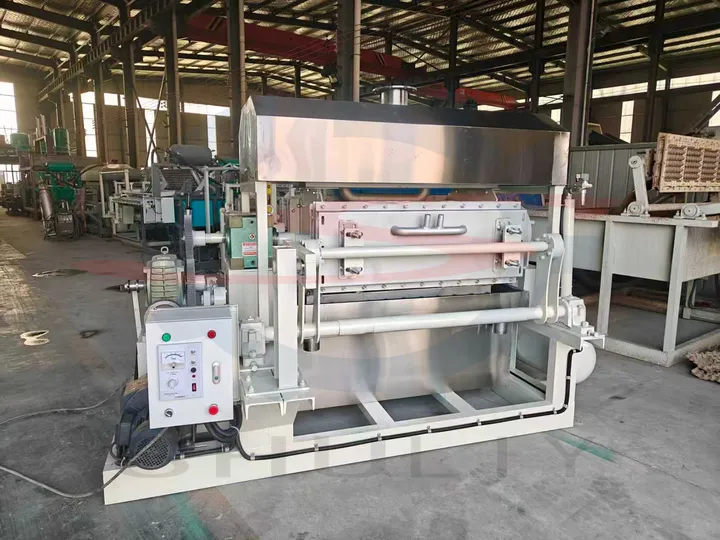
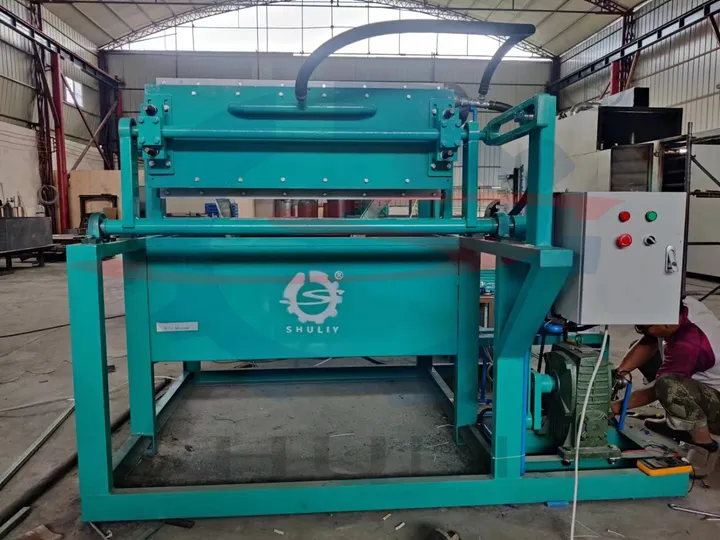
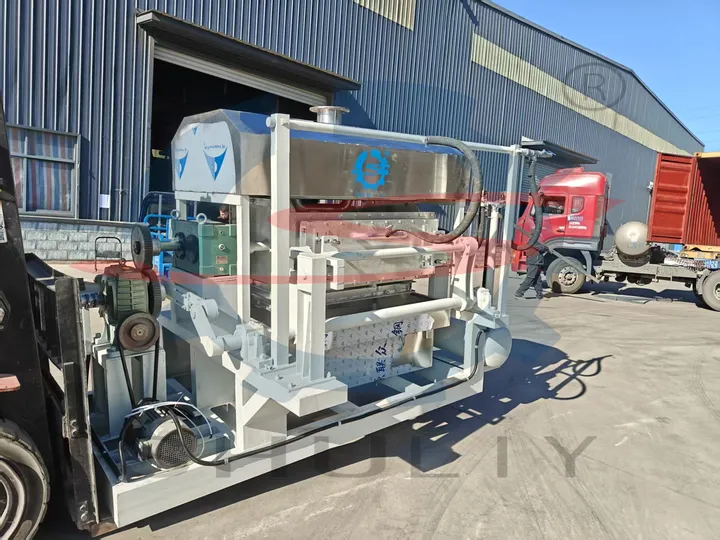
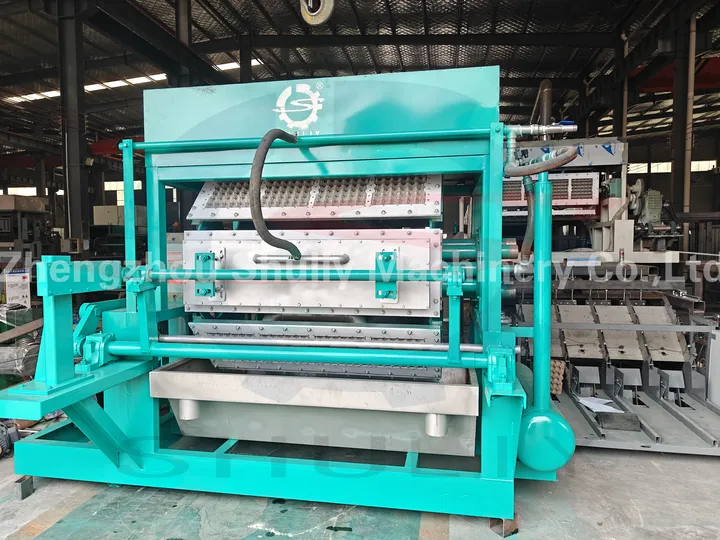
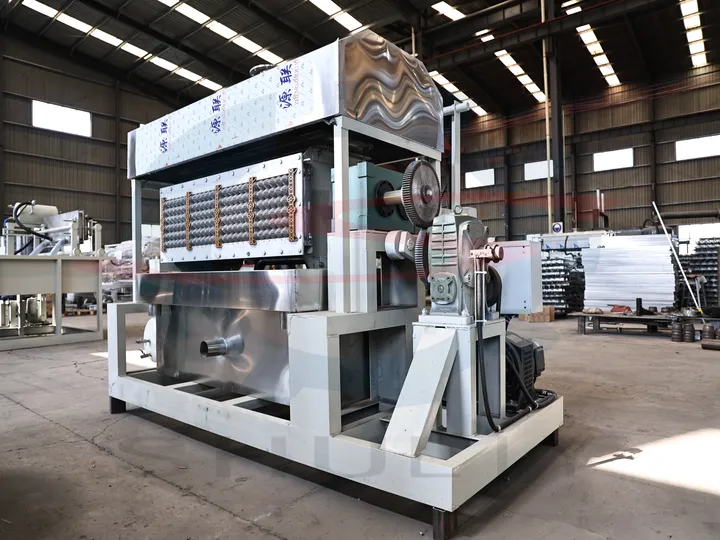
Shuliy supplies a complete range of machines matched to different investment levels. Every model converts waste paper, cardboard, and old newspapers into finished trays through pulping, molding, and drying.
| Modell | Kapazität | Leistung | Geeignet Für |
|---|---|---|---|
| SL-1000 / SL-1500 | 1,000–1,500 pcs/h | 38–50 kW | Kleine Betriebe, Start-ups |
| SL-2500 / SL-3000 | 2,000–3,000 pcs/h | 70–95 kW | Regional distributors |
| SL-4×4 / SL-5×8 | 4,000–5,000 pcs/h | 120–150 kW | Commercial packaging plants |
| SL-6×8 | 6,000–7,000 pcs/h | Up to 186 kW | Large industrial producers |
Each paper egg tray machine uses interchangeable molds. The same line produces 30-cell egg trays, 6-cell to 12-cell egg cartons, fruit trays, and cup carriers by changing the mold set. One machine can therefore serve farms, supermarkets, and market wholesalers at the same time.
Which Drying System Works Best for Guinea’s Climate?
Guinea has a hot tropical climate with a long rainy season from May to November. High humidity makes open-air natural drying unreliable for most of the year, so the drying system is the most important configuration choice for Guinean buyers.
Shuliy offers three drying options for the egg tray production line:
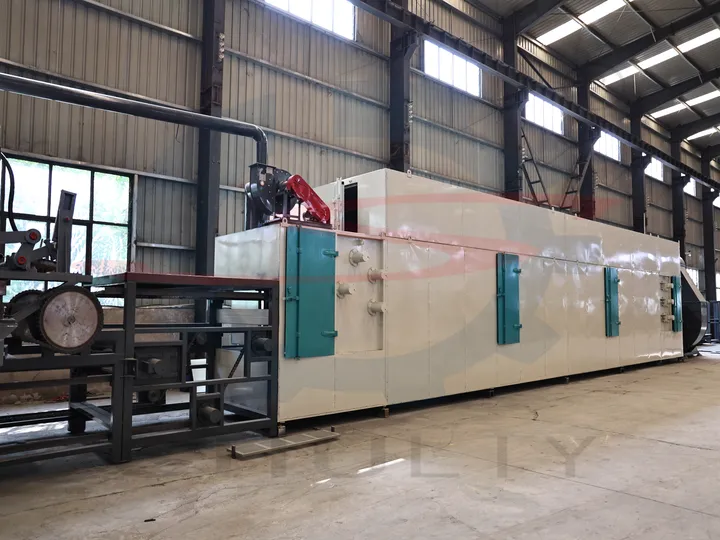
- Brick kiln drying. This is the most practical choice for Guinea. It uses coal, wood, or biomass fuel, performs reliably in humid rainy seasons, and keeps operating costs low where land and fuel are affordable. Most of our West African customers choose this system.
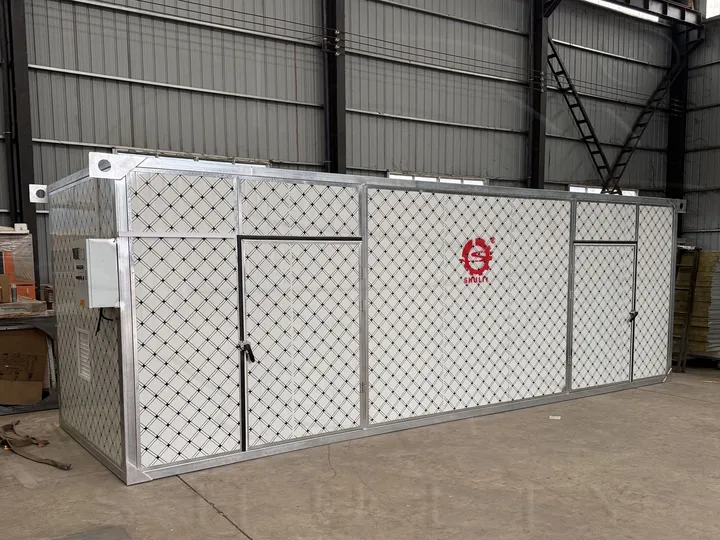
- Metal drying room. This enclosed system heats faster and occupies less space. It suits 2,000 to 4,000 pieces per hour and factories with limited land.
- Multi-layer belt dryer. This fully automatic system dries continuously at 180°C to 200°C. It suits lines above 5,000 pieces per hour and reduces labor to a minimum.
Our engineers confirm the best drying configuration after reviewing your target output, fuel prices, and factory site.
How Is the Egg Tray Machine Adapted to Guinea’s Power Supply and Logistics?
Guinean industrial power runs on 220V or 380V at 50Hz. Every Shuliy egg tray machine for Guinea is built with motors and control panels matched to this standard before leaving our factory. We confirm your exact voltage and phase during the quotation stage, so the line connects directly to your local grid.
For shipping, orders arrive through the Autonomous Port of Conakry, the country’s main container gateway. Shuliy handles complete export documentation, container loading plans, and customs paperwork. Sea freight from our factory to Conakry typically takes 35 to 45 days.
Why Do Guinean Buyers Choose Shuliy as Their Eierkartonmaschine Manufacturer?
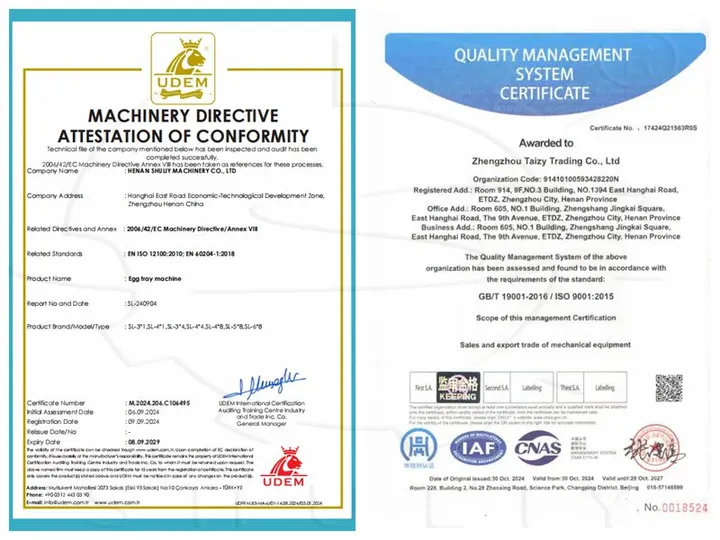
Shuliy has delivered egg tray production lines to more than 40 countries, including multiple projects across West Africa. Guinean customers choose us for practical reasons:
- We engineer each line as a complete system. Pulping capacity, molding speed, and drying output are calculated together, so you never pay for capacity you cannot use.
- We build molds in-house and customize cavity dimensions to local egg sizes, so your trays fit Guinean market standards from day one.
- We support installation with engineer guidance, operator training, and lifetime technical service with French-language communication available for Guinean customers.
Start Your Egg Tray Business in Guinea Today
Guinea’s environmental policies, expanding poultry sector, and undersupplied tray market create a rare window for egg tray machine investment. Whether you run a layer farm near Kindia or plan a packaging plant in Conakry, the right machine turns local waste paper into a product with daily demand.
Contact Shuliy with your target capacity, raw material type, and city location. Our engineers will reply within 24 hours with a full egg tray production line proposal, including equipment list, factory layout, and a quotation in both US dollars and Guinean Francs. You are also welcome to visit our factory and see the machines in operation, just as our Guinean customers did.