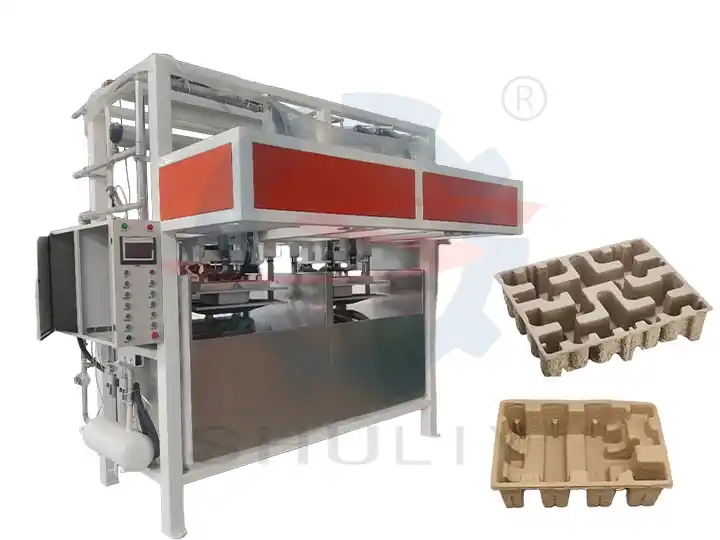
How Much Does an Industrial Packaging Tray Production Line Cost?
An industrial packaging tray production line costs between 30,000 and 80,000 USD depending on capacity, automation level, and configuration. These figures are approximate ranges based on current market quotations. Final prices depend on specific technical requirements and shipping terms.
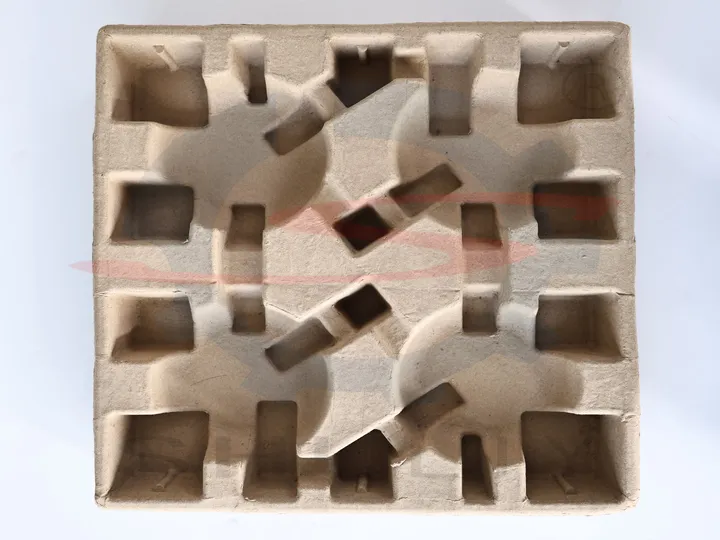
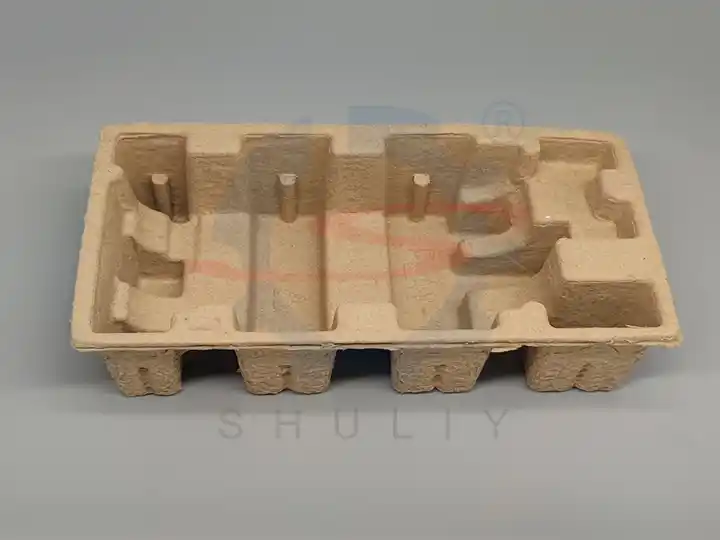
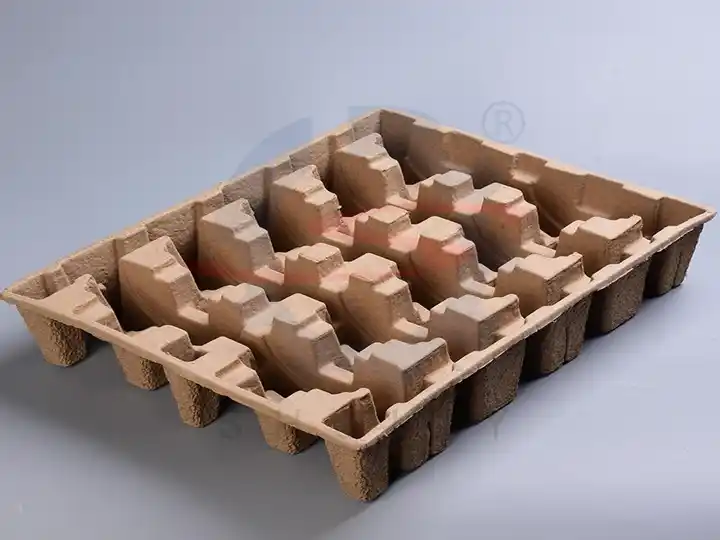
This equipment is not a standard egg tray machine adapted for industrial use. It is purpose-built pulp molding machinery for manufacturing heavy-duty protective trays. The system processes waste paper, cardboard, kraft pulp, and bamboo fiber into precision-formed packaging for electronics, automotive components, medical devices, and industrial parts. Wall thickness reaches 2-5mm. Load capacity ranges from 20kg to 80kg per tray. The production line integrates high-consistency pulping, deep-draw vacuum forming with pressure assistance, and controlled temperature drying to create biodegradable packaging that replaces plastic foam and EPS inserts.
What Does the Industrial Packaging Tray Production Line Include?
A complete industrial packaging tray production line consists of five integrated modules. Each module is engineered to handle the demands of thick-wall tray manufacturing.
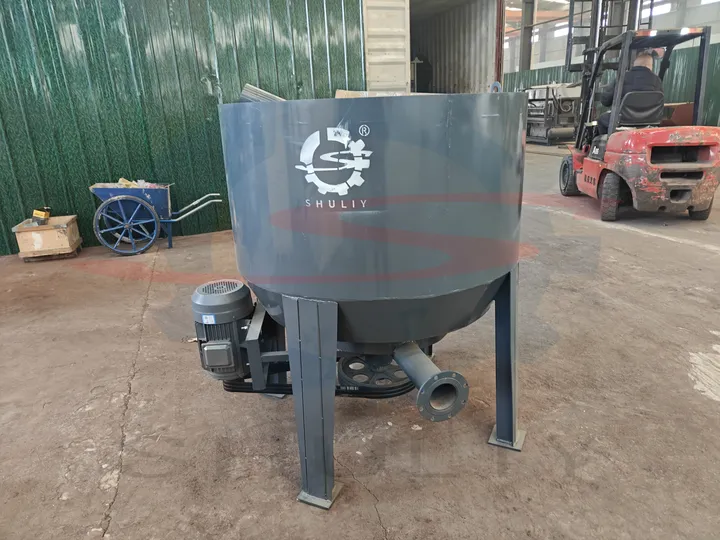
1. Pulping and Preparation System
Industrial trays require higher pulp consistency than egg trays. The system uses 4-5% consistency slurry to achieve structural density.
| Component | Chức năng | Typical Specification |
|---|---|---|
| Hydropulper | Breaks down fiber | 2-5 m³ capacity |
| High-density cleaner | Removes contaminants | Essential for industrial grade |
| Máy tinh chế | Improves fiber bonding | 15-30 kW |
| Additive system | Anti-static, water resistance | Optional dosing unit |
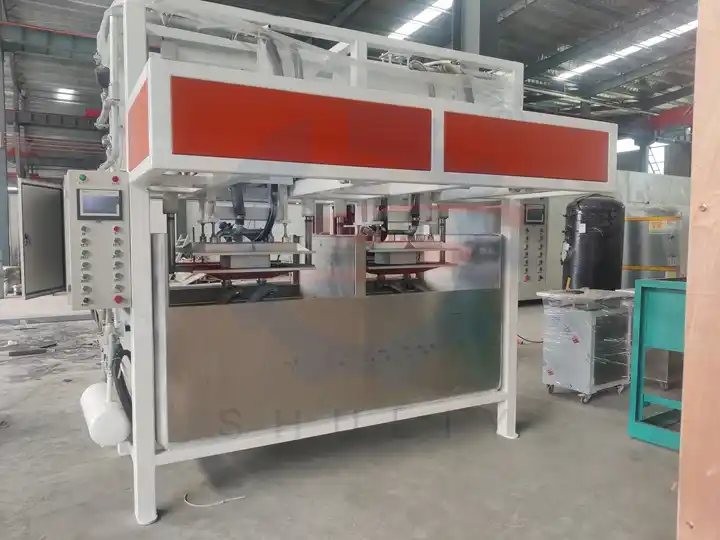
2. Máy tạo hình khay đóng gói công nghiệp
The forming machine uses deep-draw vacuum technology. Molds are CNC-machined aluminum alloy or copper.
| Tính năng | Thông số kỹ thuật |
|---|---|
| Forming depth | 80-150mm |
| Áp lực chân không | 0.06-0.09 MPa |
| Cycle time | 15-45 seconds |
| Mold material | Hard anodized aluminum or copper |
| Tolerance | ±0.1mm |
Hệ thống sấy khô
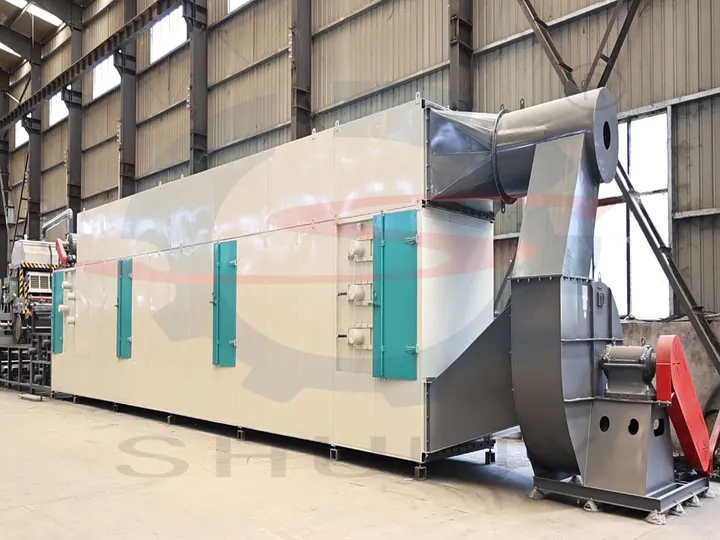
Thick trays retain more moisture. The dryer operates at higher temperatures than egg tray equipment.
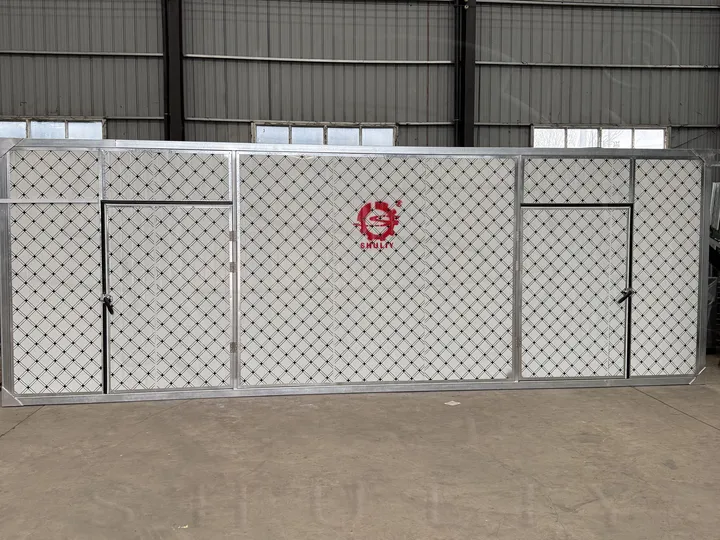
| Loại | Temperature | Thời gian sấy | Tốt nhất cho |
|---|---|---|---|
| Brick tunnel dryer | 180-200°C | 20-40 min | Medium to large output |
| Máy sấy băng lưới kim loại | 180-220°C | 15-30 min | High output, limited space |
| Multi-layer drying room | 60-120°C | 60-120 min | Small batch, varied products |
How Does the Production Process Work?
The manufacturing process follows six stages optimized for heavy-duty trays.
Stage 1: Raw Material Sorting
Waste paper or pulp is screened to remove plastic, metal, and contaminants. For electronics packaging, anti-static additives are introduced at this stage.
Stage 2: High-Consistency Pulping
The pulper operates at 4-5% consistency. This creates stronger fiber bonding than the 2-3% used for egg trays. The slurry passes through a refiner to improve fibrillation.
Stage 3: Precision Vacuum Forming
Pulp is pumped to the forming station. Vacuum suction at 0.06-0.09 MPa draws fibers onto the mold. For deep trays, a pre-forming stage deposits initial layers, followed by pressure-assisted forming to compact walls.
Stage 4: Wet Pressing (Optional)
Some applications require wet pressing. A platen applies 5-20 tons of pressure to increase density and reduce water content.
Stage 5: Controlled Drying
Trays enter the drying tunnel. Temperature zones progress from 160°C to 200°C. Belt speed is slower than egg tray production to prevent cracking.
Stage 6: Trimming and Inspection
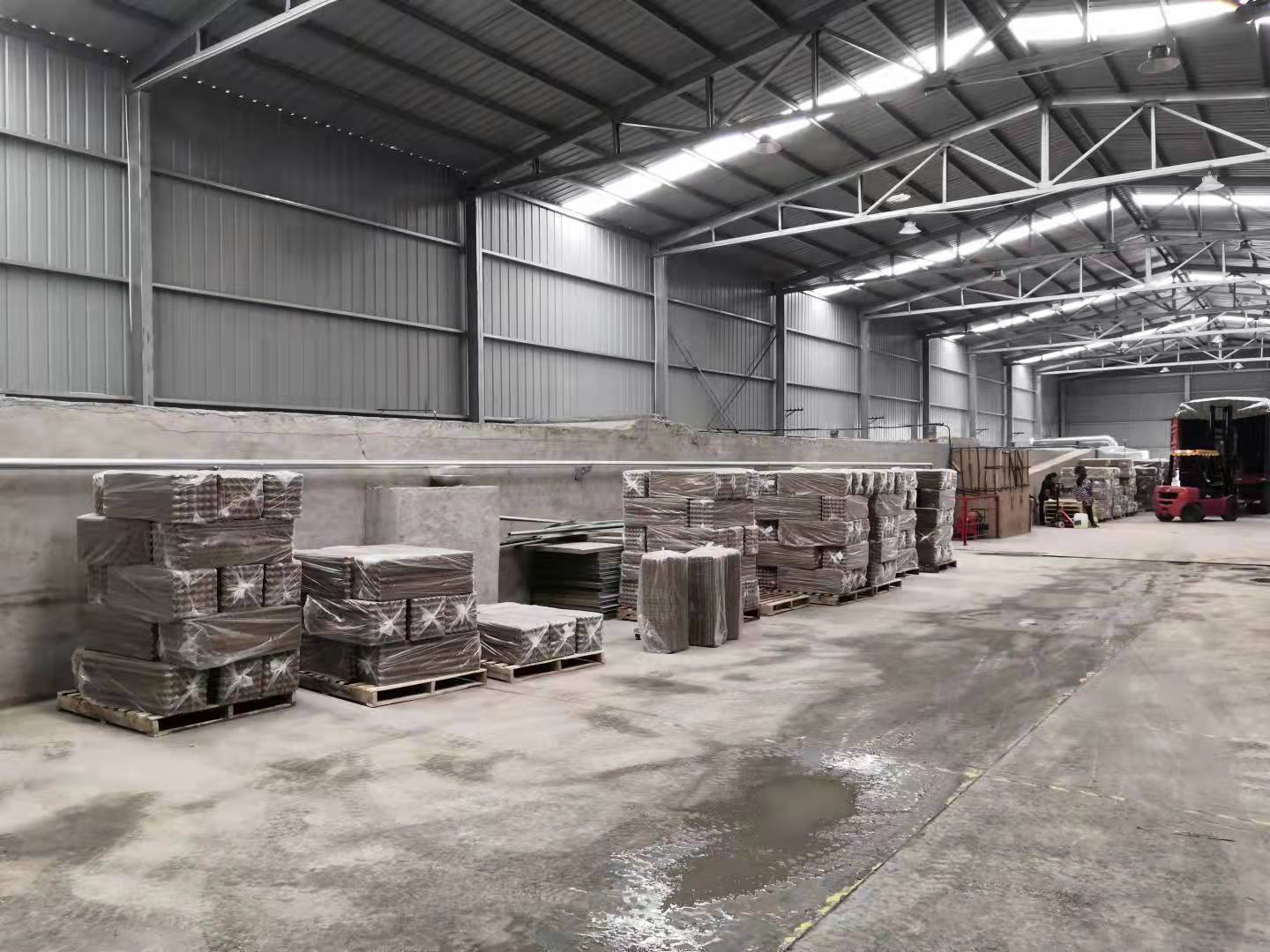
Dried trays are inspected for dimensional accuracy. Trimming removes flash. Finished trays are stacked for shipment.
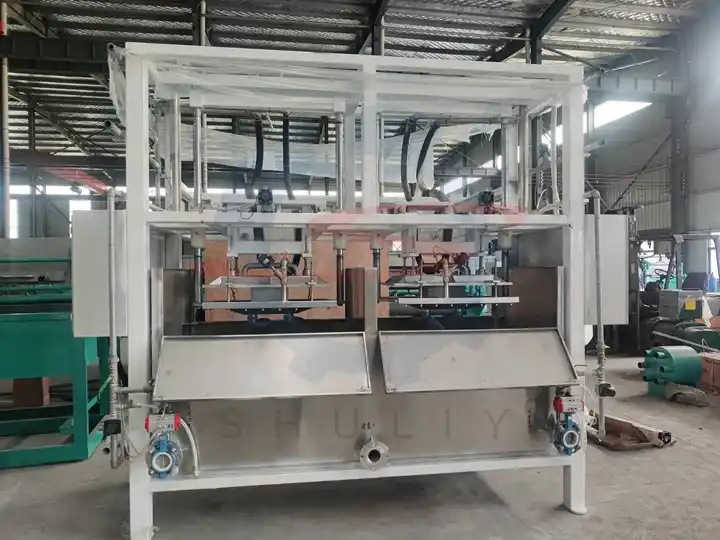
Thông số kỹ thuật
| Mô hình | SL-R2000 |
| Dung lượng | 1000-2000 chiếc/giờ |
| Công suất | 55kw |
| Điện áp | 380V, 50HZ |
| Sử dụng bã | 200kg/giờ |
| Sử dụng nước | 400kg/giờ |
| Kích thước (mm) | 2900*1800*1800 |
Which Industries Use Industrial Packaging Trays?
The industrial packaging tray manufacturing line produces protective packaging for diverse sectors.
| Industry | Tray Type | Key Requirement |
|---|---|---|
| Electronics | Circuit board trays, phone component trays | Anti-static, precision fit |
| Automotive | Gasket trays, filter packaging, brake components | Oil resistance, impact protection |
| Medical | Surgical instrument trays, vial packaging | Sterilization compatible |
| Glassware | Bottle trays, laboratory glass trays | Cushioning, edge protection |
| Hardware | Fastener trays, tool packaging | Rust prevention, compartmentalized |
| Appliances | Motor packaging, control panel trays | Scratch prevention, rigidity |
By changing molds, the same line produces different tray formats. Mold changeover takes 30-60 minutes.
Why the Industrial Packaging Tray Production Line Costs More Than Egg Tray Equipment?
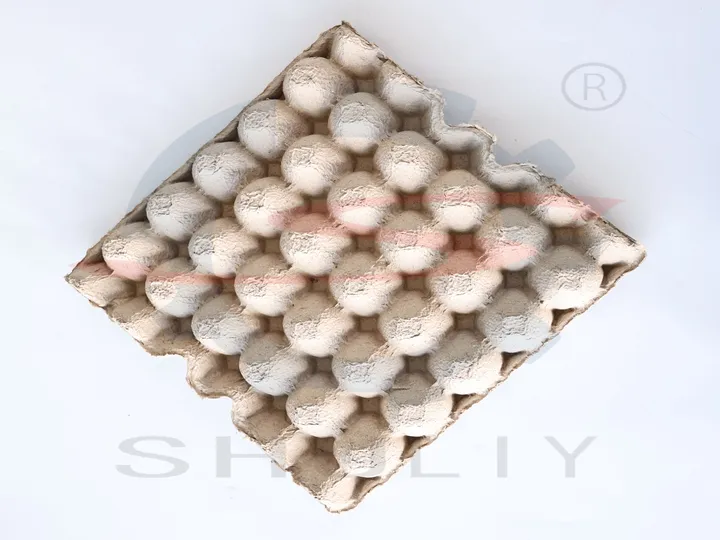
Buyers sometimes ask why an industrial packaging tray molding line costs 3-5 times more than a standard egg tray line. The answer lies in engineering requirements.
- Deeper molds require CNC machining with tight tolerances. Copper molds for complex geometries add cost.
- Higher vacuum power demands larger pumps and reinforced frames. The forming station must withstand repeated deep draws.
- Longer drying time means extended tunnels and higher fuel consumption. Thick trays need 20-40 minutes versus 10-20 minutes for egg trays.
- Precision controls are essential for consistent wall thickness. PLC systems with multi-zone temperature control cost more than basic panels.
- Material quality standards are stricter. Medical and electronics trays require food-grade or anti-static additives.
What Factors Determine the Final Price?
Several factors change the price from the base range.
- Tray complexity: Simple flat trays cost less than deep-draw automotive trays
- Mold material: Aluminum alloy vs copper vs plastic
- Automation level: Manual loading vs automatic transfer
- Drying method: Brick vs metal vs drying room
- Voltage adaptation: 380V standard vs custom voltage
- Shipping destination: Container size and inland transport
- Compliance requirements: Medical or food-grade certifications
What Common Production Challenges Can This System Solve?
| Challenge | Giải pháp Shuliy |
|---|---|
| Plastic foam bans in export markets | Biodegradable pulp trays meet EU, US, Japan regulations |
| Product damage during shipping | Custom mold design creates exact fit, reduces movement |
| High cost of molded plastic inserts | Waste paper raw material costs 60-80% less than resin |
| Inconsistent tray quality | PLC-controlled forming ensures uniform thickness |
| Need for sterile packaging | Stainless steel contact parts, washable molds |
| Heavy products crush trays | High-density pulp and 4- 5 mm walls support 80kg loads |
Tại sao chọn Shuliy?
- Engineering capability: CAD/CAM mold design with sample testing before production.
- Material flexibility: Processes recycled paper, virgin pulp, bamboo, and bagasse.
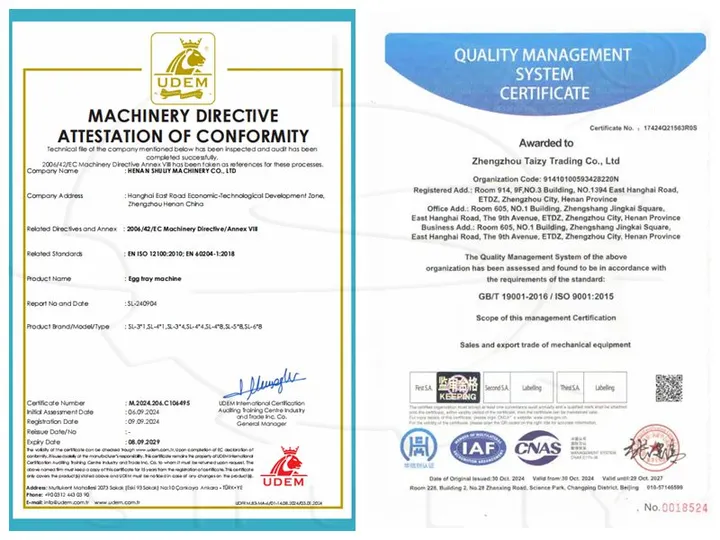
- Compliance support: Documentation for ISO 9001, REACH, and CE.
- After-sales service: 12-month warranty, mold repair, remote diagnostics.
Get Your Industrial Packaging Tray Production Line Proposal
The industrial packaging tray production line you need depends on your product dimensions, weight, daily volume, and industry standards. Shuliy engineers a complete system including forming machine, dryer, pulping equipment, and custom molds.
Send us your product specifications, target output, and facility dimensions. Receive a detailed proposal with equipment list, layout drawing, and investment analysis within 48 hours.
Contact Shuliy today and start manufacturing protective industrial packaging that replaces plastic and reduces cost.