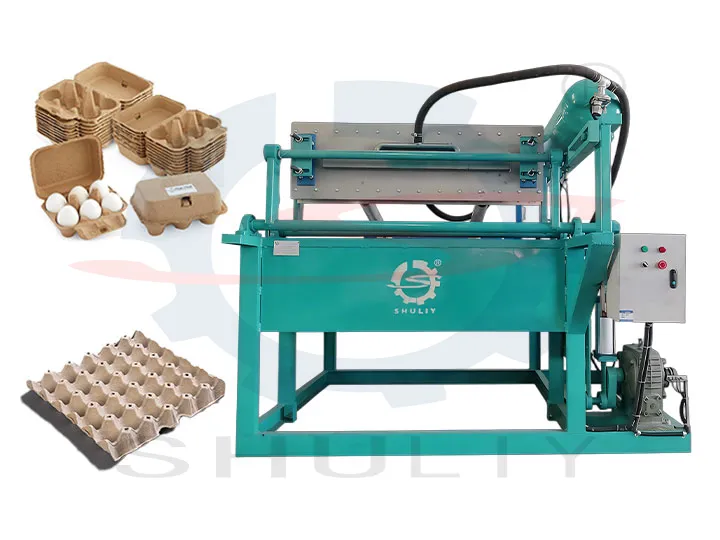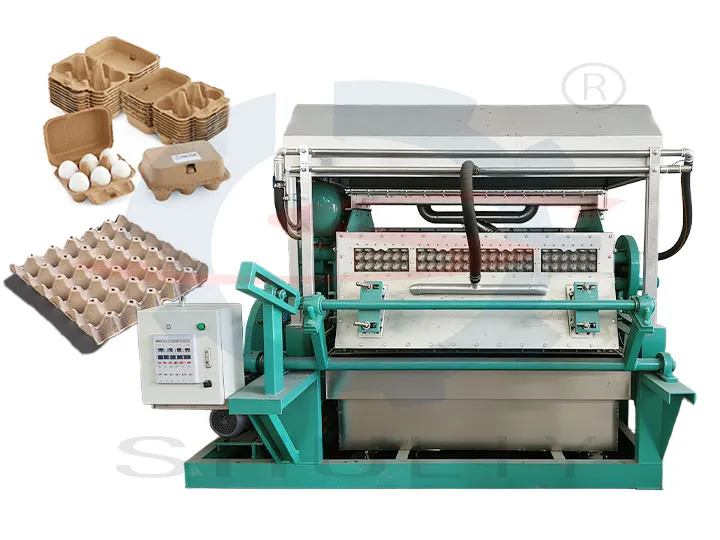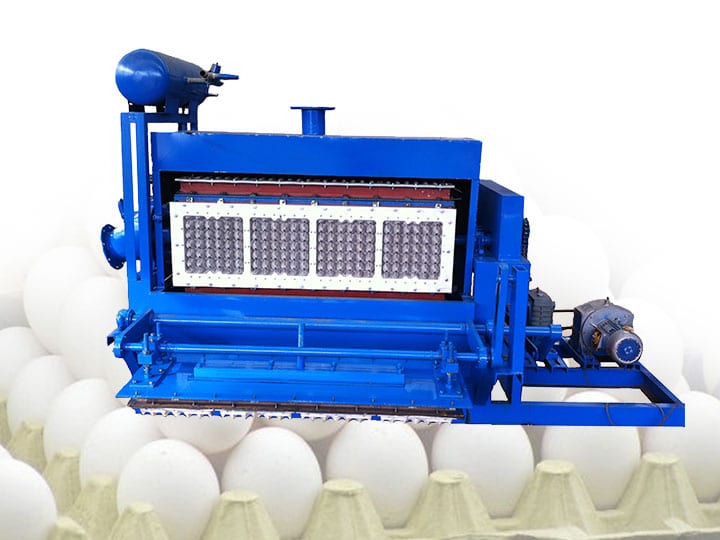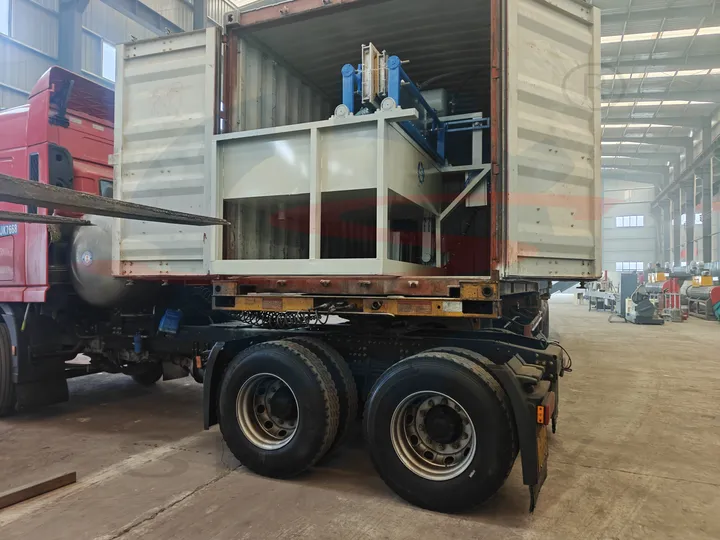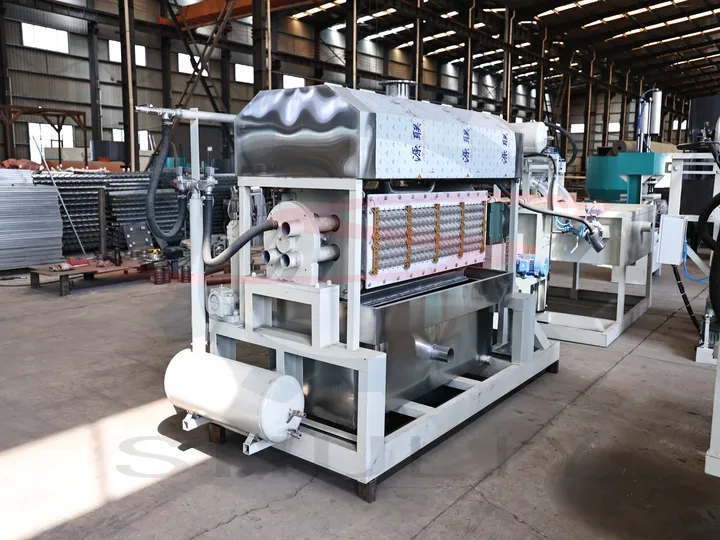
Máquina de bandejas de ovos de 8 lados
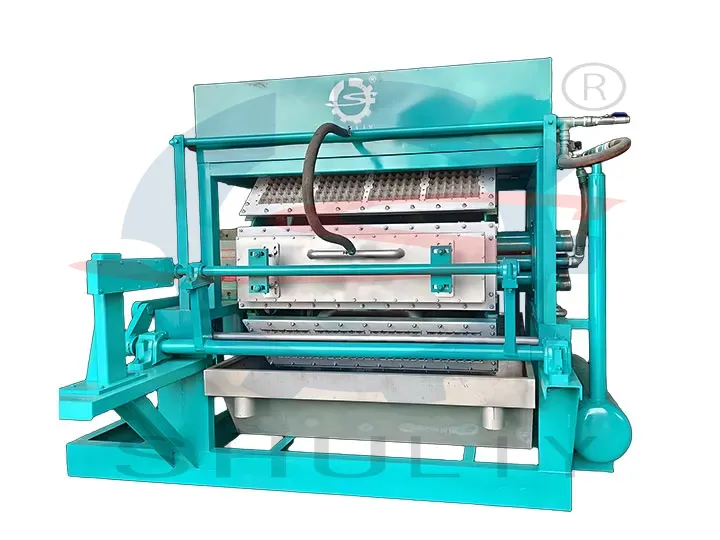
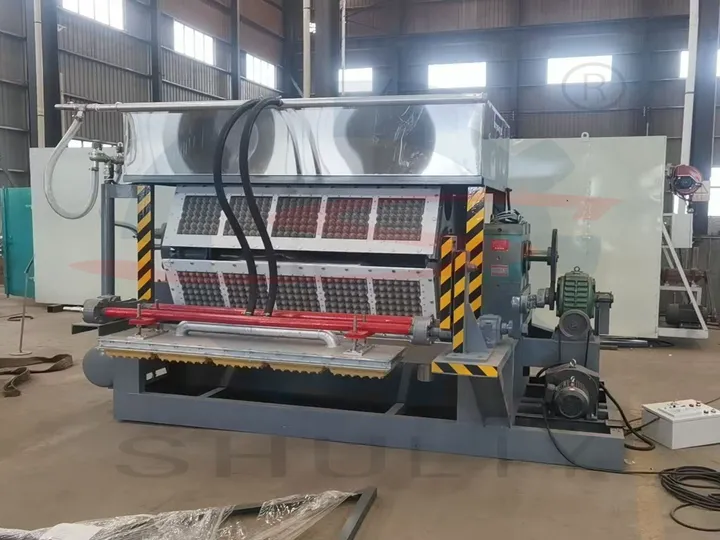
| Marca | Máquinas Shuliy |
| Modelo | SL-4000-4X8; SL-5000-5X8; SL-7000-6X8 |
| Capacidade | 4000-7000pcs/h |
| Potência | 95kw; 120kw |
| Tensão | 380V,50HZ |
| Tamanho | Tabela de Parâmetros Técnicos de Referência |
| Garantia | 12 meses |
Agora você pode perguntar aos nossos gerentes de projeto sobre detalhes técnicos
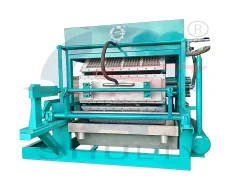
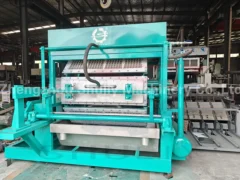
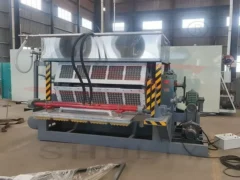
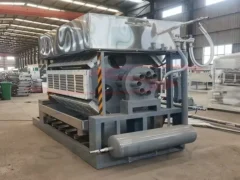
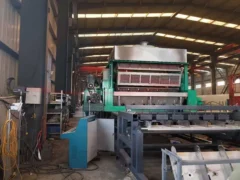
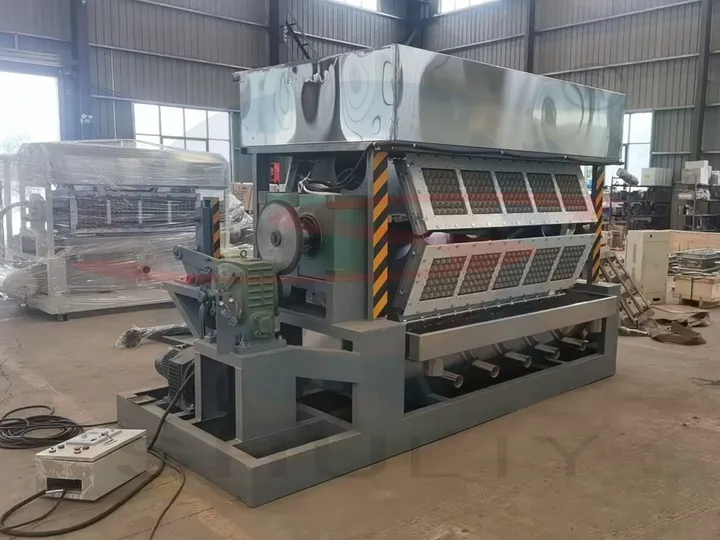
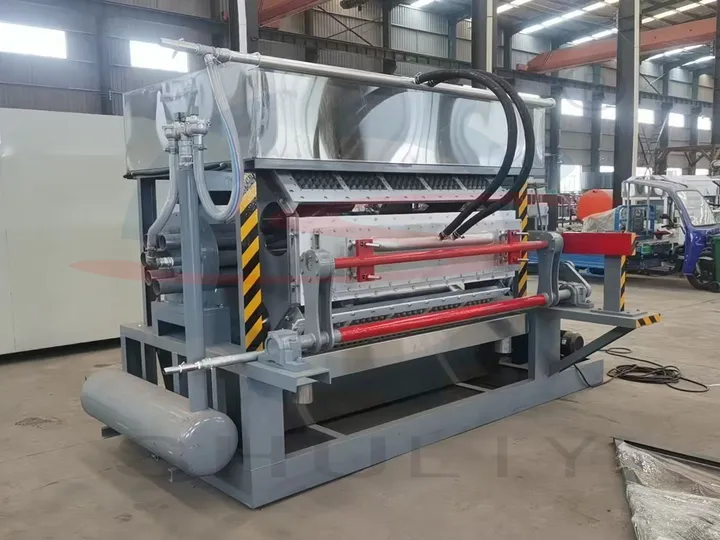
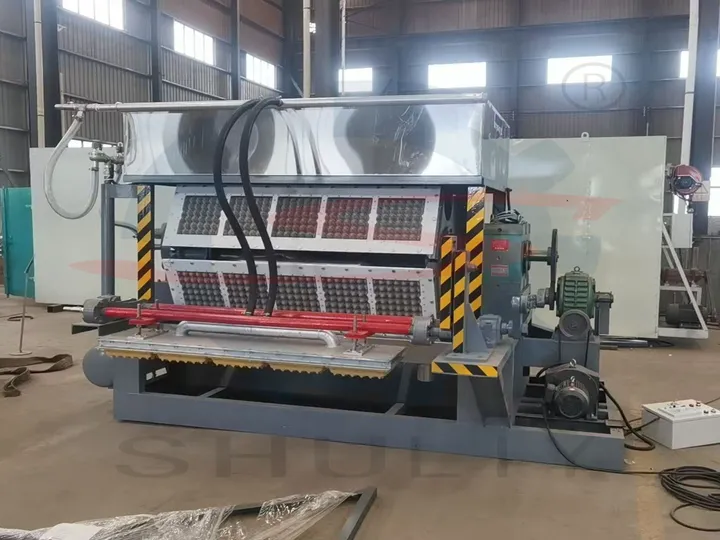
O Máquina de bandeja de ovos de 8 lados, também conhecida como máquina formadora de bandejas de ovos em larga escala, é equipada com um tambor rotativo de 8 lados. Permite produção contínua e de alta velocidade, tornando-a especialmente adequada para fábricas com requisitos de produção de médio a grande porte.ª
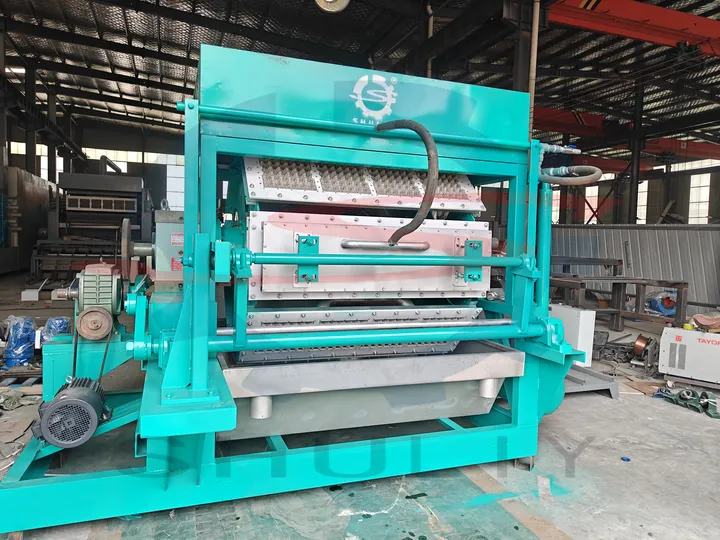
SL-4000-4X8 can produce about 4000pcs egg shells per hour. Egg plate molds can be customized according to the buyer’s requirements. This equipment can be continuously produced and ensures production capacity. In addition, because the whole production process is recycled waste paper, no pollution sources, so it is called green environmental protection machinery.
Model SL-5000-5X8 egg tray machine can produce about 5000pcs egg trays per hour. It is 45 angle and an eight-plate rotary tray machine. Eight plates form a board, and all systems can be connected. This transfer arm makes a 90-degree reciprocating motion. The working efficiency is very high.
O SL-7000-6X8 is our company’s highest-capacity egg tray forming machine, with an output of up to 7,000 pieces per hour. It features an 8-sided rotary drum with 6 egg tray molds on each side, making it ideal for efficient, large-scale production in big factories.
Why Choose an 8 Side Egg Tray Machine for Large-Scale Production?
- Feito com aço carbono espessado para durabilidade e forte capacidade de carga
- Moldes de liga de alumínio (opcional em aço inoxidável), leves e fáceis de secar e substituir
- Revestimento de Teflon de alta temperatura e antiaderente disponível
- Sistema de transmissão de aço de alta resistência com rolamentos resistentes ao desgaste
- Tubos hidráulicos de aço inoxidável e válvulas de cobre, resistentes à corrosão
- Gabinete de controle em aço inoxidável, à prova d'água e à prova de poeira
- Design rotativo de 8 lados permite operação contínua sem paradas frequentes
- Compatível com sistemas automáticos de secagem e empilhamento
- Materiais de grau industrial garantem mais de 10 anos de uso contínuo
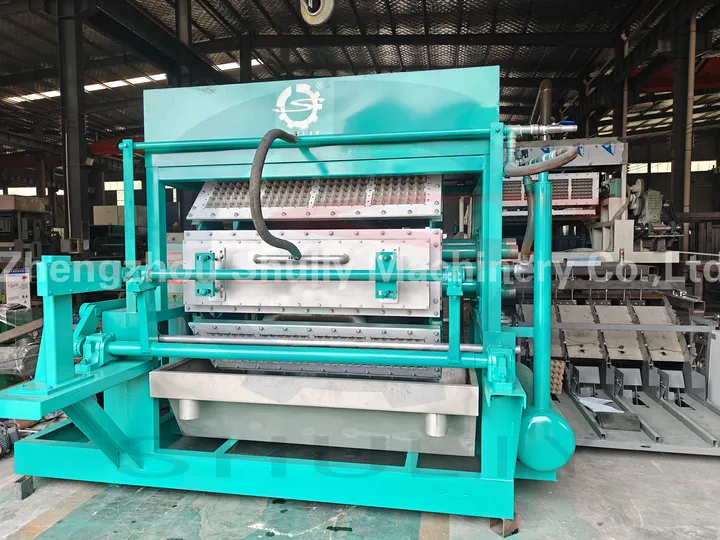
How Does an 8 Side Egg Tray Machine Work? Structure and Production Process
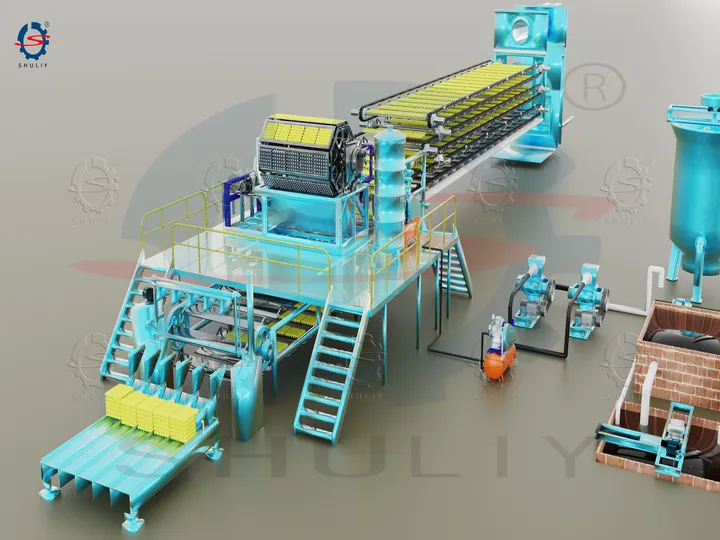
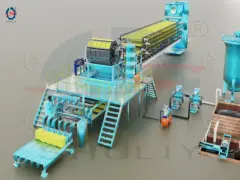
A máquina de bandejas de 8 lados consiste principalmente em sistema de polpa, sistema de formação, sistema de secagem e sistema de embalagem.
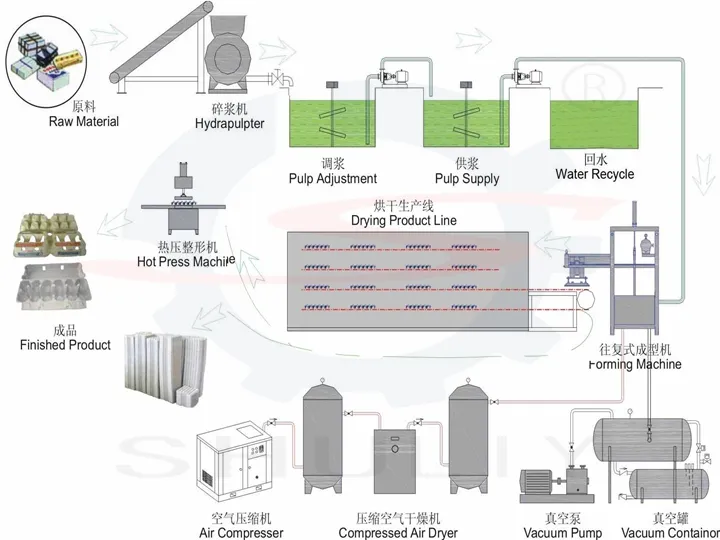
8 Side Egg Tray Machine Structure
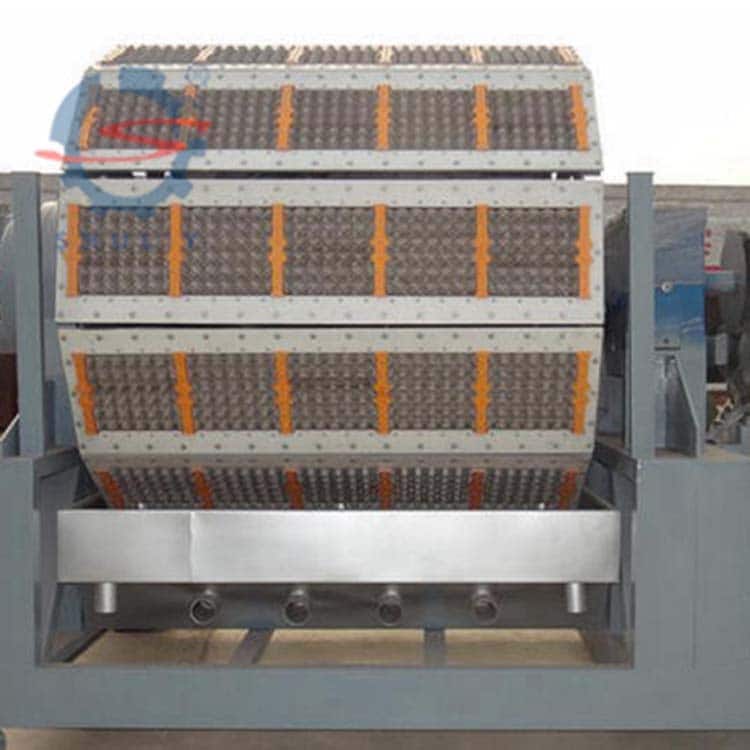
An Máquina de bandeja de ovos de 8 lados uses an octagonal rotary drum as its forming core. Each of the eight drum faces carries a row of aluminum forming molds, and the whole drum rotates continuously through the pulp vat, vacuum forming station, and ejection zone.
The mold layout depends on the model:
- SL-4000-4×8: 4 molds per side × 8 sides = 32 forming molds
- SL-5000-5×8: 5 molds per side × 8 sides = 40 forming molds
- SL-7000-6×8: 6 molds per side × 8 sides = 48 forming molds
This high-density layout is what allows the machine to reach 4,000–7,000 pieces per hour. The drum is driven by a heavy-duty gear system with wear-resistant bearings. A vacuum pump, air compressor, PLC control cabinet, and transfer conveyor are integrated into the same frame.
The complete production system also includes:
- Sistema de polpa – hydrapulper, pulp pump, and consistency regulator
- sistema de moldagem – 8-sided rotary drum with vacuum molds
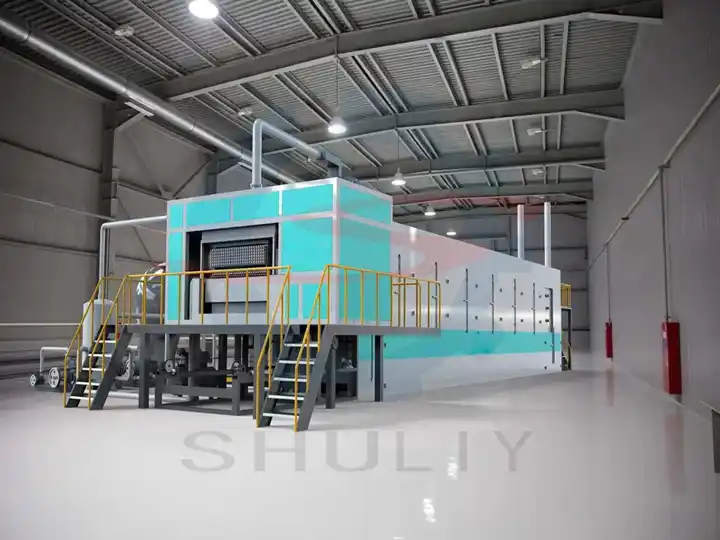
- Sistema de secagem – sun drying racks, brick kiln, or multi-layer metal dryer
- Packing system – hydraulic press and strapping unit
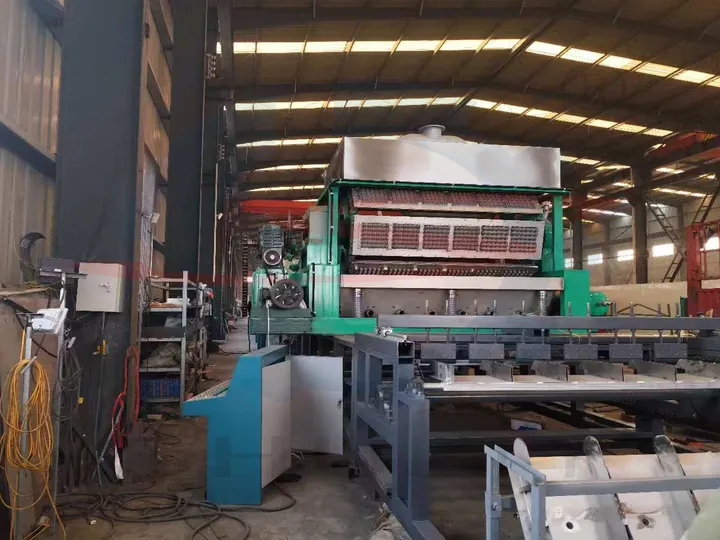
Processo de Produção
Step 1: Pulp Preparation
Waste paper, cardboard, or pulp board is loaded into the hydrapulper with water at a ratio of about 1:4. The blades run for 15–20 minutes until the mixture becomes a smooth fiber slurry. The pulp concentration is adjusted to 2–3% before it is pumped into the machine’s pulp tank.
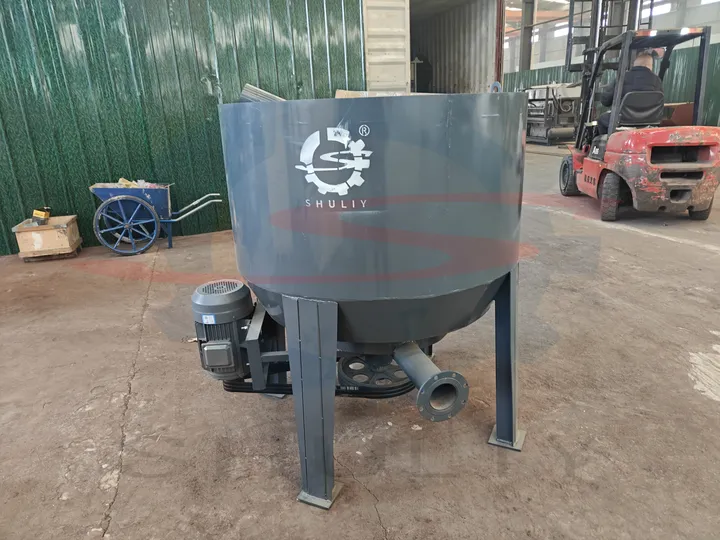
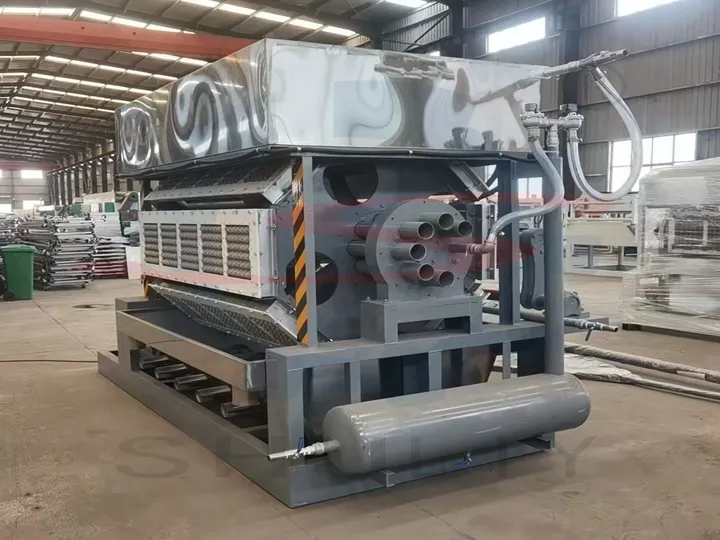
Step 2: Mold Immersion and Vacuum Forming
As the 8-sided drum rotates, each mold face dips into the pulp tank one after another. A vacuum pump draws pulp fibers onto the mold screen, shaping the wet tray inside the mold cavity. Because eight sides are working in sequence, forming never stops.
Step 3: Dewatering
After leaving the pulp tank, the formed tray stays on the rotating drum for a few seconds. Gravity and vacuum suction remove excess water. The wet tray still contains about 50–60% moisture when it reaches the ejection point.
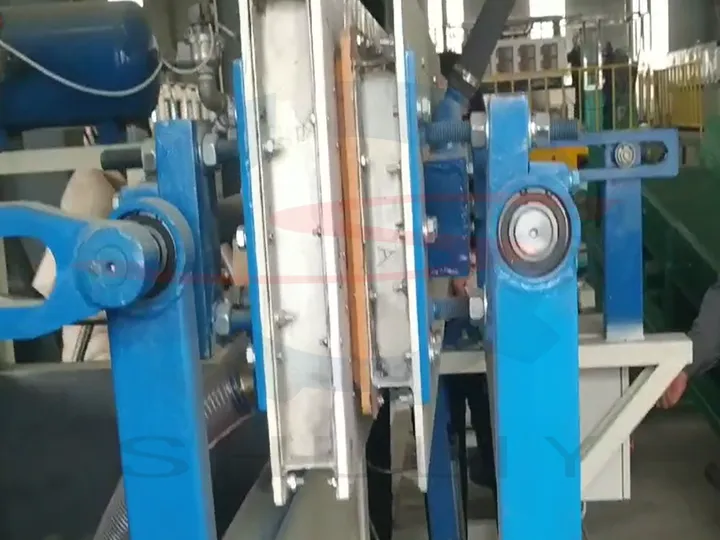
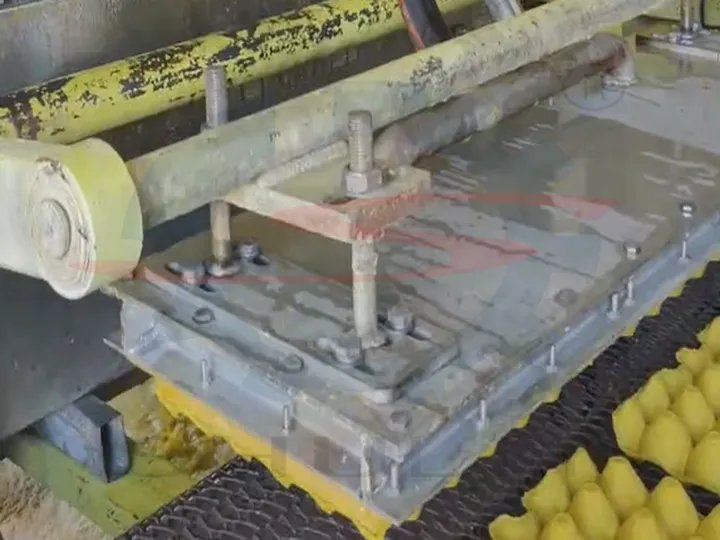
Step 4: Automatic Transfer
At the transfer position, the vacuum is released and positive air pressure blows the wet tray off the forming mold onto a transfer conveyor or a transfer mold. The empty mold then continues to the next forming cycle.
Step 5: Drying
Wet trays move into the drying system. Depending on the setup, this can be:
- Sun drying – trays dry on racks in open air for 2–3 days
- Brick kiln dryer – hot air at 80–120°C dries trays in 45–90 minutes
- Multi-layer metal dryer – automatic belt dryer with the smallest footprint
Moisture is reduced from 50–60% to below 12%.
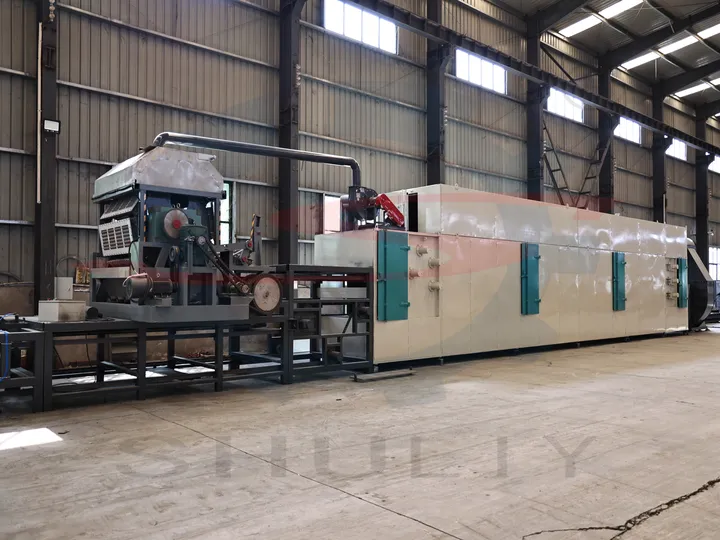
Step 6: Stacking and Packing
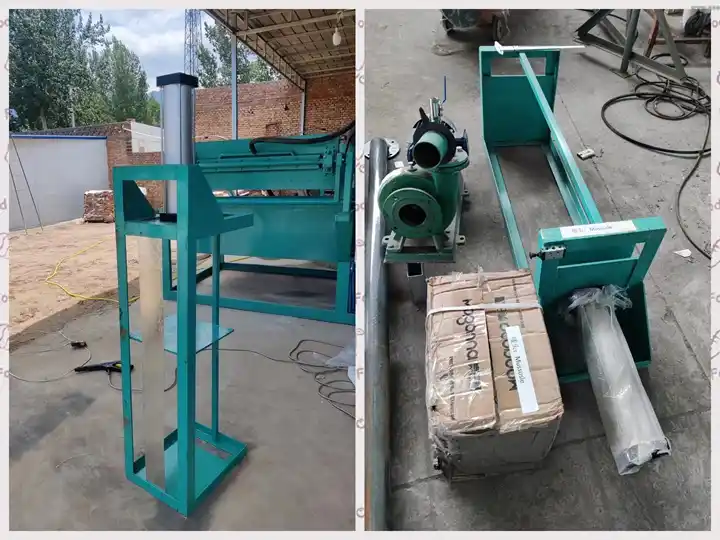
Dried trays are stacked and fed into a hydraulic packing machine. The press compresses the stack by 30–40% and straps it for transport. This reduces shipping volume and warehouse space.
3D Rendering of the Egg Tray Production Line – Customer Case Reference

8 Side Egg Tray Machine Specifications and Capacity Comparison
| Modelo | SL-4000-4X8 | SL-5000-5X8 | SL-7000-6X8 |
| Capacidade | 4000pcs/h | 5000pcs/h | 7000pcs/h |
| Potência | 95kw | 95kw | 120kw |
| Tensão | 380V,50HZ | 380V,50HZ | 380V,50HZ |
| Peso | 7000kg | 8000kg | 10000kg |
| Uso de polpa | 320kg/h | 400kg/h | 480kg/h |
| Uso de água | 640kg/h | 800kg/h | 960kg/h |
| Tamanho (mm) | 3250*2300*2500 | 3700*2300*2500 | 3200*2300*2500 |
How to Choose the Right Drying System for Egg Trays?
Sun Drying – Cost-Effective Option for Small Production
| Item | Área |
| Área da máquina | 30–50 m² |
| Área do pátio de secagem | 1000 m² |
Máquina de secagem de bandejas de ovos tipo caixa
| Modelo | Comprimento (m) | Largura (m) | Altura (m) |
| SL-4×8 | >65 | >15 | >3 |
| SL-5×8 | >65 | >15 | >3 |
| SL-6×8 | = 80 | >15 | >3 |
| SL-8×8 | = 80 | >15 | >3 |
Secadores Multicamadas -High-Capacity Production
| Modelo | Comprimento (m) | Largura (m) | Altura (m) |
| SL-4×8 | 27.5 | 6 | 3.6 |
| SL-5×8 | 27.5 | 6 | 3.6 |
| SL-6×8 | 33.5 | 6 | 3.6 |
How to Make Egg Trays with an 8 Side Egg Tray Machine?
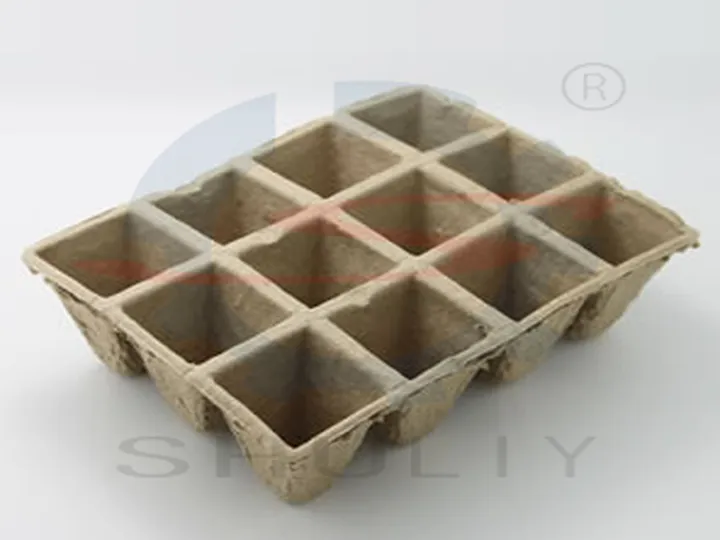
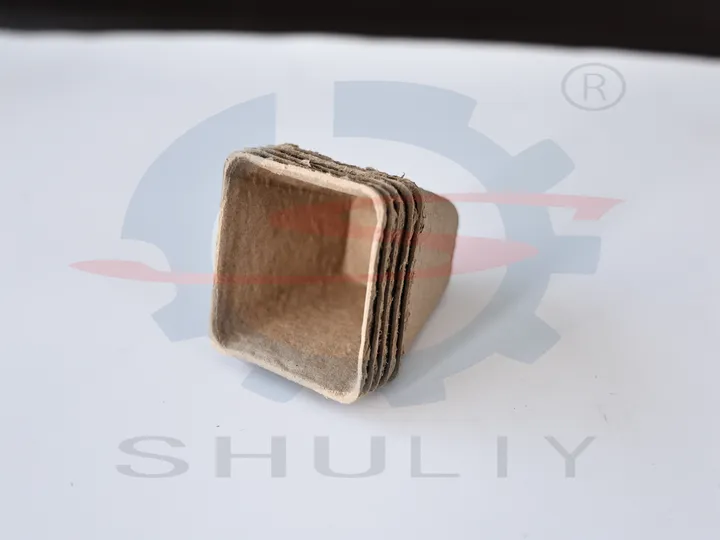
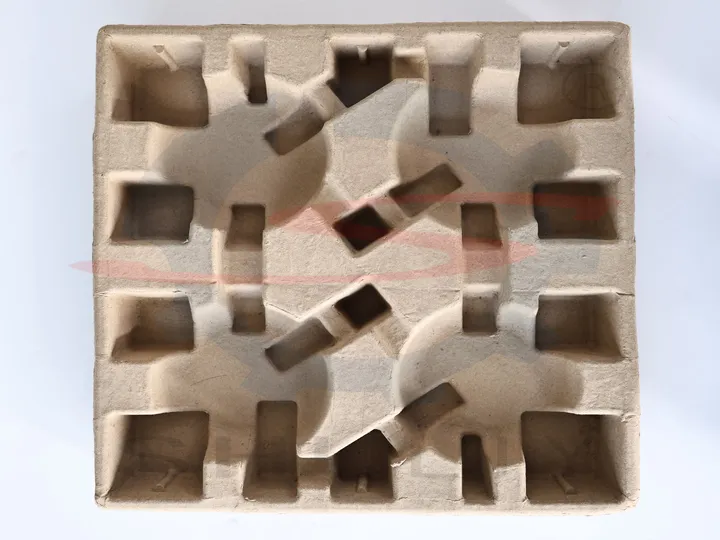
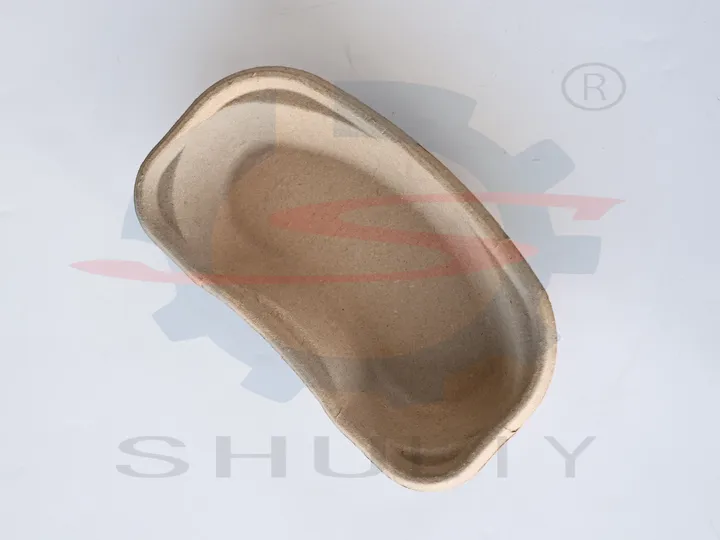
As matérias-primas são principalmente polpa de palha, polpa, polpa de bambu, polpa de madeira, papelão reciclado, papel de caixa de papel reciclado, papel branco reciclado, resíduos de polpa de cauda de fábrica de papel, etc. A matéria-prima tem uma ampla gama de fontes e é fácil de coletar. A máquina de bandejas de ovos é a máquina principal para a linha de produção de bandejas de ovos.
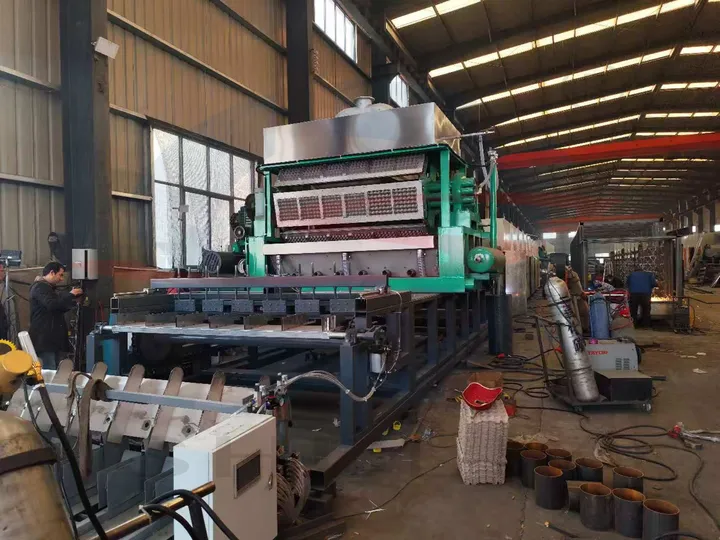
Alimentando a polpa na piscina de polpa para a máquina de moldagem. A polpa é absorvida pelo sistema de vácuo, e a polpa é moldada pelo molde no equipamento. A água é absorvida e transportada de volta para a piscina de polpa através da bomba de vácuo. A água pode ser reciclada.
Após o molde absorver a lama, o molde de transferência é descarregado através do compressor de ar. O produto acabado é soprado do molde de formação para o molde de transferência, e então é enviado pelo molde de transferência.
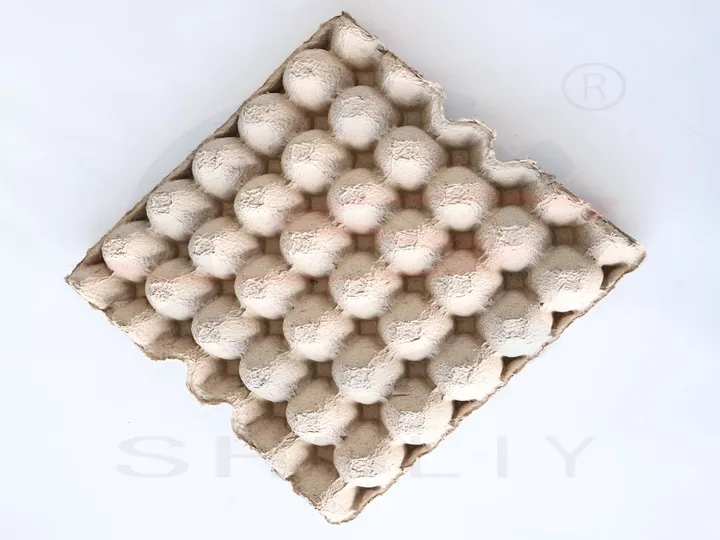
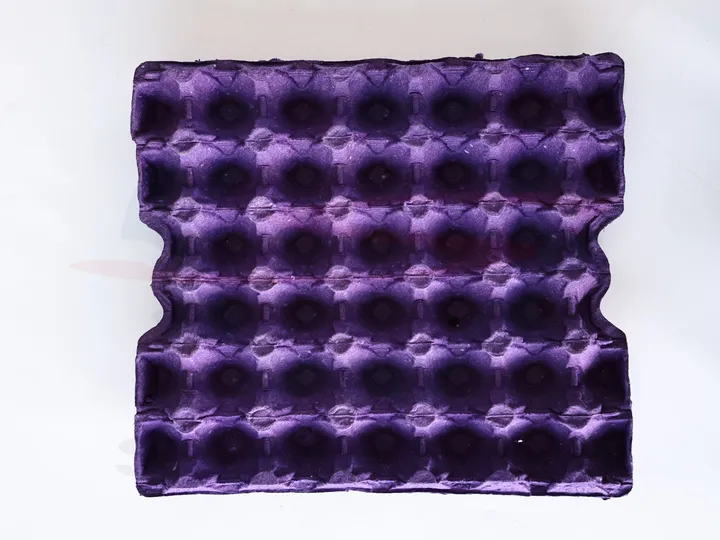
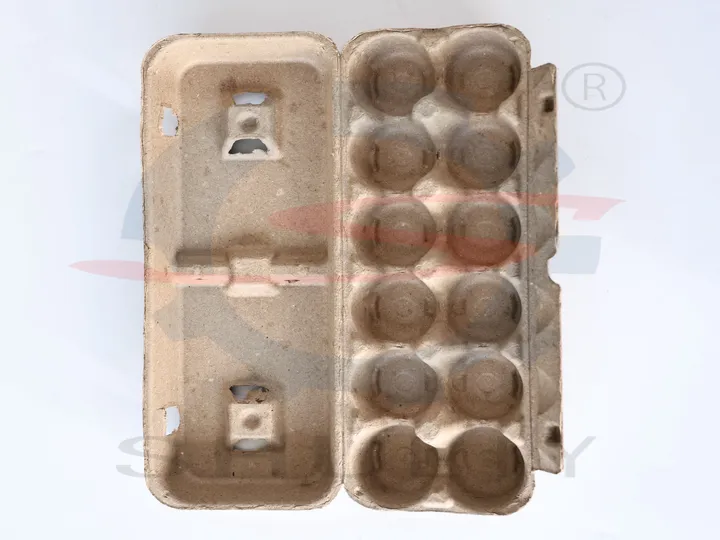
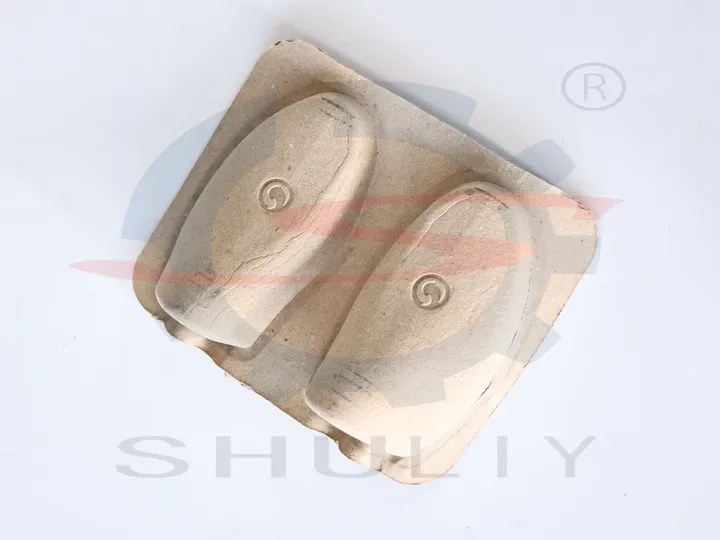
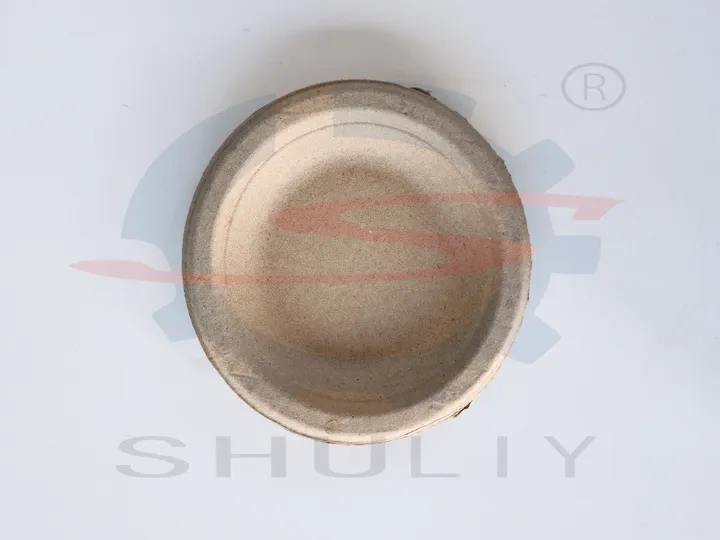
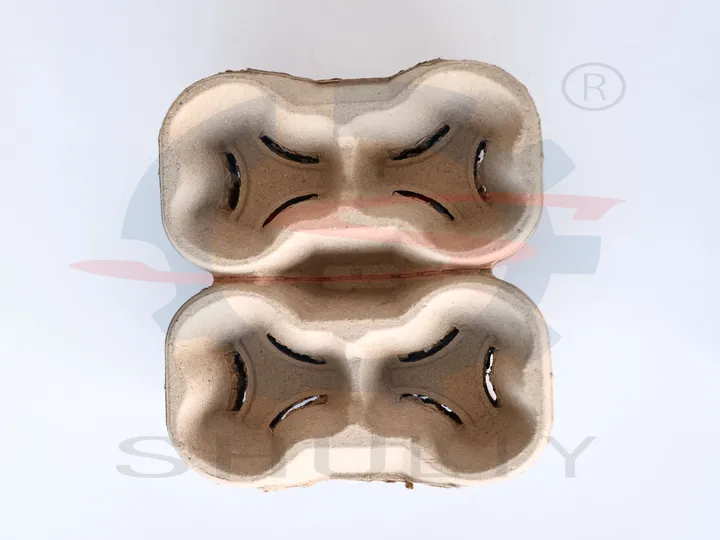
How Much Does It Cost to Produce Egg Trays? Cost Analysis
| Item de Custo | Descrição | Custo Unitário por Bandeja (RMB) |
| Matéria-prima | 1 tonelada de papel reciclado pode produzir 12.000–15.000 bandejas (com base no peso da bandeja). Com base em 80g por bandeja: 1.000.000g ÷ 80g = 12.500 bandejas Preço do papel reciclado: ¥1500/ton → 1500 ÷ 12.500 = ¥0.12 por bandeja | ¥0.12 |
| Trabalho | Secagem ao sol: 6 trabalhadores; secagem por máquina: 4 trabalhadores. Na China, O trabalho é frequentemente calculado por peça: aproximadamente ¥0.02 por bandeja. | ¥0.02 |
| Eletricidade | Varía com a capacidade e o consumo de energia. Maior produção significa menor custo por bandeja. | ¥0.02 |
| Combustível de Secagem | Carvão (5000 kcal/kg) Madeira (4000 kcal/kg) Gás Natural (8900 kcal/m³) Diesel (11.900 kcal/litro) | ¥0.03/pc ¥0.03/pc ¥0.06/pc ¥0.08/pc |
| Pigmento (opcional) | ¥12/kg de pigmento; 1 kg pode produzir aproximadamente 3000–4000 bandejas | Aproximadamente ¥0.003–0.004 |
Conversão de Moeda: $1(USD)=¥7.2(RMB)
Is an 8 Side Egg Tray Machine a Profitable Investment?
Amigo do meio ambiente: Com o desenvolvimento da sociedade, mais e mais pessoas estão prestando atenção às questões de proteção ambiental. O meio ambiente é o que as pessoas dependem para sobreviver. Portanto, devemos proteger o meio ambiente por meio de vários canais. A reciclagem de papel reciclado é uma maneira de proteger o meio ambiente. Nenhuma poluição ocorrerá durante o processo de produção.
Funções: A principal função da bandeja de ovo é a absorção de choque. Separe itens, como itens frágeis, para reduzir a taxa de quebra de itens durante o transporte ou armazenamento.
Preço: A máquina de bandeja de ovo tem vários modelos para escolher. Se você deseja iniciar um negócio a partir do pequeno, esta é uma boa escolha. O investimento não é alto, e você pode recuperar o investimento quando a máquina começar a produzir. Máquina de bandeja de ovo à venda a um preço razoável da Zhengzhou Shuliy Machinery.
8 Side Egg Tray Machine Projects and Customer Applications
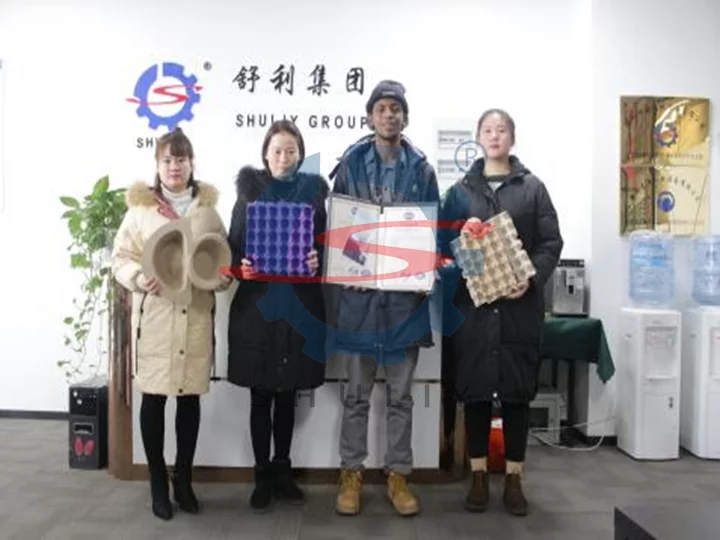

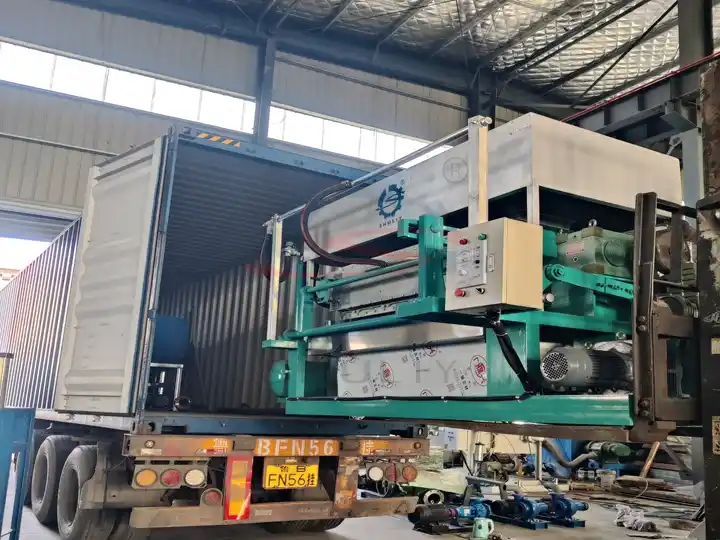
Egg Tray Machine Shipping Cases and Global Projects
2,500 pcs/h Egg Tray Production Machine Installed in Sierra Leone
In August 2025, Shuliy completed the installation and commissioning of a 2,500 pcs/h egg tray production machine for a customer in Sierra Leone. The customer runs a food packaging business and wanted to turn locally collected waste paper into biodegradable egg trays.
Equipment supplied:
- SL-2500-3×4 egg tray forming machine
- Pulping system with 2 m³ capacity
- Brick house dryer with diesel burner
- Hydraulic packing machine
Project results:
- The line reuses waste paper as its main raw material
- Production runs automatically from pulping to packing
- Shuliy engineers provided on-site installation and operator training
- The customer is now producing egg trays for the local market
Why Choose Shuliy 8 Side Egg Tray Machine?
Factory-Direct Manufacturing
Shuliy designs and builds every 8 side egg tray machine in its own factory. This direct control keeps quality consistent and removes middleman costs. Buyers deal with engineers who understand the machine from frame to control system.
Customized Line Configuration
An 8-side machine is rarely used alone. Shuliy matches the forming machine with the right pulper, dryer, and packing equipment based on your target output, workshop size, and local fuel availability. You receive a layout drawing before production starts.
Proven Rotary Technology
The 8-sided rotary drum uses vacuum forming with synchronized mold rotation. This design reduces stop-start wear and raises output to 4,000–7,000 trays per hour. Mold replacement takes less than 30 minutes.
Global Installation Experience
Shuliy has shipped and installed egg tray machines in Africa, the Middle East, South America, Australia, and Southeast Asia. Engineers provide online or on-site installation and train your operators.
Certified Equipment
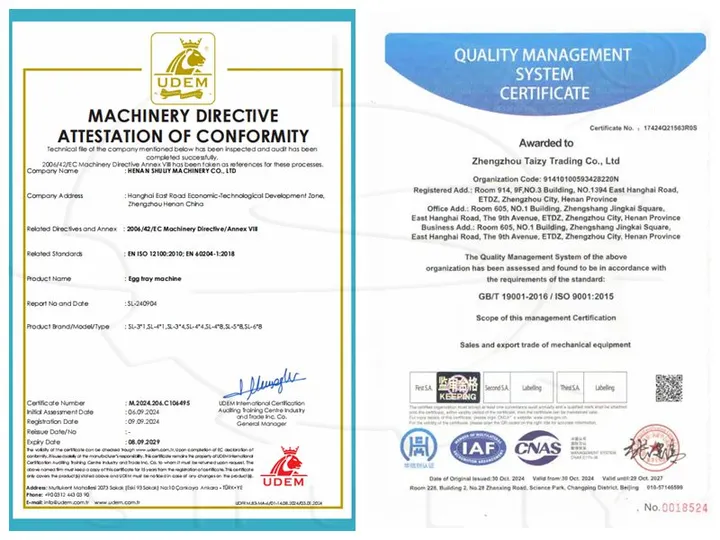
Machines meet CE and ISO standards. Electrical parts use internationally recognized brands, and motors meet standard efficiency ratings.
Long-Term Support
- 12-month warranty on main components
- Lifetime technical support
- Spare parts supply with fast dispatch
- English, French, and Spanish service teams
Perguntas frequentes
What is the difference between a 4-side and an 8-side egg tray machine?
A 4-side machine has four forming faces on the rotary drum and is ideal for 2,000–3,000 pcs/h. An 8-side machine has eight forming faces and higher mold density, making it suitable for 4,000–7,000 pcs/h.
How many workers are needed to run an 8 side egg tray machine?
A complete 8-side line normally needs 3–5 workers per shift. One operator monitors the control panel, one handles raw material feeding, and the rest manage drying and packing.
What is the power consumption per 1,000 trays?
Power use is approximately 0.0125–0.013 kWh per tray, or 12.5–13 kWh per 1,000 trays. Drying fuel is calculated separately based on coal, diesel, gas, or electricity choice.
Can the 8 side machine produce products other than egg trays?
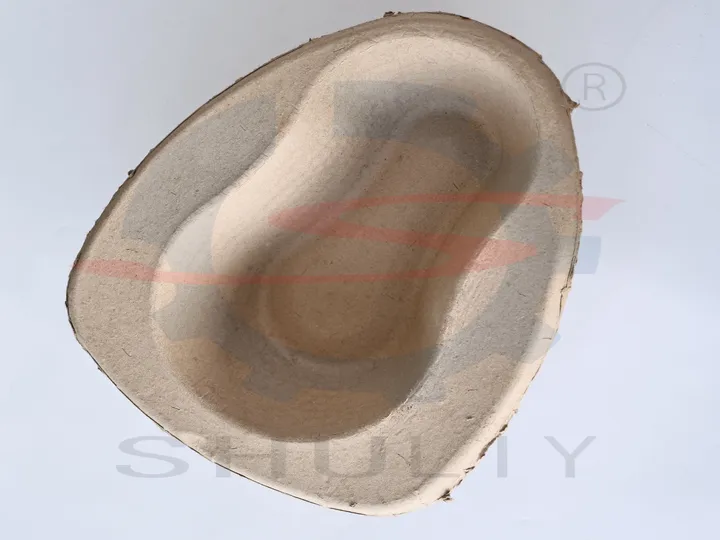
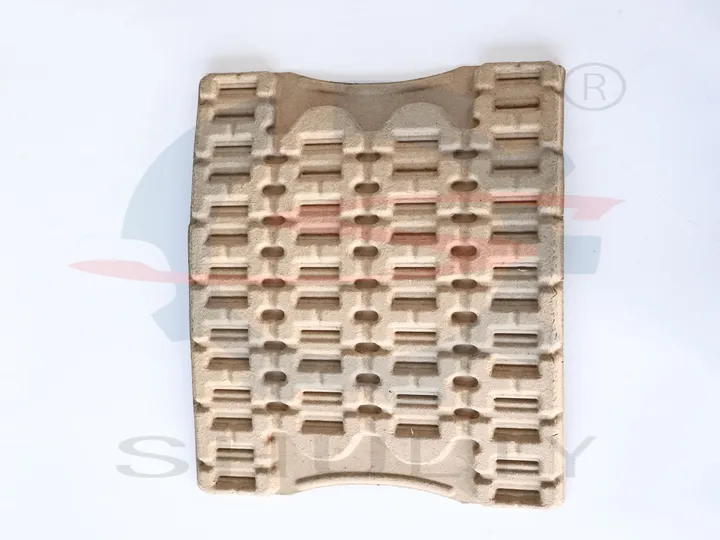
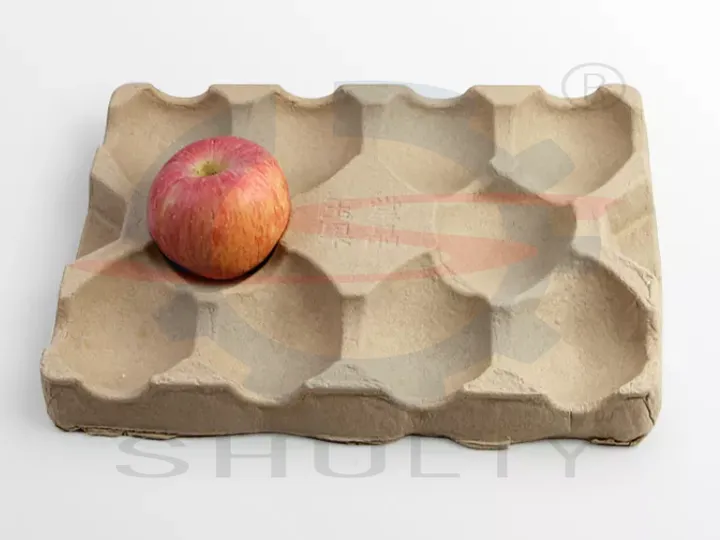
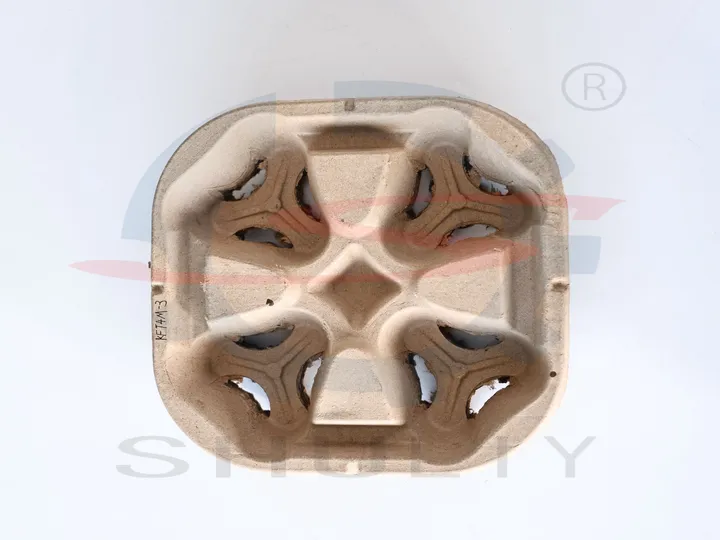
Yes. By changing molds, the same machine can produce fruit trays, shoe trays, wine bottle trays, electronic component trays, and disposable food containers.
How much floor space does an 8-side egg tray production line need?
The forming machine itself needs about 30–50 m². With a brick kiln dryer, the total workshop area is usually 600–800 m². A multi-layer metal dryer reduces this to 200–300 m².
What is the typical delivery time after placing an order?
Standard models need 20–30 working days. Custom voltage or special mold designs may add 5–10 working days. Sea shipping time depends on the destination port.
What spare parts should be kept in stock?
We recommend keeping mold screens, vacuum pump seals, air compressor filters, bearings, and conveyor belts in stock. These parts wear gradually and are easy to replace.
Can the machine run in hot and humid climates?
Yes. The electrical cabinet is waterproof and dustproof. Stainless steel parts resist corrosion. In very humid areas, we recommend a metal dryer instead of natural sun drying.