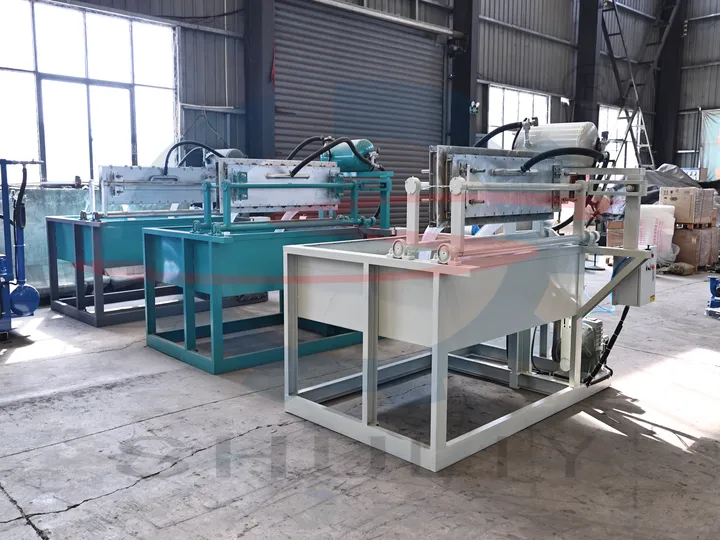
Industrial Packaging Tray Production Line
| 브랜드 | 슐리 기계 |
| 원자재 | Waste paper, cardboard, kraft paper, bamboo pulp, bagasse |
| Tray Thickness | 2-5mm (adjustable by pulp consistency) |
| Load Capacity | 20-80kg depending on tray design |
| Forming Cycle | 15-45 seconds per mold (slower than egg trays due to depth) |
| Hourly Output | 500-2,000 trays/hr |
| 건조 온도 | 160-200°C |
| 제어 시스템 | PLC with touchscreen, multi-zone temperature control |
| 맞춤화 | Yes, tray size, shape, thickness, and mold can be customized |
| 보증 | 1 year |
| 가격 | Customized based on tray design, capacity, and production line configuration |
이제 프로젝트 관리자에게 기술 세부 정보를 문의할 수 있습니다.
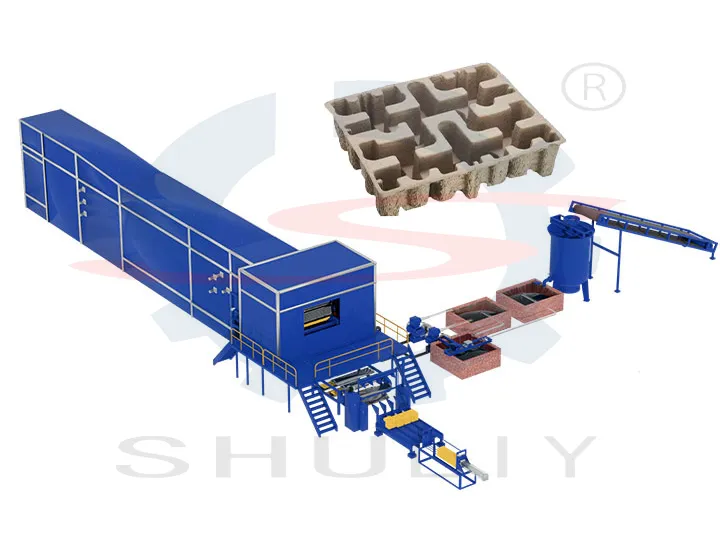
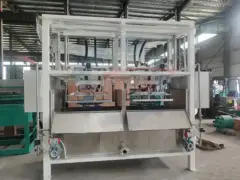
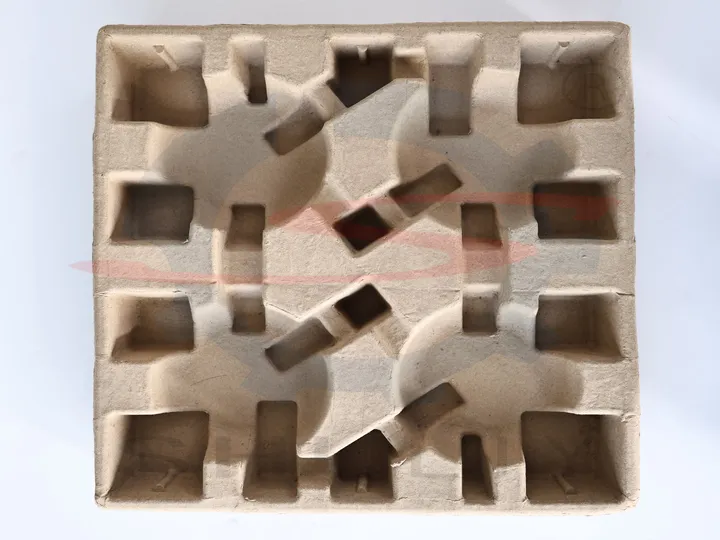
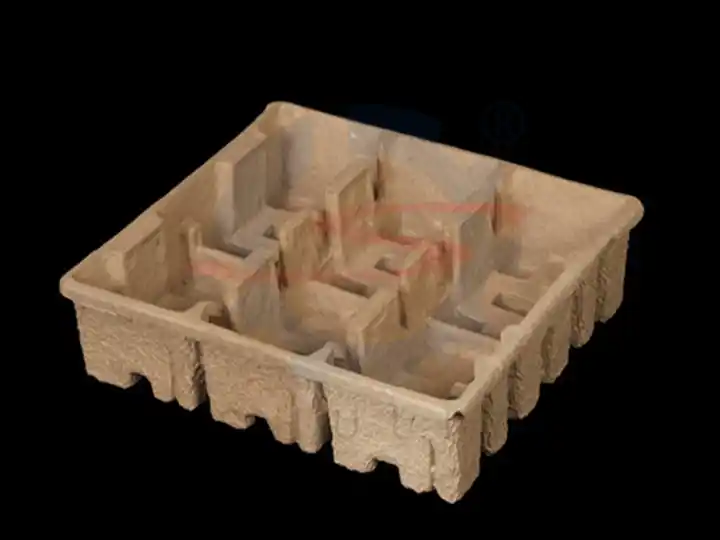
An industrial packaging tray production line is a specialized pulp molding system designed to manufacture heavy-duty protective trays for electronics, automotive parts, medical devices, and industrial components. It processes waste paper, cardboard, kraft paper, bamboo pulp, and bagasse into molded fiber trays with wall thickness of 2-5mm and load capacity from 20kg to 80kg. Output ranges from 500 to 2,000 trays per hour depending on tray complexity and forming method. The line integrates pulping, precision vacuum forming, and controlled drying to create biodegradable packaging that replaces plastic foam and EPS inserts.
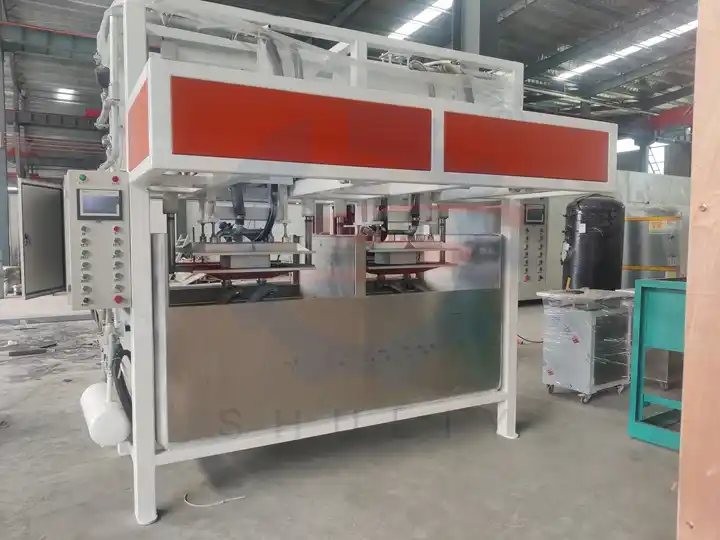
Compared with standard egg tray production lines , this system uses deeper molds up to 150mm, higher vacuum pressure of 0.06-0.09 MPa, and reinforced drying structures operating at 180-200°C. The forming cycle is slower at 15-45 seconds per mold to ensure complete fiber deposition in thick walls. Shuliy engineers each line to match the specific product: electronics trays need anti-static properties, automotive trays need impact resistance, and medical trays need sterilization compatibility. The pulping system, mold design, and drying parameters are adjusted accordingly. This is purpose-built equipment for protective packaging manufacturing, not a generic egg tray machine adapted for industrial use.
핵심 기술 사양
| 매개 변수 | 사양 |
|---|---|
| Forming Method | Vacuum suction forming with pressure assistance |
| 원자재 | Waste paper, cardboard, kraft paper, bamboo pulp, bagasse |
| Tray Thickness | 2-5mm (adjustable by pulp consistency) |
| Load Capacity | 20-80kg depending on tray design |
| Forming Cycle | 15-45 seconds per mold (slower than egg trays due to depth) |
| Hourly Output | 500-2,000 trays depending on complexity |
| 건조 온도 | 160-200°C for industrial grade hardness |
| Mold Material | Aluminum alloy or copper (for precision) |
| 제어 시스템 | PLC with touchscreen, multi-zone temperature control |
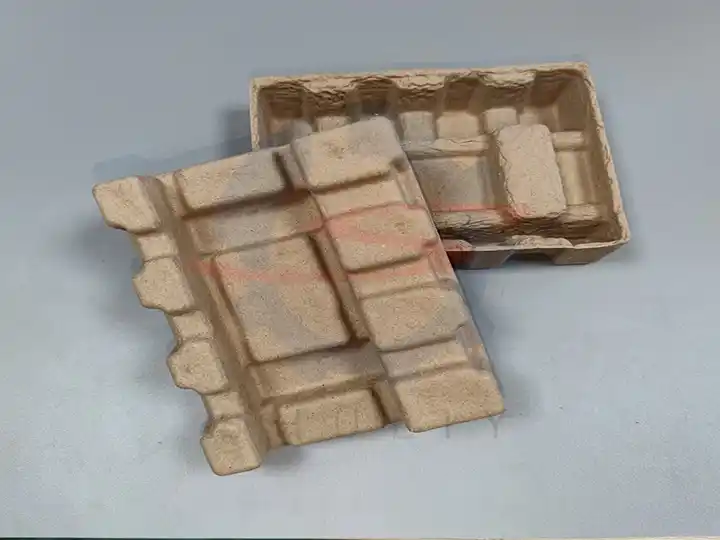
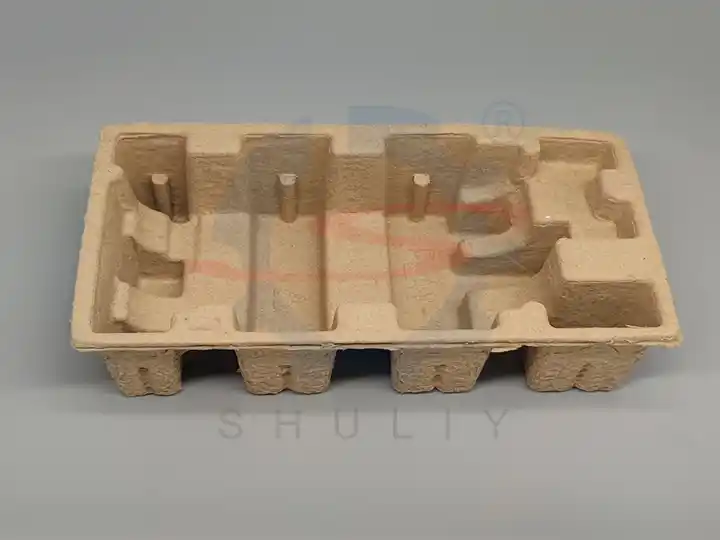
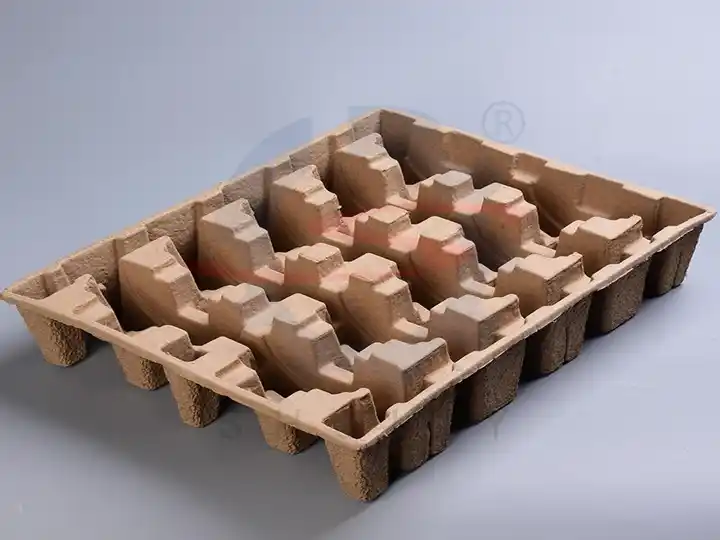
What Does the Industrial Packaging Tray Production Line Include?
A complete industrial packaging tray production line consists of five integrated modules. Each module is sized to match the forming capacity and tray specifications.
1. Pulping and Preparation System
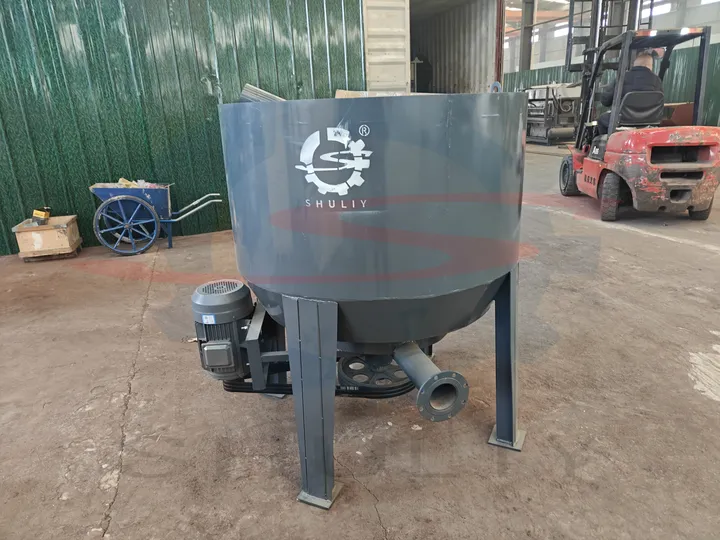
그 pulping machine processes raw fiber into consistent slurry. Industrial trays require higher consistency than egg trays to achieve structural strength.
| Component | 기능 | 사양 |
|---|---|---|
| Hydropulper | Breaks down waste paper | 2-5 m³ capacity, 15-37 kW |
| High-density cleaner | Removes staples, sand, plastic | Essential for industrial grade |
| 정제기 | Improves fiber fibrillation | 15-30 kW |
| Consistency controller | Maintains 4-5% solids | Automated adjustment |
| Additive dosing system | Anti-static, water resistance | Optional per product requirement |
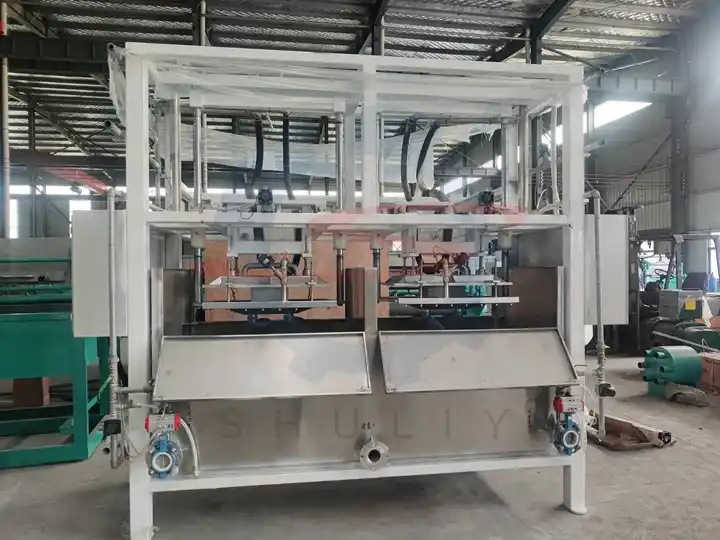
2. Industrial Packaging Tray Making Machine
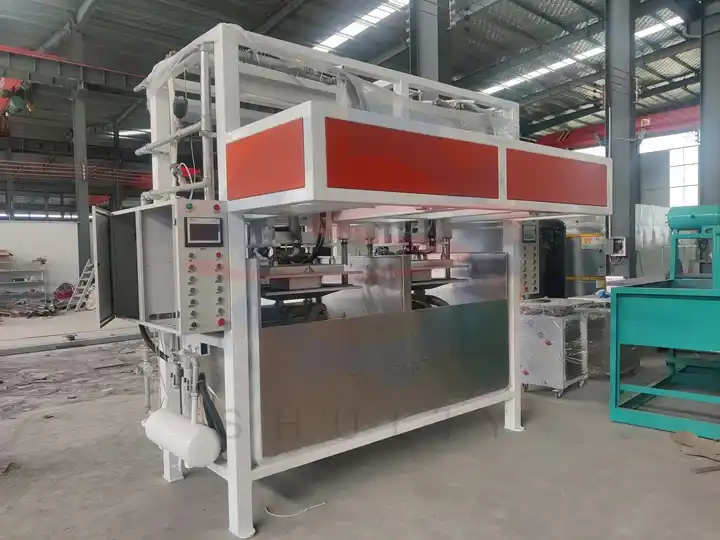
그 industrial packaging tray forming machine is the production core. It uses vacuum suction and pressure assistance to form thick-wall trays.
| Component | 기능 | 사양 |
|---|---|---|
| Forming station | Vacuum forming of trays | Single to eight-side rotary |
| Vacuum system | Creates 0.06-0.09 MPa suction | 30-55 kW pump capacity |
| Pressure assist | Compacts thick walls | 5-20 ton platen force |
| Mold frame | Holds precision molds | CNC-machined, ±0.1mm tolerance |
| Transfer system | Moves wet trays to dryer | Pneumatic or mechanical |
3. 건조 시스템
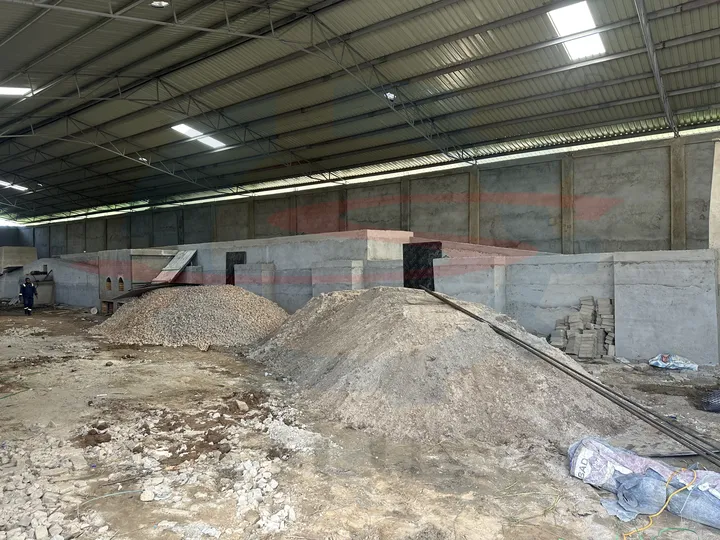
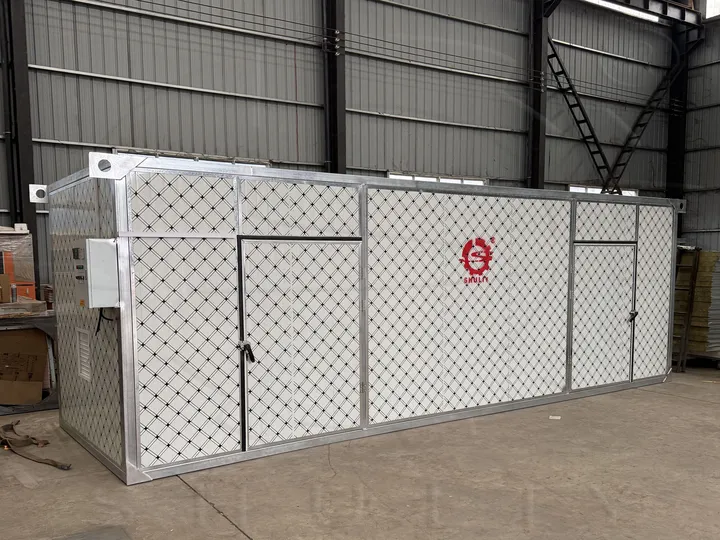
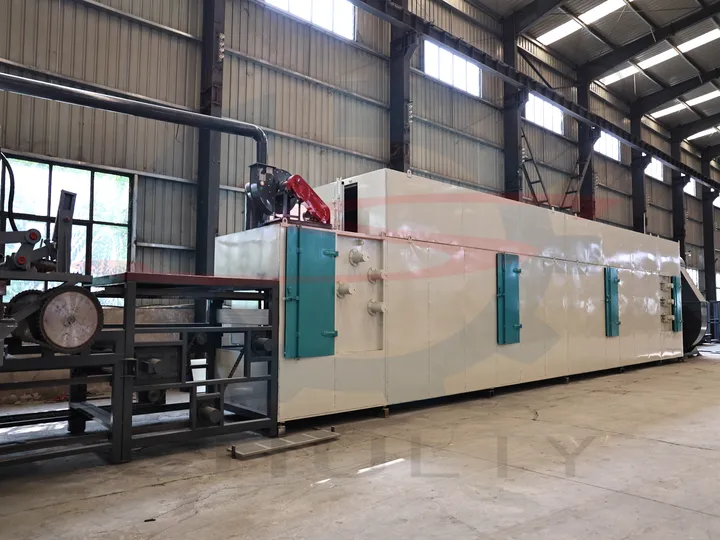
Industrial trays are thicker and retain more water. The dryer must remove moisture uniformly without cracking.
| 유형 | 가장 적합한 용도 | 건조 시간 | Temperature |
|---|---|---|---|
| Multi-layer drying room | Small output, varied products | 2-4 hour/batch | 60-120°C |
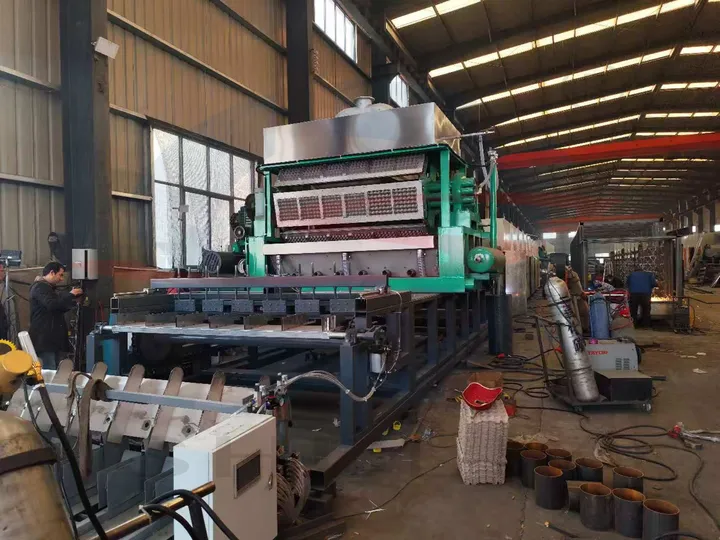
| Brick tunnel dryer | Medium to large output | 20-40 min | 160-200°C |
| 금속 메쉬 벨트 건조기 | High output, limited space | 15-30 min | 180-220°C |
4. 핫 프레스 성형기
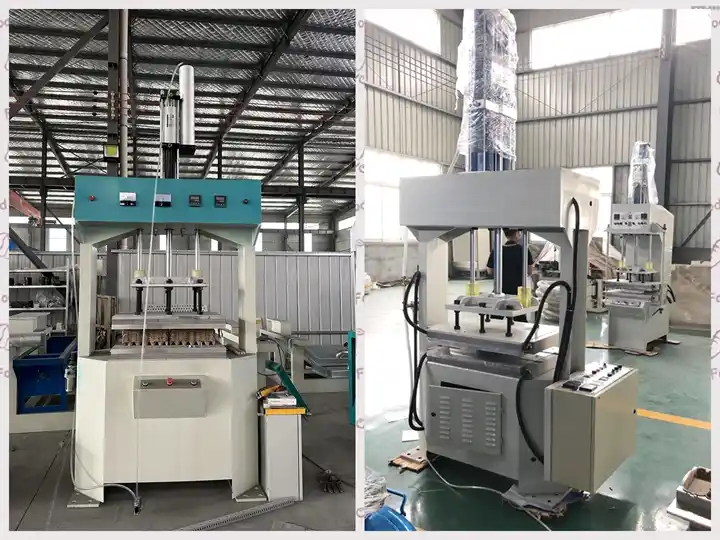
The hot press forming machine is a key step in the industrial packaging tray production line. It applies high temperature and hydraulic pressure to the semi-wet pulp trays after initial forming, further compressing and shaping the trays to improve surface smoothness, wall density, dimensional stability, and load-bearing strength. This process is especially important for heavy-duty industrial packaging trays that need to protect electronics, automotive parts, medical devices, and other products during handling and transportation.
| Component | 기능 | 사양 |
|---|---|---|
| Hot press forming station | High-temperature pressing and shaping of pulp trays | 160-200°C working temperature |
| Hydraulic system | Applies high pressure for dense and stable forming | 15-ton working pressure |
| Upper and lower molds | Compress and shape the semi-wet pulp products | High-strength steel plates |
| Adjustment plate | Adjusts mold distance and pressing height | Suitable for different product thicknesses |
| Guide rods | Keep upper and lower molds parallel during pressing | Improves forming accuracy |
| Hydraulic manifold | Controls hydraulic oil supply, release, and pressure regulation | Three-in-one hydraulic unit |
| Pressure regulating valve | Adjusts and stabilizes hydraulic pressure | Precise pressure control |
| PLC control system | Controls temperature, pressure, and cycle time | Automatic control |
| Hot press frame | Supports the molds and hydraulic pressing system | High-quality welded steel |
| Heating system | Heats the molds for rapid dehydration and forming | 160-200°C |
| Power system | Provides power for the complete hot press operation | 6.5 kW |
| Cycle time | Completes one hot pressing cycle | 6-10 seconds |
Key Differences from Standard 계란 트레이 생산 라인
An industrial packaging tray manufacturing line differs from egg tray equipment in four critical ways. Understanding these differences prevents buyers from purchasing undersized machines.
Forming Depth and Vacuum Power
Standard egg trays are shallow, typically 25-35mm deep. Industrial trays for pumps, circuit boards, or glass components can be 80-150mm deep. This requires:
- Higher vacuum pump capacity (30-55kW vs 18.5kW for egg trays)
- Longer forming time to ensure complete fiber deposition
- Pressure-assisted forming for dense wall structure
- Reinforced mold frames to handle deeper draws
Mold Material and Precision
Egg tray molds use plastic or standard aluminum. Industrial trays use:
- Aluminum alloy with hard anodizing for wear resistance
- Copper molds for complex geometries and fine details
- CNC-machined cavities with tolerance ±0.1mm
- Integrated drainage channels for thick wall formation
Mold cost is higher but lifespan exceeds 5 years with proper maintenance.
Drying System Design
Industrial trays are thicker and denser. They retain more water after forming. The drying system must:
- Operate at higher temperatures (180-200°C vs 160-180°C for egg trays)
- Use longer drying tunnels (20-40% longer than egg tray dryers)
- Include humidity exhaust systems to prevent moisture pockets
- Apply variable belt speed to prevent cracking during drying
Pulp Quality Control
Industrial packaging requires consistent pulp cleanliness. Contaminants cause weak spots that fail under load. The pulping system includes:
- High-density cleaners to remove staples and sand
- Screening equipment to separate plastic fragments
- Consistency controllers for uniform thickness
- Optional chemical treatment for water resistance or anti-static properties
How Does the Industrial Packing Tray Production Line Work?
The industrial packaging tray production line follows a six-stage process optimized for heavy-duty tray manufacturing.
Stage 1: Raw Material Preparation
Waste paper or virgin pulp is sorted to remove contaminants. For electronics packaging, anti-static agents may be added at this stage. The material enters the hydropulper with water at a 1:4 ratio.
Stage 2: High-Consistency Pulping
The pulper operates at 4-5% consistency, higher than the 2-3% used for egg trays. This creates stronger fiber bonding. The slurry passes through a refiner to improve fiber fibrillation.
Stage 3: Precision Vacuum Forming
Pulp is pumped to the forming station. Vacuum suction (0.06-0.09 MPa) draws fibers onto the mold surface. For deep trays, a pre-forming stage deposits initial layers, followed by pressure-assisted forming to compact the wall structure.
Stage 4: Wet Pressing (Optional)
Some industrial trays require wet pressing to increase density. A press platen applies 5-20 tons of pressure to the wet tray, reducing water content and increasing strength.
Stage 5: Controlled Drying
Trays enter the drying tunnel on a mesh belt. Temperature zones start at 160°C and increase to 200°C. Belt speed is slower than egg tray production to ensure complete moisture removal without surface cracking.
Machine Configuration by Production Scale
Small-Scale Industrial Tray Line (500-800 pcs/hour)
Suitable for electronic component manufacturers or small automotive suppliers.
| Component | 사양 |
|---|---|
| Forming machine | Single-side rotary, 4-6 molds |
| 진공 펌프 | 30 kW |
| Dryer | Multi-layer drying room or short brick tunnel |
| Floor space | 300-500 m² |
| Workers | 4-6 per shift |
Medium-Scale Industrial Tray Line (1,000-1,500 pcs/hour)
Suitable for contract packaging manufacturers serving multiple industries.
| Component | 사양 |
|---|---|
| Forming machine | Four-side rotary, 12-16 molds |
| 진공 펌프 | 45 kW dual system |
| Dryer | Brick tunnel dryer, 20-25m length |
| Floor space | 800-1,200 m² |
| Workers | 6-8 per shift |
Applications and Product Examples
An industrial packaging tray molding line produces protective packaging for diverse sectors.
| Industry | Tray Type | Key Requirement |
|---|---|---|
| Electronics | Circuit board trays, phone component trays, hard drive packaging | Anti-static, precision fit, smooth surface |
| Automotive | Gasket trays, filter packaging, brake component trays | Oil resistance, heavy load capacity, impact protection |
| Medical | Surgical instrument trays, vial packaging, diagnostic kit trays | Sterilization compatibility, biocompatibility, cleanliness |
| Glassware | Bottle trays, jar packaging, laboratory glass trays | Cushioning, edge protection, stackability |
| Hardware | Fastener trays, tool packaging, valve and fitting trays | Rust prevention, compartmentalization, weight tolerance |
| Appliances | Motor packaging, control panel trays, small appliance inserts | Scratch prevention, structural rigidity, custom shapes |
Customer Pain Points and Solutions
| Packaging Challenge | Shuliy 솔루션 |
|---|---|
| Plastic foam bans in export markets | Pulp trays are biodegradable and accepted in EU, North America, Japan |
| Product damage during shipping | Custom mold design creates exact fit, reducing movement and impact |
| High cost of molded plastic inserts | Waste paper raw material costs 60-80% less than plastic resin |
| Inconsistent tray quality | PLC-controlled forming and drying ensure uniform thickness and strength |
| Need for sterile packaging | Stainless steel contact parts and washable molds meet medical standards |
| Heavy products crushing standard trays | High-density pulp formulation and thicker walls support 50kg+ loads |
Why Choose Shuliy for Industrial Packaging Tray Production?
Engineering Expertise
Shuliy designs molds using CAD/CAM systems. Engineers analyze your product dimensions, weight, and fragility to create optimal tray geometry. Sample testing confirms performance before full production begins.
Material Flexibility
The line processes recycled paper, virgin pulp, bamboo pulp, bagasse, and agricultural waste. Blending options allow cost optimization without sacrificing strength.
Compliance Support
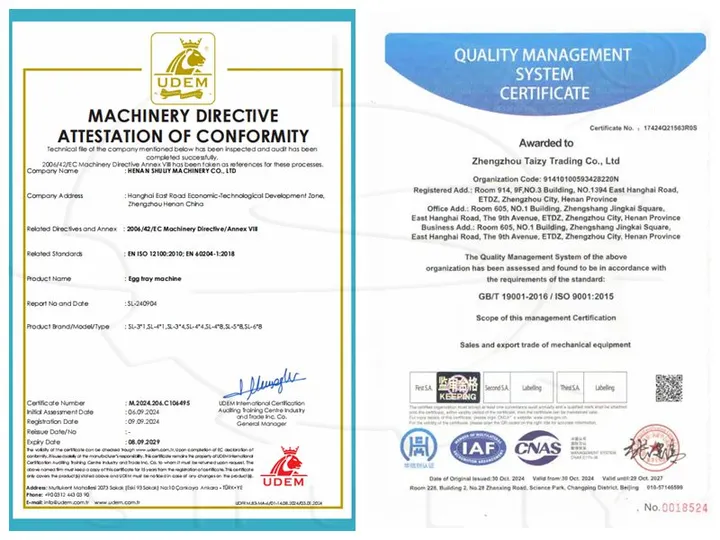
Shuliy provides documentation for international packaging standards including ISO 9001, REACH, and FDA food-contact requirements. This simplifies export approval for your packaged products.
애프터 서비스
- 기계 및 전기 부품 12개월 무상 보증
- Mold refurbishment and repair service
- Remote diagnostics via internet connection
- Spare parts inventory with 48-hour dispatch
자주 묻는 질문
Can the same line produce both industrial trays and egg trays?
Yes, with mold changes. However, industrial trays require higher vacuum and slower cycle times. A line optimized for industrial trays will produce egg trays at lower speed than a dedicated egg tray machine. Most buyers focus on one product type to maximize efficiency.
What is the minimum order quantity for custom molds?
Shuliy manufactures custom molds from a single set. There is no minimum order. However, mold cost per unit decreases when ordering multiple sets for high-volume production.
How do I test if my product fits the tray properly?
Send product samples or CAD drawings to Shuliy. Engineers design the mold, produce sample trays, and conduct fit testing. Video documentation shows the product seated correctly in the tray.
Can the trays be colored or printed?
Yes. Dyes can be added to the pulp for colors such as black, blue, or green. Post-production printing is possible but less common than colored pulp for industrial applications.
What is the typical lead time from order to production?
Standard lines ship in 40-60 days. Custom molds add 15-25 days. Installation and commissioning take 10-14 days depending on line complexity.
Do industrial trays meet export packaging standards?
Yes. Pulp trays comply with ISPM-15 for wood packaging alternatives. They are accepted in EU, US, and Asian markets. Shuliy provides material safety data sheets and compliance certificates.
Get Your Industrial Packaging Tray Production Line Proposal
The industrial packaging tray production line you need depends on your product dimensions, weight, daily volume, and industry standards. Shuliy engineers a complete system including forming machine, dryer, pulping equipment, and custom molds.
Send us your product specifications, target output, and facility dimensions. Receive a detailed proposal with equipment list, layout drawing, and investment analysis within 48 hours.
Contact Shuliy today and start manufacturing protective industrial packaging that replaces plastic and reduces cost.